Sam Altman’s AI Analogy Sparks Global Outrage
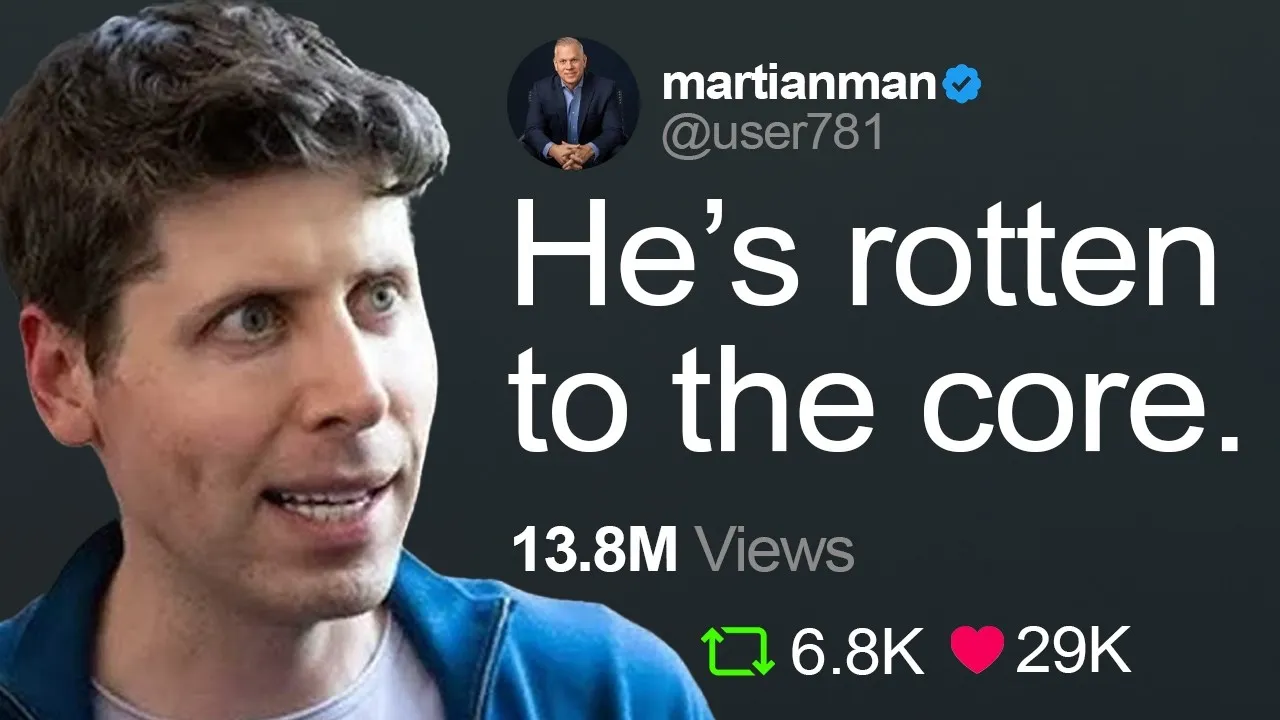
A recent statement by OpenAI CEO Sam Altman, drawing a parallel between the energy required to train an AI model and the energy expended in raising a human child, has ignited a firestorm of criticism and backlash across the internet. The controversial comparison, made during an interview in India, has been widely interpreted as devaluing human life and has led to accusations of a “rotten worldview” among AI leaders.
The Statement That Broke the Internet
During a discussion about the energy demands of AI, Altman stated, “People talk about how much energy it takes to train an AI model, but it also takes a lot of energy to train a human. It takes like 20 years of life on all the food you eat during that time before you get smart.” This remark, shared widely on social media, quickly garnered millions of views, predominantly negative, and fueled a fierce debate about the perception of AI and its creators.
Public Reaction: From Disbelief to Anger
The backlash was swift and intense. Many interpreted Altman’s comment as comparing human life to a mere energy cost, a perspective many found dystopian and dehumanizing. Social media platforms were flooded with reactions, ranging from disbelief to outright anger. Some comments accused Altman of being a “traitor to the human race” and suggested that AI developers with such views could pose an existential threat.
One particularly viral reaction highlighted the sentiment: “He’s not just defending AI energy use. He’s smuggling in a whole anthropology where humans are basically inefficient meat computers that you have to pour food and years into before they become useful. And once you accept that the next move is obvious, if people are just costly biological training runs, then burning mountains of electricity to build synthetic intelligence starts to not only feel equal, but superior, even if it negatively impacts humans. That is dystopian.”
The sentiment that human life is being reduced to an “inefficient line item” resonated deeply, with many arguing that this perspective fundamentally misunderstands the value of human existence.
Data Centers, Opposition, and the Energy Debate
Altman’s comments arrived at a critical juncture in the broader debate surrounding AI’s energy consumption and its impact on local communities. The construction of AI data centers has faced increasing opposition due to their significant demands on local resources, including electricity and water, and their potential to increase pollution and strain power grids. Reports indicate a sharp rise in project cancellations and local pushback against new data center developments across the United States.
This growing community resistance, coupled with concerns from politicians like Donald Trump about rising electricity costs, creates a challenging landscape for AI infrastructure expansion. The energy cost of training large AI models, such as GPT-4, is substantial, requiring vast amounts of electricity. Critics argue that Altman’s analogy, even if intended to contextualize the energy debate, inadvertently fuels public apprehension and strengthens the arguments of those advocating for stricter regulations or even moratoriums on AI development.
The Math Doesn’t Add Up?
Further fueling the controversy, some analyses have emerged questioning the accuracy of Altman’s comparison. One calculation suggests that training a human for 20 years requires approximately 17 megawatt-hours of energy (from food), while training a model like GPT-4 is estimated to consume between 50,000 to 60,000 megawatt-hours of electricity. This would imply that training GPT-4 uses roughly 3,000 times more energy than raising a human to adulthood. With newer, more powerful models requiring even greater energy investments, the gap between the two energy costs appears to widen significantly.
The sheer scale of energy required for current and future AI models, including Altman’s ambitious plans for a 10-gigawatt power source for future projects, highlights the immense infrastructure challenge ahead. Critics point out that these energy demands could lead to national shortfalls and significant price increases, raising questions about who will bear the cost and what happens when the necessary infrastructure is not available.
Accusations of Sociopathy and a “Rotten Worldview”
The intensity of the public reaction has even led some to question Altman’s character, with accusations of sociopathy surfacing. While not a formal diagnosis, these comments reflect a perception that Altman’s statement reveals a profound lack of empathy and an “anti-human” perspective. Articles and discussions have surfaced referencing past criticisms of Altman’s leadership style at OpenAI, including accusations of being “psychologically abusive,” “highly toxic,” and having a “low integrity” due to alleged dishonesty and manipulative behavior.
Critics argue that a leader at the forefront of AI development should champion its benefits for humanity, rather than framing human existence as an energy expenditure comparable to machine learning. The perception is that such rhetoric alienates the public and undermines the potential for AI to be a force for good.
Why This Matters
Sam Altman’s controversial statement underscores a critical challenge facing the AI industry: public perception and trust. By drawing a seemingly dismissive analogy between human development and AI training, Altman has inadvertently amplified public fears about AI’s potential to devalue human life and displace workers. This kind of rhetoric, critics argue, plays directly into the hands of those who advocate for heavy regulation or outright bans on AI technology.
For the AI industry to progress and be widely accepted, its leaders must communicate its value in a way that resonates with the public, emphasizing collaboration and augmentation rather than replacement or mere efficiency. The framing of AI as a tool that enhances human capabilities, rather than an entity that competes with or diminishes human existence, is crucial for fostering a positive and productive future. As one AI optimist put it, “The real technooptimist position isn’t that AI is cheaper than humans. It’s now we have two forms of intelligence on this planet and the combination is more powerful than either alone.”
Context and Nuance: The Full Interview
While the viral clip has dominated the conversation, the full context of Altman’s interview offers a slightly more nuanced perspective. In the complete exchange, Altman appears to be making a more specific point about the *per-query* energy cost of AI answering a question versus a human performing the same task. He suggests that once a model is trained, the energy cost to respond to a single query might be more efficient than a human performing that task.
However, even with this added context, the core issue of the massive upfront energy cost for *training* AI models remains. Critics argue that focusing on per-query efficiency distracts from the significant cumulative energy footprint and the environmental impact of developing increasingly powerful AI systems. The analogy to human development, even if intended differently, remains a significant PR misstep that has overshadowed the intended technical point.
The Road Ahead
The incident serves as a stark reminder for AI leaders to be exceptionally mindful of their public statements. The narrative surrounding AI development is fragile, and missteps can have far-reaching consequences, impacting investor confidence, regulatory approaches, and public acceptance. Moving forward, the industry must prioritize clear, empathetic communication that highlights AI’s potential to benefit humanity, fostering a collaborative rather than adversarial relationship between humans and artificial intelligence.
Source: Sam Altman Sparks OUTRAGE With Controversial AI Comment (YouTube)