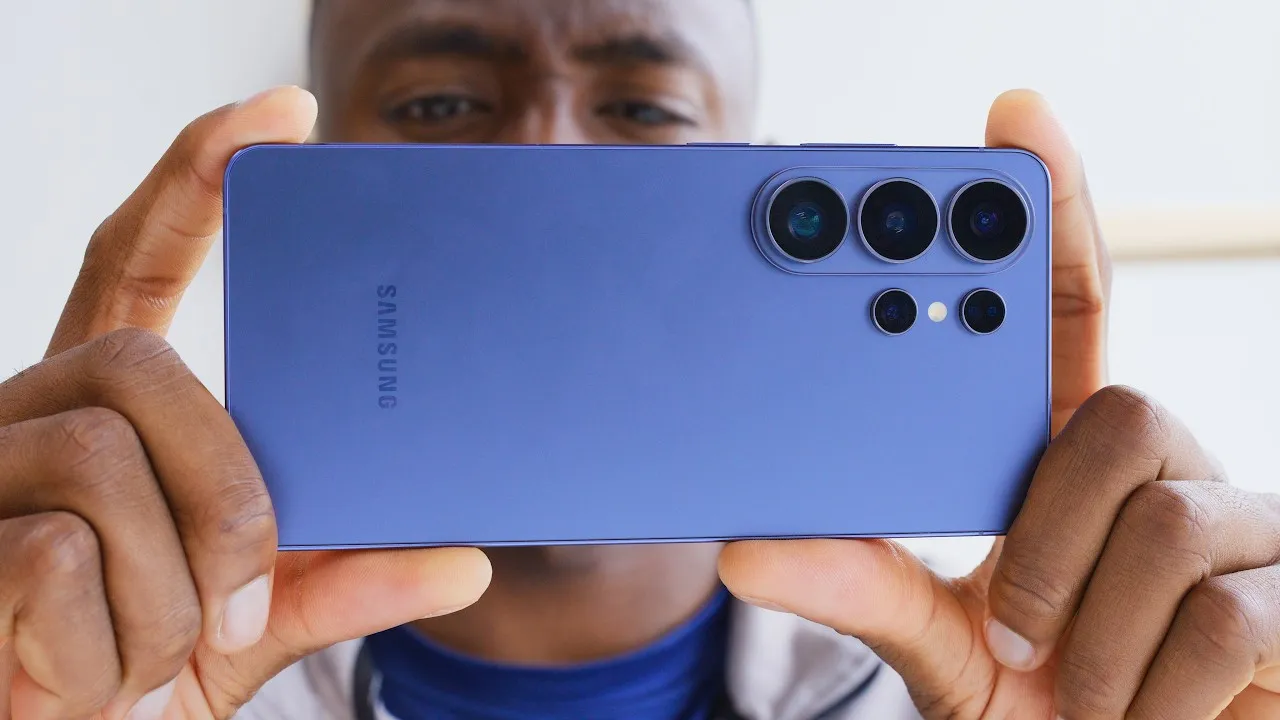
Samsung Unveils Galaxy S26 Ultra with Groundbreaking Privacy Display, But Users Must Weigh the Costs
Samsung has launched its latest flagship, the Galaxy S26 Ultra, boasting a suite of new features aimed at enhancing user experience and privacy. The most significant innovation is the ‘Privacy Display,’ a hardware-level feature designed to restrict viewing angles, preventing onlookers from seeing the screen. However, as is often the case with cutting-edge technology, this new capability comes with inherent trade-offs that tech enthusiasts and average consumers alike will need to consider.
The Privacy Display: A Double-Edged Sword
The Galaxy S26 Ultra features a 6.9-inch OLED display with a 1440p resolution and a 1-120Hz adaptive refresh rate, specifications largely similar to its predecessor. The headline addition is the ‘Privacy Display’ function. When activated, this feature dramatically narrows the display’s viewing angles, effectively blocking anyone from seeing the screen from the sides. This offers a more robust privacy solution than traditional polarization screen protectors, which are often limited in their effectiveness and angle range.
What sets Samsung’s implementation apart is its granular control. Users can selectively enable the privacy feature for specific apps, such as banking or messaging applications, or even just for incoming notifications. This level of customization is a significant leap forward in mobile privacy hardware.
The technology behind this privacy feature involves two types of pixels: wide-angle pixels and narrow-angle pixels. When the privacy display is off, all pixels function normally. However, when activated, the wide-angle pixels are turned off, leaving only the narrow-angle pixels, which are equipped with a focusing lens to restrict viewing. This clever engineering, however, directly leads to the primary trade-off: a reduction in effective resolution. When the privacy display is on, the phone’s resolution is effectively halved, which can result in less crisp text and visible pixelation on fine details. Microscopic analysis confirms the pixel-level changes when the feature is engaged.
Beyond resolution, the privacy display also impacts peak brightness. While Samsung attempts to compensate by adjusting the output of the remaining pixels, users may notice a slight dimming when the feature is active, especially at higher brightness levels. Furthermore, the constant presence of narrow-angle pixels, even when the privacy feature is off, subtly degrades the overall viewing angles of the display compared to previous models. The display also appears to have a less effective anti-reflective coating than the S25 Ultra and continues to use an 8-bit display simulating 10-bit color, a standard that many competitors have moved beyond.
Samsung’s decision to implement this feature reflects a broader trend in smartphone design: prioritizing unique selling points over absolute perfection in every aspect. The company acknowledges that most users opt for the default 1080p resolution setting for better battery life, suggesting a willingness to compromise on display quality for perceived user benefits. For those who prioritize display fidelity, the S26 Ultra, despite its premium price tag, may not offer the absolute best visual experience on the market, with even Samsung’s own previous displays potentially offering superior clarity.
Design Tweaks and Performance Upgrades
The physical design of the S26 Ultra sees minor refinements, including a thinner, lighter profile with slightly rounded corners to align with Samsung’s other flagship devices. However, these aesthetic changes introduce functional compromises. The more rounded corners mean the S Pen can only be inserted in one orientation, unlike the previous flat design. Additionally, a larger camera plateau, combined with the thinner body, causes the phone to rock noticeably on flat surfaces when typing without a case.
The switch back to aluminum sides from titanium is largely inconsequential for user experience but removes a design element that differentiated it from competitors like the iPhone.
Under the hood, the S26 Ultra is powered by the Snapdragon 8 Elite Gen 5 for Galaxy. Benchmarks show performance on par with other devices using the same chipset, offering the expected 20-30% CPU improvement over previous generations. Samsung appears to be placing a greater emphasis on the Neural Processing Unit (NPU) to drive its new AI features.
Performance in daily tasks, multitasking, and gaming is seamless, aided by an improved vapor chamber cooling system. Battery life sees a slight improvement despite retaining the 5,000 mAh battery, attributed to the efficiency of the new chip and software. Charging speeds are also slightly faster, peaking at 60 watts.
Notable omissions include the lack of MagSafe-compatible magnets and the continued absence of a silicon carbon battery. These features, present in some competitor devices, could have further enhanced the phone’s appeal and longevity.
Camera Improvements and AI Features
The camera system on the S26 Ultra retains much of its predecessor’s prowess, with key upgrades including a larger aperture on the main and 5x telephoto lenses. These enhancements allow for better light capture, resulting in improved low-light performance and a more natural bokeh effect for close-up shots. However, the minimum focus distance on the main camera has reportedly worsened, a minor drawback for macro photography enthusiasts.
Software-driven camera advancements are more pronounced. The addition of the APV log codec and an impressive ‘Horizon Lock’ stabilization feature, which uses the 200-megapixel sensor to provide exceptionally stable 4K video at up to 60fps, are significant improvements. Video footage, in general, benefits from the wider apertures, delivering good quality output.
The most extensive additions to the S26 Ultra are its AI-powered software features. These range from a useful call-screening tool for unknown numbers to an ‘Audio Eraser’ that effectively removes background noise from videos. The ‘Photo Assist’ feature allows for significant image manipulation, enabling users to create entirely new scenes within photos. While Samsung categorizes these as ‘agentic’ AI, the user experience is more flexible, allowing individuals to opt-in or out of using these features.
Despite the impressive array of AI tools, some, like ‘Now Nudge’ and the AI photo editor, proved unreliable or overly restrictive during testing, with the AI refusing certain editing requests. The reviewer expressed skepticism that these AI features alone are sufficient justification for purchasing the S26 Ultra, especially given that many of these capabilities could potentially be rolled out to older Samsung devices via software updates.
Value Proposition and Market Position
The article also touches upon the value proposition of Samsung’s other S26 models. The base S26 and S26 Plus are described as feeling like afterthoughts, with minimal design and camera updates since the S23 series. The removal of millimeter wave support and the use of Exynos chips in many regions further diminish their appeal. With the 128GB option removed and the 256GB model maintaining its price, the entry-level cost has increased to $900, a price point where consumers can find more compelling alternatives.
The S26 Ultra starts at a steep $1,300. While it offers genuine innovation with its privacy display and a host of other strong features, the reviewer suggests that its price point is perhaps its most ‘ultra’ characteristic. The phone is seen as a convergence of existing technologies rather than a radical leap forward, lacking advancements like advanced silicon carbon batteries or significantly faster charging found in some competitors. Ultimately, the S26 Ultra’s success hinges on whether its unique privacy display and AI features are enough to justify the premium price and the associated compromises.
Source: Samsung Galaxy S26 Ultra Review: There's a Catch (YouTube)