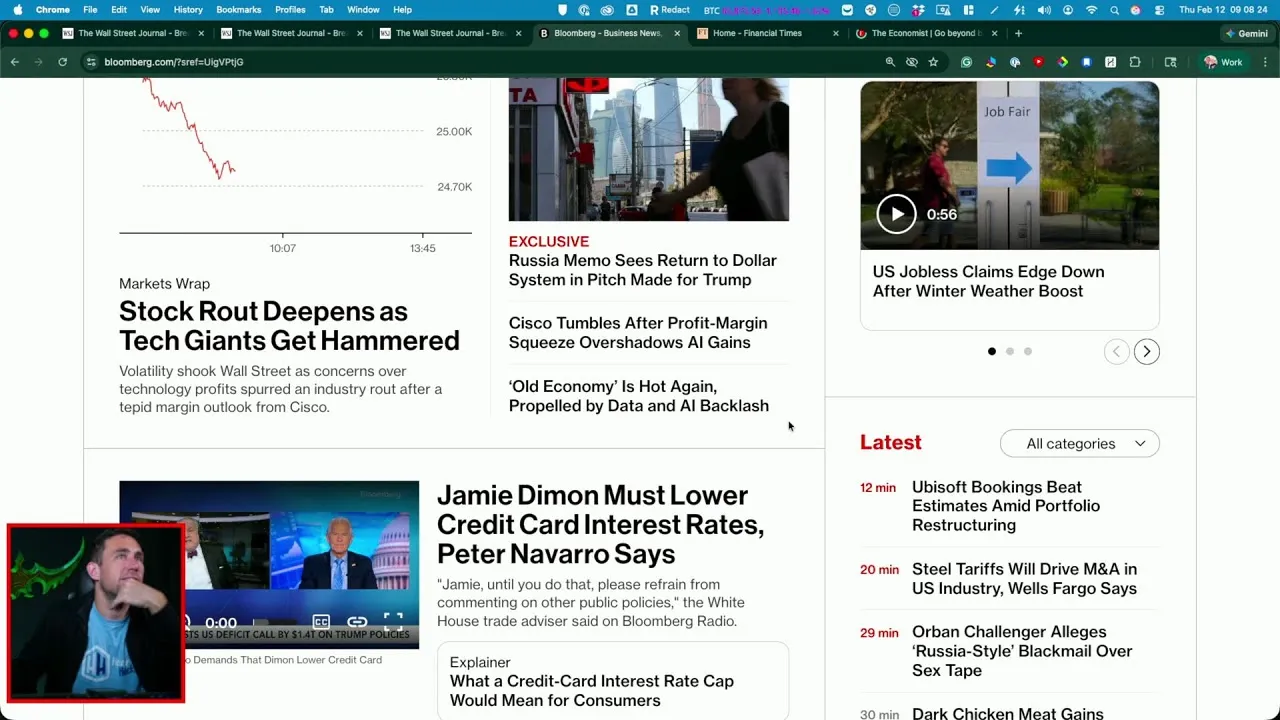
Stocks See Volatile Swings Amid Shifting Investor Sentiment
The stock market experienced a period of notable volatility, with indices showing significant price fluctuations as investor sentiment rapidly shifted. This dynamic trading environment underscores the current uncertainty and rapid reassessment of market conditions by participants.
Market Performance Snapshot
While specific index movements were not detailed in the provided transcript, the overarching theme was one of rapid ‘flipping’ in stock prices. This suggests that both upward and downward trends were short-lived, characterized by quick reversals. Such behavior often indicates a market grappling with conflicting economic signals or a lack of clear direction.
Understanding Market Volatility
Market volatility refers to the degree of variation in trading prices over time. High volatility means that stock prices are changing dramatically over a short period. This can be driven by a variety of factors, including:
- Economic News: Unexpected economic data releases (e.g., inflation reports, employment figures, GDP growth) can trigger sharp market reactions.
- Geopolitical Events: International conflicts, political instability, or major policy changes can create uncertainty and lead to sell-offs or rallies.
- Corporate Earnings: Surprises in company earnings reports, whether positive or negative, can significantly impact individual stock prices and broader market sentiment.
- Interest Rate Speculation: Anticipation of changes in interest rates by central banks (like the Federal Reserve) is a major driver of market moves.
- Investor Psychology: Fear and greed are powerful forces that can amplify market swings, leading to herd behavior.
What Investors Should Know
The rapid ‘flipping’ observed in stock prices presents both challenges and opportunities for investors. Understanding the underlying drivers of this volatility is crucial for navigating such markets.
Short-Term Implications:
- Increased Risk: Rapid price swings mean a higher potential for quick losses if positions are not managed carefully.
- Trading Opportunities: For short-term traders, such environments can offer opportunities for profit, but they require sophisticated strategies and risk management.
- Uncertainty: It becomes difficult to predict near-term market direction, making it challenging for longer-term investors to make decisions based on immediate trends.
Long-Term Implications:
- Testing Fundamentals: Periods of high volatility can sometimes serve to test the underlying fundamentals of companies and sectors. Stocks with weak fundamentals may be disproportionately affected.
- Rebalancing Opportunities: For long-term investors, significant price drops can present opportunities to acquire quality assets at lower valuations, provided their long-term investment thesis remains intact.
- Focus on Strategy: Volatility often reinforces the importance of having a well-defined investment strategy and sticking to it, rather than reacting emotionally to short-term price movements.
Sectoral Context
While the transcript does not specify which sectors were most affected, it is common for different industries to react differently to market-wide sentiment shifts. Growth-oriented sectors, such as technology, often experience amplified moves in both directions compared to more defensive sectors like utilities or consumer staples. The ‘flipping’ phenomenon could be more pronounced in areas sensitive to interest rate changes or consumer spending trends.
Navigating the Current Market
The current market environment, characterized by swift reversals, demands a cautious and informed approach. Investors are advised to:
- Stay Informed: Keep abreast of economic news, central bank commentary, and geopolitical developments that could influence market direction.
- Review Portfolios: Assess whether current holdings align with long-term financial goals and risk tolerance, especially in light of increased volatility.
- Diversify: Ensure the investment portfolio is adequately diversified across different asset classes, sectors, and geographies to mitigate sector-specific or market-wide risks.
- Focus on Quality: Prioritize investments in companies with strong balance sheets, sustainable business models, and resilient earnings potential, as these tend to weather volatility better.
The rapid nature of stock price movements highlights the dynamic and often unpredictable character of financial markets. Investors who remain disciplined, well-informed, and focused on their long-term objectives are best positioned to navigate such periods of heightened uncertainty.
Source: Stocks Flipping (YouTube)