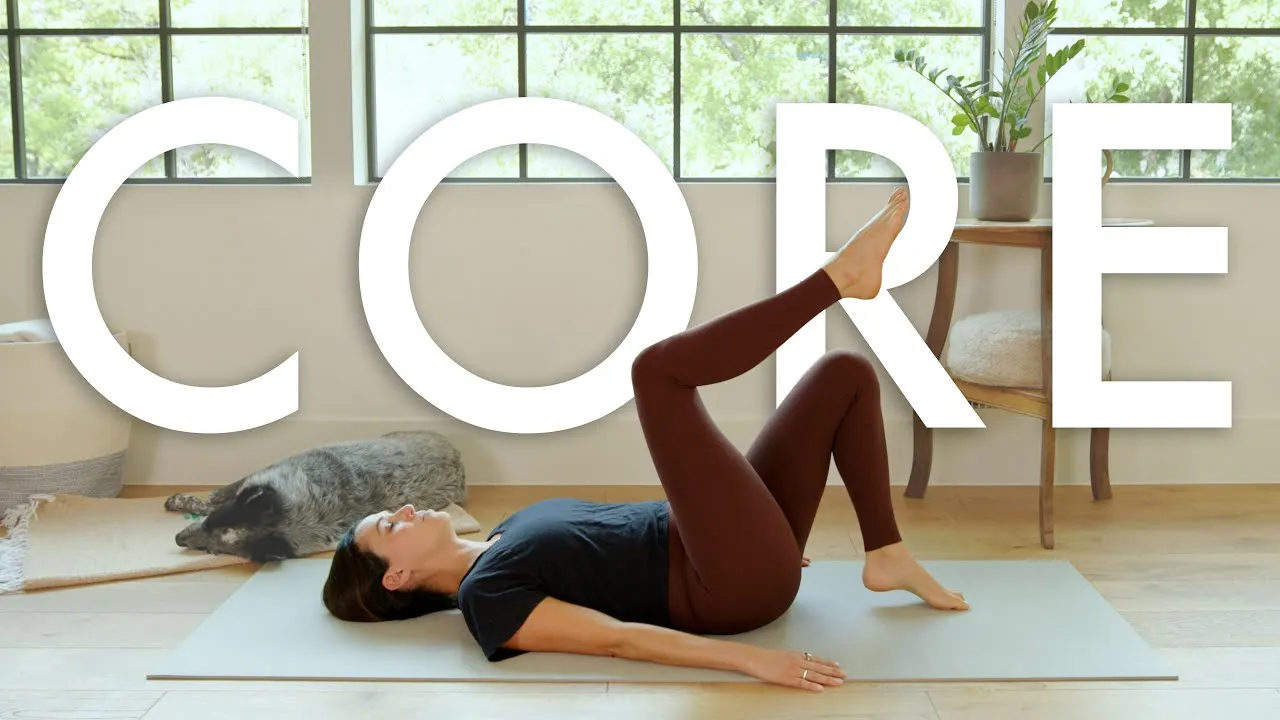
Discover a Disciplined Core in Just 15 Minutes with Yoga
A strong, stable core is fundamental to overall physical health, impacting everything from posture and balance to reducing the risk of back pain. Fortunately, you don’t need hours in the gym to cultivate this essential strength. A focused 15-minute yoga practice, as demonstrated by Adriene Mishler (known as Yoga with Adriene), offers an accessible and effective way to engage and condition the deep muscles of your core.
The Foundation: Mindful Breathing and Core Connection
The practice begins not with intense exertion, but with a grounding awareness of the body and breath. Lying on your back with knees bent and feet flat on the earth, the initial focus is on settling in and connecting with your breath. Adriene emphasizes that the discipline of yoga isn’t just about showing up, but about bringing your full attention to the present moment. By placing hands on the lower belly, practitioners are encouraged to feel the gentle expansion on inhalation and the subtle drawing in on exhalation.
This mindful breathing is the gateway to core activation. The technique involves inhaling deeply into the belly, feeling the expansion, and then, on the exhale, actively drawing the navel towards the spine. This controlled contraction lengthens the lower back and begins to engage the deep abdominal muscles. Adriene guides participants through several rounds, encouraging a widening of the ribcage on the inhale and a cinching sensation at the hips on the exhale, reinforcing the connection between breath and core engagement.
Building Strength: From Toe Taps to Dead Bugs
Once a foundational connection is established, the practice progresses to more dynamic movements. The first series involves drawing one knee into the chest and releasing, alternating sides, before bringing both knees in. This simple action prepares the body for the next phase: toe taps. From a position with shins parallel to the ceiling (tabletop), the exercise involves extending one leg to tap the toe on the floor and then returning to center, alternating legs. The key here is to keep the lower back long and the pelvis stable, drawing the navel towards the spine to protect the back and maximize core engagement.
Adriene offers modifications, advising to return to the knee-to-chest movement if any low back pain arises. She also explains that the further the shins are floated away from the body, the more intense the core work becomes, allowing individuals to scale the challenge based on their current strength and awareness. Maintaining relaxed shoulders and neck is crucial to isolate the work in the core. The pace is kept slow and intentional to activate the deep stabilizing muscles, rather than just the superficial ones.
The practice then transitions to the ‘dead bug’ exercise, a highly effective core-strengthening movement. Starting again in tabletop with shins parallel, the fingertips reach up towards the ceiling, encouraging shoulder blades to lift slightly off the ground. The emphasis is on hugging the low ribs in towards the earth, creating a stable core by imagining a taut connection between the hip points and the lower ribs. From this stable base, participants extend one leg long and the opposite arm overhead, moving slowly and with control, then returning to center. This is repeated, alternating sides, and moving with the breath. The goal is to maintain pelvic stability and keep the low back connected to the mat throughout the movement.
Targeting the Obliques and Deeper Muscles
Further engaging the core, particularly the oblique muscles (side abdominal muscles), the practice involves a controlled rocking motion. With legs squeezed together and knees bent, participants slowly shift their knees to one side, lifting the opposite hip slightly off the ground, then return to center. This is repeated on the other side. This movement, performed slowly and with knees kept together, targets the rotational stability of the core.
The dead bug exercise is revisited for a final round, encouraging participants to find a rhythm that works for them, refining their awareness and slowing down to connect with the deep muscles. This repetition helps solidify the core engagement and build endurance.
Cool Down and Integration
The practice concludes with gentle twists, allowing the spine and core to release. Knees fall to one side while the opposite arm opens up, facilitating a gentle stretch and breathwork to release tension. Finally, a brief, gentle bridge pose is introduced. By pressing the palms into the earth and peeling the spine up, practitioners engage the glutes and back muscles while breathing into the front body. This is followed by a final hug of the knees into the chest before coming to a comfortable seated position.
Who Can Benefit?
This 15-minute core yoga practice is suitable for a wide range of individuals. It’s particularly beneficial for those looking to:
- Improve posture and spinal alignment.
- Reduce and prevent lower back pain.
- Enhance balance and stability.
- Build foundational core strength after a period of inactivity.
- Complement other fitness routines.
While the practice is designed to be accessible, Adriene emphasizes listening to your body. Modifications are provided, and individuals experiencing significant pain or with specific medical conditions should consult with a healthcare professional before starting.
Key Health Takeaways
- Mindful Breathing is Key: Actively engage your core by drawing your navel towards your spine on each exhale.
- Protect Your Back: Focus on maintaining a long lower back and stable pelvis during all movements. If you feel pain, modify or regress to simpler exercises like knee-to-chest.
- Slow and Steady Wins: Perform movements with control and intention to target deep core muscles effectively.
- Listen to Your Body: Adjust the range of motion and intensity based on your current strength and comfort level.
- Consistency Matters: This short, focused practice can be repeated regularly to build sustained core strength and stability.
Disclaimer
This article is based on a yoga practice demonstration and is for informational purposes only. It does not constitute medical advice. Always consult with your doctor or a qualified healthcare provider before beginning any new exercise program, especially if you have pre-existing health conditions.
Source: Disciplined Core – 15 Minute Yoga Practice (YouTube)