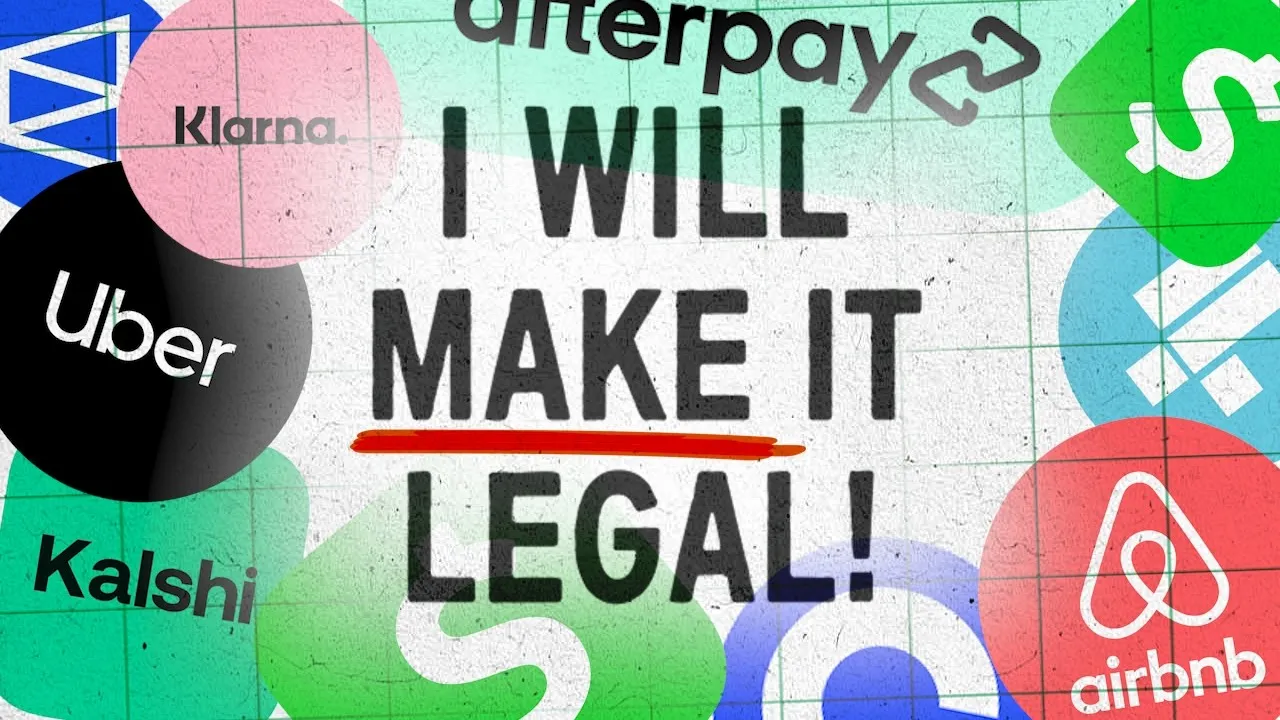
Tech Giants Exploit Loopholes, Build Billions on Regulatory Arbitrage
In a landscape where innovation often outpaces regulation, major technology companies have mastered a strategy known as regulatory arbitrage to achieve astronomical valuations and market dominance. This approach involves identifying and exploiting loopholes or ambiguities in existing laws and regulations to gain a competitive advantage, often leading to the creation of multi-billion dollar enterprises that operate in previously inaccessible markets.
The Art of Exploiting Legal Gray Areas
The core principle behind regulatory arbitrage is simple: operate where the law is less restrictive, even if it means bending the spirit, if not the letter, of the law. Companies strategically leverage technological advancements to scale rapidly, making it difficult for regulators to catch up. This has been the playbook for numerous successful tech giants.
Examples abound across various sectors:
- Uber circumvented traditional taxi regulations by framing its service as a peer-to-peer carpooling or ride-sharing initiative, rather than a regulated taxi service.
- Food delivery apps have navigated minimum wage laws by classifying their drivers as independent contractors, a model that has faced significant legal challenges and debate.
- Buy Now, Pay Later (BNPL) services have skirted consumer lending standards by offering installment plans that are structured differently from traditional loans, often avoiding stringent licensing and oversight requirements.
- Airbnb bypassed hotel licensing and zoning laws by presenting its platform as a way for individuals to rent out spare rooms or entire homes, rather than operating as commercial lodging establishments.
- Crowdfunding platforms have found ways to navigate investment regulations, while some betting platforms have skirted gambling regulations and age limits through complex financial technicalities.
- The cryptocurrency sector has been a particularly fertile ground for such practices, operating in vast gray areas with evolving and often unclear regulatory frameworks.
The common thread is that these companies, by venturing into areas where existing laws were not designed or had not yet been adapted, have built immense value. While these innovations can offer short-term benefits to consumers and workers by breaking down rigid structures and offering more competitive pricing or services, the long-term implications are a subject of intense scrutiny.
A Historical Precedent: Regulatory Arbitrage in Finance
The concept of regulatory arbitrage is not new; it gained prominence in the financial sector during the 1980s. The Basel Accords, international agreements aimed at standardizing banking regulations, highlighted disparities in capital requirements across different countries. Banks in jurisdictions with lower reserve requirements could lend out a larger portion of their deposits, leading to higher profits and more competitive interest rates compared to banks in countries with stricter rules.
To circumvent these differences, financial institutions would establish operations in countries with more lenient regulations. A common tactic involved creating non-bank subsidiaries, such as mortgage originators or lenders, that were funded, advertised, and managed by the bank but were not technically part of it. This allowed them to operate with less capital than if they were subject to the bank’s direct regulatory constraints, a strategy that ultimately contributed to systemic risks, as seen in the lead-up to the 2008 financial crisis.
The Modern Playbook: A Seven-Step Strategy
The transcript outlines a systematic approach for tech companies to leverage regulatory arbitrage:
- Identify a Highly Regulated Industry: Target sectors with complex, costly, and rigid regulations that create friction and dissatisfaction among consumers or potential service providers.
- Find a Non-Commercial Analogue: Reframe the service by drawing parallels to a less regulated or non-commercial activity. For instance, Uber used carpooling, Airbnb used short-term roommate arrangements, and BNPL services mimicked layaway plans. The proposed example of a decentralized school system, ‘Schooloolie,’ uses the idea of parents sharing homeschooling burdens.
- Leverage Technology for Scale and Speed: Utilize scalable technology, particularly network effects, to grow rapidly. This allows companies to outpace slow-moving regulatory bodies and keep costs down by enabling others to perform the operational heavy lifting. Venture capitalists are attracted to this model due to its potential for exponential returns.
- Launch in Lenient Jurisdictions: Begin operations in cities, states, or countries with more relaxed attitudes toward technological innovation and less stringent regulatory oversight.
- Achieve Hyper-Growth Through Subsidies: Use investor funding to heavily subsidize services, pay gig workers above-market rates, and engage in community outreach and philanthropy. This builds goodwill and a strong user base, creating a powerful narrative and political buffer.
- Replicate and Expand Rapidly: Systematically expand into jurisdictions with progressively higher regulatory oversight, using legal challenges as a delaying tactic while continuing to grow user numbers and contractor networks.
- Become Too Big to Regulate: Reach a scale where the economic and social impact of shutting down the business is too significant for politicians to bear. Millions of users and hundreds of thousands of independent contractors create a powerful lobbying force, making regulatory intervention politically infeasible.
Market Impact and Investor Considerations
The success of this strategy means that technology companies can disrupt established industries, often leading to more competitive markets and innovative services. For investors, companies that successfully navigate regulatory arbitrage can offer substantial returns, as demonstrated by the multi-billion dollar valuations of firms like Uber and Airbnb.
However, this approach also raises significant concerns:
- Erosion of Regulations: It can undermine the purpose of regulations designed to protect consumers, workers, and public safety.
- Unfair Competition: Companies that operate with fewer regulatory burdens have an unfair advantage over established businesses that comply with the law.
- Worker Exploitation: The classification of workers as independent contractors, while cost-saving for companies, often leaves workers without benefits, protections, and stable incomes.
- Precedent for Future Lawbreaking: The success of these tactics can encourage a culture where skirting regulations is seen as a viable business strategy, potentially leading to a race to the bottom.
The alternative to this ‘disruptive’ approach is often ‘regulatory capture,’ where incumbent businesses lobby for excessive regulations to stifle competition. The current environment often sees a complex interplay between these forces.
The Path Forward
The transcript suggests that the most effective solution would be well-funded, well-staffed regulatory bodies capable of enforcing laws from day one. However, it acknowledges the unlikelihood of this scenario in the near future. Therefore, understanding the mechanics of regulatory arbitrage becomes crucial for investors and observers of the market, providing a framework to analyze how new tech giants are built and the potential risks and rewards associated with their strategies.
Source: How Tech Companies Just… Straight Up Break The Law (YouTube)