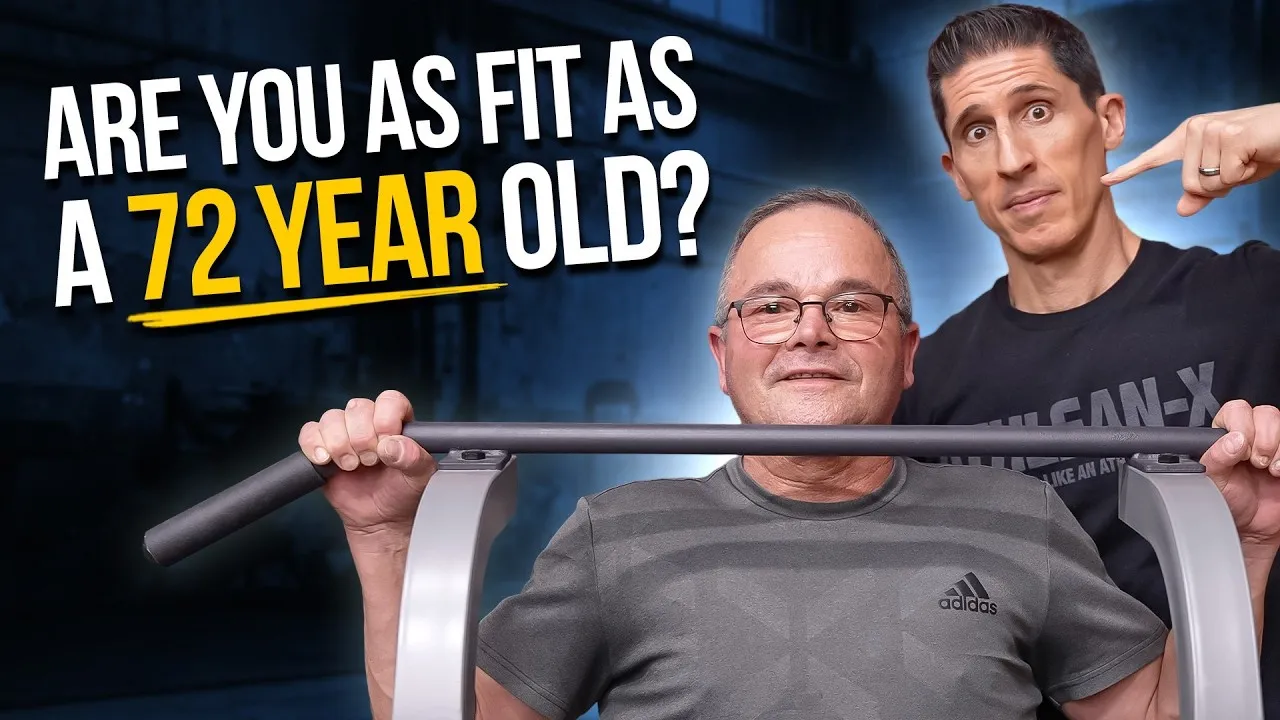
Test Your Fitness: Simple Exercises Reveal Your True Health
Many people believe they are fit, but can they prove it? A recent video explored this question by putting real people through a series of simple, do-anywhere tests. These exercises are designed to reveal hidden weaknesses and show you exactly where you stand in terms of your overall fitness. The good news is that all these areas can be improved with targeted training.
Single Leg Wall Sit: Test Your Stability and Strength
The single leg wall sit is a straightforward test that checks your hip and ankle stability, the static strength in your thigh muscles (quads), and your muscular endurance. To perform it, stand with your back flat against a wall, bend your knees to a 90-degree angle, and lift one leg off the ground. The goal is to hold this position for 30 seconds on each leg. While it may seem easy, many people find it challenging after just 10 seconds. This exercise not only tests your quads but also your hip stability, knee control, and ability to hold a position when fatigued. If you struggle to hold this for 30 seconds on each side, it signals an area that needs attention. Sports physical therapists often use this test to assess the risk of ACL injuries, as instability around the knee can make you more prone to injury.
Wall Squat Test: Assess Your Mobility and Control
Moving from static holds to dynamic movement, the wall squat test reveals more about your body’s ability to move through space. Stand facing a wall with your toes about one to two inches away, turned slightly outward. Extend your arms straight overhead without leaning on the wall or using it for balance. Keep your chest and head up, then sit down into a full squat, going below parallel. Hold for a moment, then stand back up. This exercise requires ankle mobility, hip mobility, the ability to extend your upper back (thoracic spine), shoulder mobility, and control of your pelvis and lower back. If any of these areas are limited, the squat will break down quickly. For example, limited ankle mobility means your body must compensate, often by not squatting as deep or losing your position. Similarly, a lack of upper back mobility can cause your arms to drift forward. Even if you can complete the squat, pay attention to how your body feels; some people, like the video’s host, experienced lower back cramping due to compensating muscles working too hard.
Hand Release Push-Up Test: Measure Upper Body Endurance
The hand release push-up test evaluates your upper body strength, muscular endurance, and core stability. Start face down on the floor with arms extended overhead. Bring your hands back to just outside your shoulders and push up into a plank position. Keeping your body rigid, lower your chest to the floor, briefly lift your hands off the ground, place them back down, and then push back up to full extension. This test adds up quickly, challenging your ability to perform repeated movements under fatigue. The video provided benchmarks: men in their 40s should aim for 40 unbroken reps, with a gradual decrease for older age groups. Women in their 40s should aim for 30 reps, also with a similar decline per decade. These numbers serve as a guide, and falling short indicates an opportunity to improve. Noticing how people stop—whether their hips sag, range of motion decreases, or core weakens—also provides valuable insight.
Dead Hang Test: Gauge Grip and Shoulder Strength
To test how long you can sustain effort, the dead arm hang is used. Find a bar high enough so your feet clear the ground, with hands about shoulder-width apart. Depress your shoulders slightly by pulling them down and away from your ears. This engages your shoulder blades (scapula) and stabilizes the shoulder joint. The target time is two minutes for men in their 40s, with a one-second deduction for each year beyond that. For women in their 40s, the benchmark is one minute and 15 seconds, with the same deduction for subsequent years. This test assesses grip strength, forearm endurance, scapular stability, upper back mobility, and core control. Many people don’t even make it halfway, often failing because their shoulders lose stability or their core weakens, rather than just their grip giving out. Grip strength is linked to overall health, but this test shows how well your entire system works together under sustained load.
Side Plank With Leg Lift: Evaluate Lateral Core Strength
The side plank with a leg lift challenges your body’s ability to stabilize from the side. Start on your side with your forearm on the ground, elbow directly under your shoulder. Lift your hips to create a straight line from your shoulders to your feet. Then, raise your top leg to about a 45-degree angle and hold this position for 30 seconds on each side. This test is harder than it looks because it requires significant effort to prevent movement. It targets your lateral core muscles, hip abductors (muscles on the outside of your hips), and your ability to keep your trunk from collapsing. Failures often happen gradually, with hips sagging, shoulders sinking, or the top leg drifting forward to compensate. Maintaining a straight line and preventing excessive body shifting is key, meaning quality is as important as the 30-second duration.
The “Old Man Test”: Assess Balance and Ankle Mobility
Named the “old man test,” this exercise is a simple yet revealing challenge: putting on a sock and shoe while standing on one leg, without holding on to anything. Your lifted foot must stay off the ground until the shoe is on and tied. This tests single-leg balance, ankle mobility, hip stability, and proprioception – your body’s awareness of its position in space. It’s less about raw strength and more about control. Small wobbles, needing to reset your body, or touching your lifted foot down all indicate areas for improvement. If you can’t complete this task smoothly, it might not be age itself, but rather a lack of training in these specific control-based movements.
Pull-Up Test: The Ultimate Measure of Relative Strength
Considered the king of upper body pulling exercises, the pull-up is a demanding test of strength relative to body weight. The standard requires full extension at the bottom and the chin clearly over the bar at the top, with no cheating. For men in their 40s, the goal is 15 unbroken reps; for women, it’s seven. These numbers decrease with age, but even a fit 70-year-old man should aim for seven to ten reps. This test highlights imbalances, particularly the common bias towards training the front of the body (chest, arms) over the back. Excess body fat also acts as a penalty, making it harder to lift your own weight. While the standards may seem high, they provide a clear target for improvement. Many people fail by shortening the range of motion or altering the movement to make it easier, but these modified reps don’t count towards the standard.
Understanding Your Results and Taking Action
These tests are not about judgment but about providing actionable information. Each exercise points to specific weaknesses—be it grip, shoulder control, mobility, or core stability—that can be addressed through training. Improving in these areas not only helps you pass the tests but also leads to better movement, feeling better, and living a healthier life. Remember, these tests focus on muscular strength and endurance. Other crucial aspects of fitness, like cardiovascular health and mental well-being, are also vital and should not be overlooked.
Disclaimer: This information is for educational purposes only and does not constitute medical advice. Always consult with a qualified healthcare provider before beginning any new fitness program or making changes to your health routine.
Key Health Takeaways
- Assess Your Fitness: Use simple, do-anywhere tests like the single leg wall sit, wall squat, hand release push-ups, dead hang, side plank with leg lift, single-leg sock/shoe test, and pull-ups to understand your current fitness level.
- Identify Weaknesses: These tests reveal specific areas needing improvement, such as hip and ankle stability, mobility, upper body endurance, grip strength, core control, and balance.
- Improve Mobility: Exercises like the wall squat highlight the importance of ankle, hip, and upper back mobility for overall movement.
- Build Strength and Endurance: Push-ups and pull-ups test upper body strength and endurance, while the dead hang assesses grip and shoulder stability over time.
- Strengthen Your Core: The side plank with leg lift and various other tests emphasize the critical role of a strong, stable core for everyday movements and injury prevention.
- Balance is Key: The single-leg sock/shoe test shows the importance of balance and proprioception, which are vital for preventing falls, especially as we age.
- Fitness is Trainable: Every weakness identified by these tests is an opportunity for improvement. Consistent training can enhance performance and overall health.
- Consult a Professional: Always talk to your doctor before starting a new fitness routine.
Source: How Fit Are You REALLY? (7 Do-Anywhere Tests) (YouTube)