How to Uncover Surprising Coincidences Between Presidents
Have you ever noticed how history seems to repeat itself, or how certain events and figures align in uncanny ways? This article explores the fascinating phenomenon of coincidences, using the famous parallels between Presidents John F. Kennedy and Abraham Lincoln as a case study. You’ll learn how to identify these patterns and understand the perspective that such coincidences are not necessarily supernatural, but rather a product of probability and our human tendency to seek meaning.
Understanding Coincidences
The concept of coincidences, especially those that seem too perfect to be accidental, has long captured the human imagination. The parallels between President John F. Kennedy and President Abraham Lincoln are often cited as prime examples of these historical alignments. This article delves into these specific coincidences and offers a framework for understanding how they might arise.
Key Coincidences Between Lincoln and Kennedy
Let’s explore some of the most striking parallels drawn between these two American presidents:
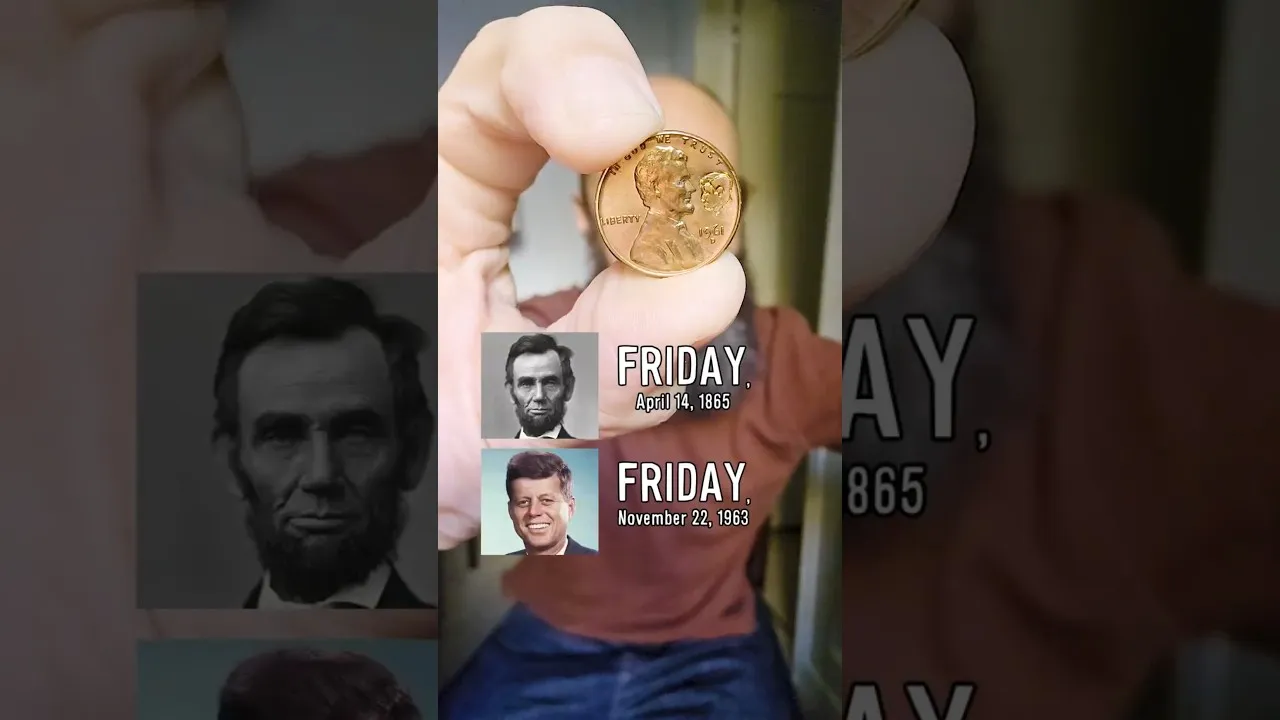
- Assassination Day: Both President Lincoln and President Kennedy were tragically assassinated on a Friday.
- Mode of Transportation at Assassination: Kennedy was shot while riding in a Ford vehicle, and Lincoln was shot in Ford’s Theatre.
- Congressional Elections: Both men were first elected to Congress in the year ’46 (1846 for Lincoln, 1946 for Kennedy).
- Presidential Elections: Following their congressional elections, both were elected to the presidency in the year ’60 (1860 for Lincoln, 1960 for Kennedy).
- Successor Presidents: The presidents who succeeded Lincoln and Kennedy were both Southerners named Johnson and both born in the year ’08 (Andrew Johnson in 1808, Lyndon B. Johnson in 1908).
- Letter Count in Names: The names “Andrew Johnson” and “Lyndon B. Johnson” each contain 13 letters. Similarly, the names “John F. Kennedy” and “Abraham Lincoln” each contain seven letters.
- Letter Count in Assassin Names: The names “John Wilkes Booth” and “Lee Harvey Oswald” each contain 15 letters.
- Assassin’s Locations: Oswald shot Kennedy from a warehouse-like building (a book depository) and was later apprehended in a theater. Conversely, John Wilkes Booth shot Lincoln in a theater and was later captured in a warehouse-like building (a tobacco shed).
The Authors of Reality Perspective
While these coincidences might seem “spooky” or indicative of a deeper, hidden meaning, the perspective offered here suggests a different interpretation. The idea is that the “authors of reality” are constantly generating an immense number of events and details – “10 billion scenes a second.” Within this vast sea of occurrences, finding patterns and similarities among people, who themselves can be described by millions of different dates and attributes, is not statistically improbable. Instead, it’s a natural outcome of probability.
Why We Find Coincidences
Our brains are wired to find patterns and make connections. When we encounter a series of striking similarities, like those between Lincoln and Kennedy, we are naturally inclined to seek an explanation beyond mere chance. This is a fundamental aspect of human cognition.
The Significance of Abundant Coincidences
The argument presented is that the sheer volume of potential connections means that finding coincidences is almost inevitable. “Competitions to find coincidences between other people have yielded so many lists between so many people that what would really make us question reality would be the discovery of two people whose lives contained no coincidences at all.” In essence, it would be far more extraordinary to find two individuals with absolutely no overlapping life events, dates, or attributes than to find those who do.
A Call to Discovery
Therefore, instead of viewing these coincidences as proof of a preordained destiny or supernatural intervention, they can be seen as invitations to explore the intricate web of connections that exist in the world. The abundance of coincidences suggests that there is “a lot more to discover” about how events and lives intersect. The challenge is posed: “That would be truly spooky and we should find those two people right now” – highlighting the inherent difficulty in finding individuals without any coincidental links.
Conclusion
The parallels between Abraham Lincoln and John F. Kennedy serve as a compelling illustration of how coincidences can manifest in history. By understanding the principles of probability and our own cognitive biases, we can appreciate these patterns not as mystical signs, but as fascinating aspects of the complex tapestry of reality. The search for connections continues, reminding us that there is always more to observe and understand about the world around us.
Source: The Kennedy Coincidences (YouTube)