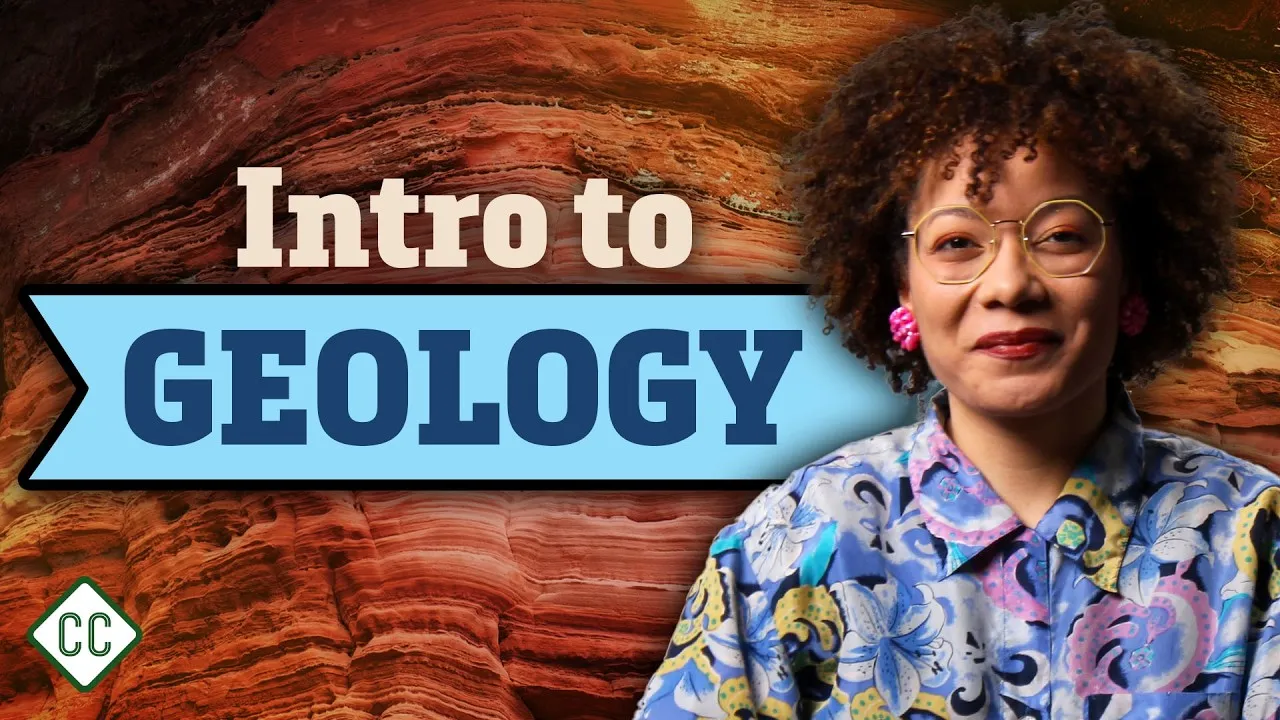
What is Geology?
Geology is the study of our planet, Earth. It’s much more than just looking at rocks. Geology helps us understand how Earth works, from the explosive power of volcanoes to the slow carving of canyons by rivers. It explains the ground beneath our feet, the minerals that make up our technology, and the forces that shape our world.
A Brief History of Geology
People have been interested in Earth for a very long time. Indigenous cultures have deep traditional knowledge about the land, like the Havasupai story of the Grand Canyon being carved by a river. The Diné people called a fossil site ‘Place With Bird Tracks,’ showing early connections between fossils and living creatures.
Early scholars around the world also made important discoveries. In Persia, Ibn Sina observed that rock layers form over time, with younger rocks on top. This is key to dating rocks. In China, Shen Kuo noticed how water changes the land and used fossils to understand that Earth’s climate has changed. Europeans like Georgius Agricola in the 1500s studied minerals and suggested earthquakes and volcanoes relate to Earth’s hot interior. Later, James Hutton and Georges Cuvier debated whether Earth’s changes happened slowly over time or through major disasters.
However, much of this early geological work was tied to exploring and taking resources from land, often without acknowledging the knowledge of Indigenous peoples or enslaved individuals. Early Western geologists often studied parts of Earth separately, missing the bigger picture.
The Big Idea: Plate Tectonics
A major shift happened in the 1960s with the theory of plate tectonics. This idea explains that Earth’s outer shell is made of large plates that move, crash, and slide past each other. This movement builds mountains, creates oceans, and shapes continents. Earth is the only planet we know of with active tectonic plates, which some scientists believe is important for life.
With plate tectonics, geologists finally saw Earth as a single, connected system, much like many Indigenous cultures had understood for centuries. This discovery helped geology become a more unified science.
Why Geology Matters to You
Geology isn’t just an academic subject; it affects your daily life in many ways. The minerals in your toothpaste, the materials in your smartphone, and the buildings you live in all come from geological processes. Geology also influences where people settle and how communities form.
How Geology Shapes Our Lives
Settlements and Cities
Geology plays a big role in where people live. For example, the East Coast of the United States has a ‘fall line.’ This is where rivers flowing from the Appalachian Mountains meet the coastal plain. Millions of years ago, this was the edge of the Atlantic Ocean. Rivers carried eroded rock, called sediment, to form the flat coastal plain. This fall line created waterfalls and rapids, making it hard for boats to travel further inland.
Indigenous peoples understood this natural boundary. European settlers, however, had to figure it out themselves. They built settlements at the fall line, where they had to stop their boats and carry goods. These settlements grew into major cities like Philadelphia, Baltimore, and Washington, D.C. Today, major highways like I-95 often follow these historical boundaries.
Throughout history, people have preferred to build cities on river plains with fertile soil, like in ancient Mesopotamia. Geology doesn’t just affect where we live, but also our environment.
Climate and Hazards
The massive Andes Mountains in South America create dramatic climate differences. They cause one of the driest deserts on one side and keep the Amazon rainforest lush on the other. Geological features also determine the risks people face in certain areas, such as floods, landslides, earthquakes, and tsunamis.
The Many Faces of Geology
Geology is a broad field with many specialized areas. Geochemists study the chemical cycles between the land, water, and air. Oceanographers look at geological processes under the sea. Paleontologists study ancient life through fossils. Planetary scientists explore the geology of other planets.
And yes, some geologists focus specifically on rocks! Sedimentologists study sediments and sedimentary rocks. Geologists work in many places: universities, research labs, government agencies, and companies dealing with energy, mining, and the environment.
Modern Geology and Indigenous Knowledge
Today, geologists continue to make important discoveries. They help us understand the minerals in our electronics and ensure our drinking water is safe. They also work to protect us from natural disasters like earthquakes and volcanic eruptions.
There’s a growing effort to include Indigenous knowledge in modern geology. Indigenous geologists are combining traditional wisdom with scientific methods to improve how we study and manage land, especially on tribal lands. Shaleene Chavarria, from the Pueblo of Santa Clara, is an example, working to integrate Pueblo teachings into the U.S. Geological Survey.
Solving Earth’s Mysteries
Geologists act like detectives, using clues in rocks and the environment to understand Earth’s past and present. They help answer big questions, such as how life began, how to reduce the risks of natural disasters, and how to manage Earth’s resources sustainably as the climate changes. Even mysteries like the exact formation of the Grand Canyon are being studied.
A New Perspective
Our planet is a unique and amazing place. Geology helps us appreciate its mountains, volcanoes, glaciers, and strange rock formations called hoodoos. It connects us to processes that have shaped Earth for billions of years.
Geology touches your everyday life in countless ways. By studying it, you can gain a grand new perspective on the world around you.
Source: Intro to Geology: Crash Course Geology #1 (YouTube)