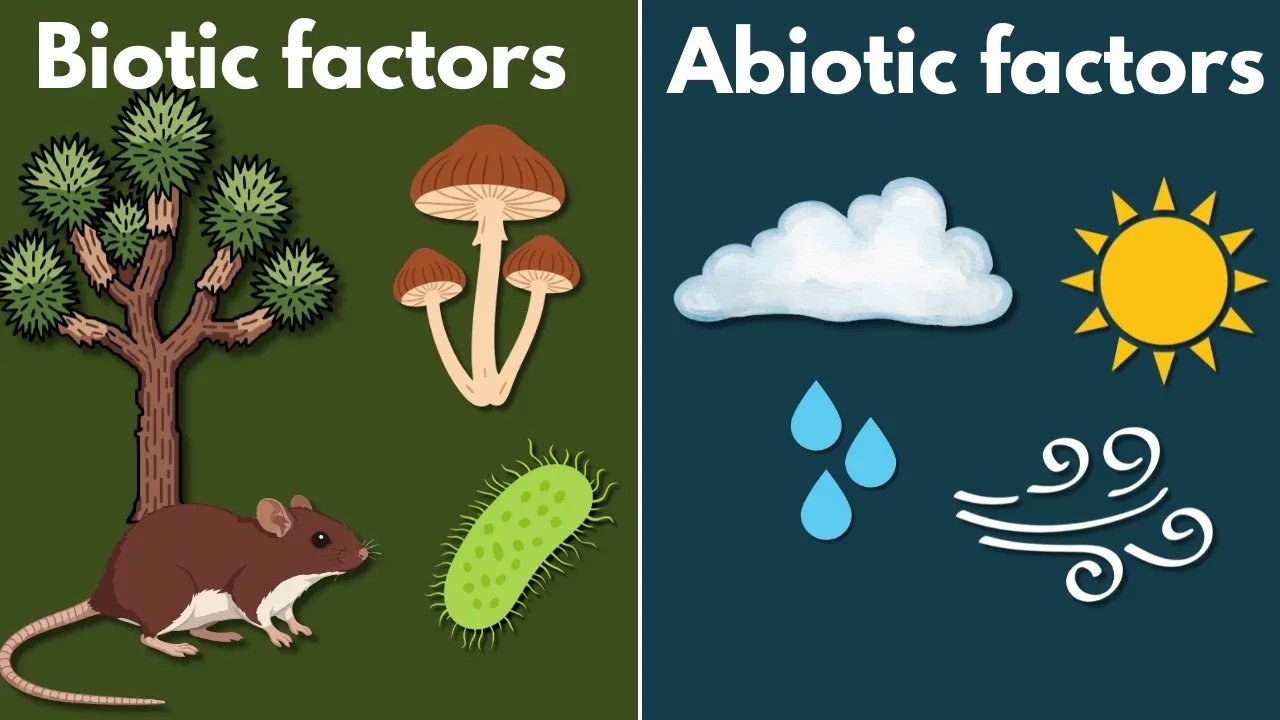
Discover Biotic and Abiotic Factors in Your Environment
Have you ever wondered why some plants and animals thrive in a desert while others cannot? The answer lies in the unique combination of living and non-living elements that make up an environment. This article will explore biotic and abiotic factors, explaining how they influence where organisms can survive and how they interact. You’ll learn to identify these factors and understand their importance for life on Earth.
What Are Biotic and Abiotic Factors?
Every environment has two main types of components that affect the organisms living there: biotic and abiotic factors. These factors work together to determine which living things can survive and flourish in a particular place.
Biotic Factors: The Living Parts
Biotic factors are all the living or once-living parts of an environment. Think of them as the ‘bio’ in biotic, meaning life. This includes everything from giant trees and large animals to tiny insects, fungi, and even microscopic bacteria. These living things often rely on each other for survival, creating complex relationships within an ecosystem.
Abiotic Factors: The Non-Living Parts
Abiotic factors are the non-living, physical, and chemical parts of an environment. These are essential for life but are not alive themselves. Common abiotic factors include sunlight, water, air, temperature, soil, and rocks. They create the conditions that living organisms must adapt to.
How Biotic and Abiotic Factors Work Together
Organisms need a specific mix of both biotic and abiotic factors to survive. A change in either can make it difficult or even impossible for them to live there. It’s like baking a cake: you need the right ingredients (biotic) and the right oven temperature and time (abiotic) for it to turn out well.
Example: A Plant’s Needs
Consider a plant. It needs sunlight and water, which are abiotic factors, to grow. But many plants also need insects to pollinate them, which are biotic factors. If either the sunlight is too weak or the insects disappear, the plant may not survive.
Example: A Deer’s Needs
A deer, for instance, needs grass to eat (a biotic factor). However, it also needs a comfortable temperature range and access to water (abiotic factors). If the temperature becomes too extreme or the water source dries up, the deer will struggle to survive.
Biotic and Abiotic Factors in Joshua Tree National Park
Joshua Tree National Park offers a great example of how these factors shape an environment. This desert climate has very little rainfall, perhaps only four to five inches per year. The air is extremely dry, causing temperatures to swing dramatically between day and night, sometimes by 50 degrees Fahrenheit or more.
Biotic Factors in the Desert
Despite the harsh conditions, life exists. Grasshoppers and lizards depend on desert bushes and flowers (biotic factors) for food and shelter. Kangaroo rats eat seeds found in the park (another biotic factor), and tarantulas prey on grasshoppers (also biotic). All these living creatures are biotic factors, essential for the survival of others.
Abiotic Factors in the Desert
The abiotic factors in Joshua Tree are just as important. These include the limited rainfall, extreme temperatures, the rocky and sandy soil, and intense sunlight. This specific combination of conditions determines which organisms can make a living in this park.
Competition for Resources
Because many biotic and abiotic factors are limited, organisms often have to compete for them. In dry areas, plants might compete fiercely for the small amount of water available in the soil. Animals might compete for shady spots or burrows to escape the intense daytime heat.
Key Takeaways
To survive in any environment, organisms need a specific balance of both biotic and abiotic factors. Biotic factors are the living components like plants, animals, fungi, and microorganisms. Abiotic factors are the non-living elements such as air, sunlight, water, temperature, and soil. The unique combination of these factors dictates which species can thrive in a given location.
Prerequisites
No special knowledge is required to understand this article. A basic understanding of plants and animals is helpful.
Source: Biotic and abiotic factors | Middle school Earth and space science | Khan Academy (YouTube)