Unpacking the Reality of Scientific Discovery
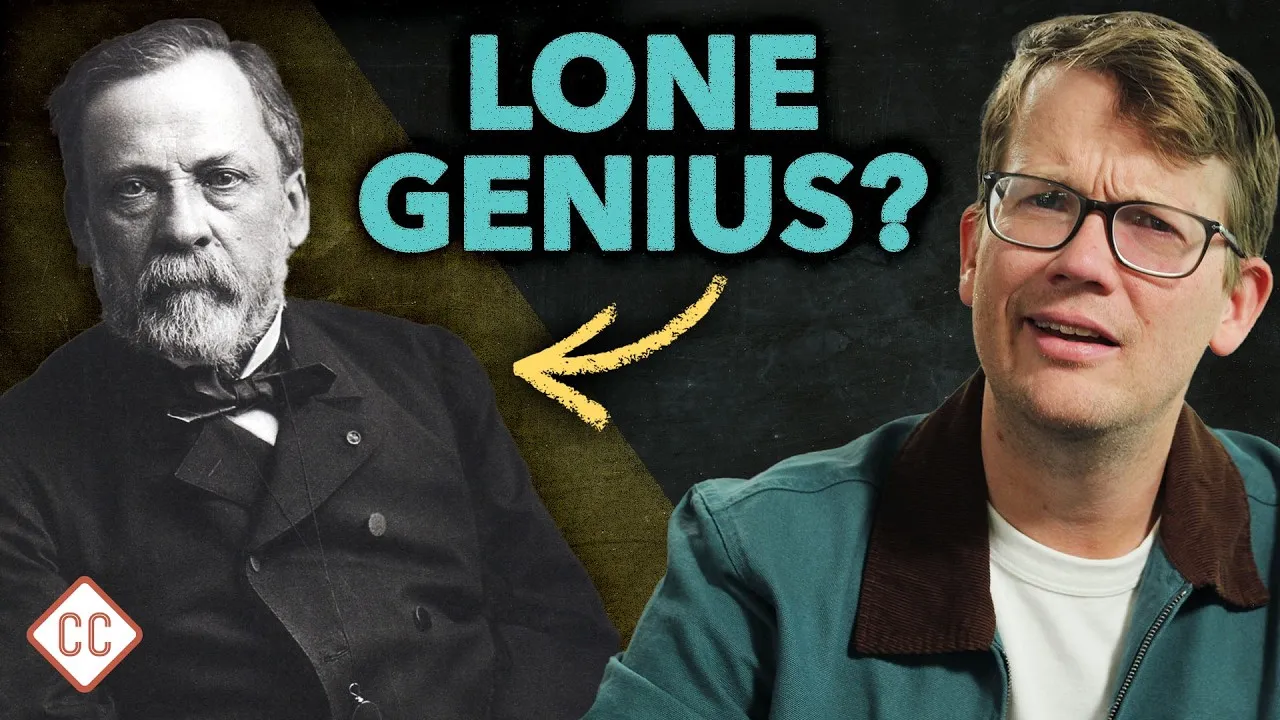
We often picture scientists as lone geniuses, toiling away in isolation until a single, brilliant experiment revolutionizes our understanding of the world. The story of Louis Pasteur and germ theory is frequently told this way: a singular mind whose groundbreaking work saved millions. While Pasteur was undoubtedly brilliant, and his contributions immense, the reality of scientific progress is far more complex and collaborative. This article will delve into the nuanced truth of how science truly operates, highlighting the importance of community, iterative experimentation, and diverse methodologies.
The Myth of the Solitary Scientist
Figures like Louis Pasteur, Ibn Sina, Marie Curie, and George Washington Carver are celebrated for their immense contributions to science. However, their achievements were not isolated incidents. As Isaac Newton famously stated, “If I have seen further it is by standing on the shoulders of giants.” This sentiment underscores a fundamental aspect of scientific advancement: it is a collective endeavor, built upon the work of those who came before and refined by the contributions of contemporaries and successors.
Germ Theory: A Collaborative Evolution
The development of germ theory, the understanding that microbes can invade our bodies and cause illness, is a prime example of this collaborative process. While Pasteur is often credited with its development, the journey was much longer and involved many minds.
Early Hypotheses and Pasteur’s Initial Experiments
By the early 19th century, the invention of the microscope had revealed the existence of microbes. However, a prevailing theory was “spontaneous generation,” the idea that life arose spontaneously from non-living matter, such as rotting food. Doubts existed, but no definitive proof disproved it.
In the 1860s, amidst shifting scientific worldviews influenced by Darwin’s work, other scientists hypothesized that microbes already existed and traveled through the air, settling in environments where they could cause disease. Louis Pasteur, skeptical of spontaneous generation, sought to test this air-traveling microbe hypothesis.
Pasteur’s initial approach involved sterilizing a broth by heating it to kill existing microbes. He then exposed the cooled broth to air. As expected, microbes reappeared. He interpreted this as evidence that microbes entered from the air, supporting the new hypothesis and refuting spontaneous generation.
The Importance of Skepticism and Refinement
Not everyone was convinced. Critics like biologist Félix Pouchet argued that the experiment hadn’t definitively ruled out spontaneous generation. They questioned whether fresh air itself might be the source of life. This skepticism, however, was not mere obstruction; it was a crucial part of the scientific process. Peer critique and challenges are vital for refining hypotheses and designing more robust experiments.
The Swan-Neck Flask Experiment
Undeterred, Pasteur designed a more sophisticated experiment using a swan-neck flask. This flask had a long, curved neck that allowed air to enter but trapped airborne particles, including microbes, in its curves. After sterilizing the broth, he exposed it to air through the swan neck. The broth remained microbe-free. When he tilted the flask, allowing the trapped microbes to fall into the broth, microbial growth quickly resumed.
This elegant experiment demonstrated that microbes were not spontaneously generating but were indeed entering from the air. The distinct shape of the flask acted as an independent variable, controlling the exposure of the sterile broth to airborne particles. The presence of microbial growth served as the dependent variable, the observed outcome.
Experimental vs. Observational Science
Pasteur’s work exemplifies experimental science, where questions are posed about the natural world, and experiments are devised to gather evidence. This often occurs in controlled laboratory settings, allowing scientists to isolate variables.
The Challenges of Real-World Science
However, as the quote “Everything gets complicated away from the laboratory” suggests, not all scientific inquiry can be confined to controlled environments. Studying complex systems like Earth’s climate, for instance, presents significant challenges.
Observational Science: Gathering Data from the World
For phenomena that cannot be easily replicated in a lab, scientists rely on observational science. This involves gathering evidence by observing events as they occur in the natural world. Climate scientists, for example, measure surface temperatures, sea levels, and atmospheric carbon dioxide concentrations to form, test, and refine their hypotheses.
Even within climate science, experimental methods are employed. For instance, experiments in labs, dating back to Eunice Newton Foote in 1856, have measured how carbon dioxide traps heat, providing crucial data that complements large-scale observations.
Ethical Considerations in Scientific Research
Beyond methodology, ethical considerations are paramount in scientific research, particularly in medical studies. When testing new treatments, researchers must ethically balance the pursuit of knowledge with the well-being of participants. This often means comparing a new treatment not to a placebo, but to the existing standard of care, ensuring all participants receive some form of treatment.
Confounding Variables and the Need for Multiple Studies
Observational studies, while valuable, can be complicated by confounding variables – factors that can influence the relationship between the variables being studied. For example, when studying the link between alcohol consumption and heart disease, other lifestyle factors like diet can complicate the findings. Scientists strive to identify and account for these variables, but it’s not always possible.
This complexity highlights why science relies on a vast body of evidence from multiple types of studies. Pasteur’s work wasn’t the end of the story; it was a pivotal moment that spurred further research. Scientists like Robert Koch built upon his findings, identifying specific bacteria responsible for diseases like tuberculosis. Today, our understanding of disease continues to evolve through a combination of well-designed experiments, rigorous observational studies, and broad collaboration within the scientific community.
The Role of Peer Review
The iterative process of scientific discovery, from initial hypotheses to refined theories, is underpinned by mechanisms like peer review. This process, where scientific work is scrutinized by other experts in the field, ensures rigor, identifies flaws, and maintains the integrity of scientific knowledge. It is a cornerstone of how science builds reliable knowledge over time.
Source: How Does Science Really Work? The Myth of the Great Experiment: Crash Course Scientific Thinking #3 (YouTube)