How to Understand Science News: Spotting Truth and Doubt
Sometimes, scientific discoveries challenge what we believe or how we live. When this happens, the news can get confusing. This guide will help you understand how science works and how to tell reliable information from doubt. You’ll learn how scientists build knowledge and why some scientific facts face public pushback. We will also look at how to evaluate science news you encounter every day.
How Scientists Build Knowledge
Scientific knowledge doesn’t appear overnight. It’s built through a long, careful process of gathering and testing evidence. This is called empirical evidence, which means information collected through careful observation and experiments. Most of the time, this process happens quietly. For example, no one debates that carbon has six protons. But sometimes, science finds something that shakes things up, like a discovery that changes how we see health or the environment.
The Case of Smoking and Lung Cancer
A great example of this is the story of smoking and lung cancer. In the early 1900s, lung cancer was very rare. But by the 1920s and 1930s, rates began to rise sharply. Scientists wanted to know why.
Gathering the Evidence
Scientists explored many ideas. Some thought it might be air pollution, X-rays, or even leftover effects from the 1918 flu pandemic. These were early thoughts, but they were just observations, not proof. Scientists knew that just because two things happen together (correlation) doesn’t mean one caused the other (causation).
Over 20 years, scientists tested these ideas. They shared their findings and reviewed each other’s work. Each study added a piece to the puzzle. Scientists asked important questions about each study:
- How well was the study designed?
- Did it show a strong link or a weak link to lung cancer?
- Did the methods directly test the question being asked?
Some early ideas, like the flu pandemic, were ruled out. But four main types of evidence eventually pointed to smoking as the cause.
Four Lines of Evidence
Exhibit A: Observational Studies. These studies watched groups of people over time. They found that smokers got lung cancer much more often than non-smokers. However, other lifestyle factors could have played a role, so these studies alone weren’t enough.
Exhibit B: Experimental Studies on Mice. Scientists studied mice in controlled lab settings. When mice were exposed to tobacco smoke, they developed tumors. This helped show a direct link.
Exhibit C: Lung Health Studies. Further research showed that cigarette smoke damages cilia. Cilia are tiny hairs in your lungs that help clear out harmful substances. Damage to cilia means bad stuff can stay in the lungs.
Exhibit D: Chemical Analysis. Tobacco smoke contains a chemical known to cause cancer. This chemical had previously been found to cause cancer in people exposed to coal tar.
When scientists put all this evidence together, it strongly suggested that smoking caused lung cancer. By the late 1950s, most scientists agreed. In 1964, the U.S. Surgeon General announced that cigarettes cause lung cancer.
When Science Clashes with the Public
Even though scientists reached a strong conclusion, the public message was confusing. The tobacco industry worked hard to cast doubt on the science.
Manufacturing Doubt
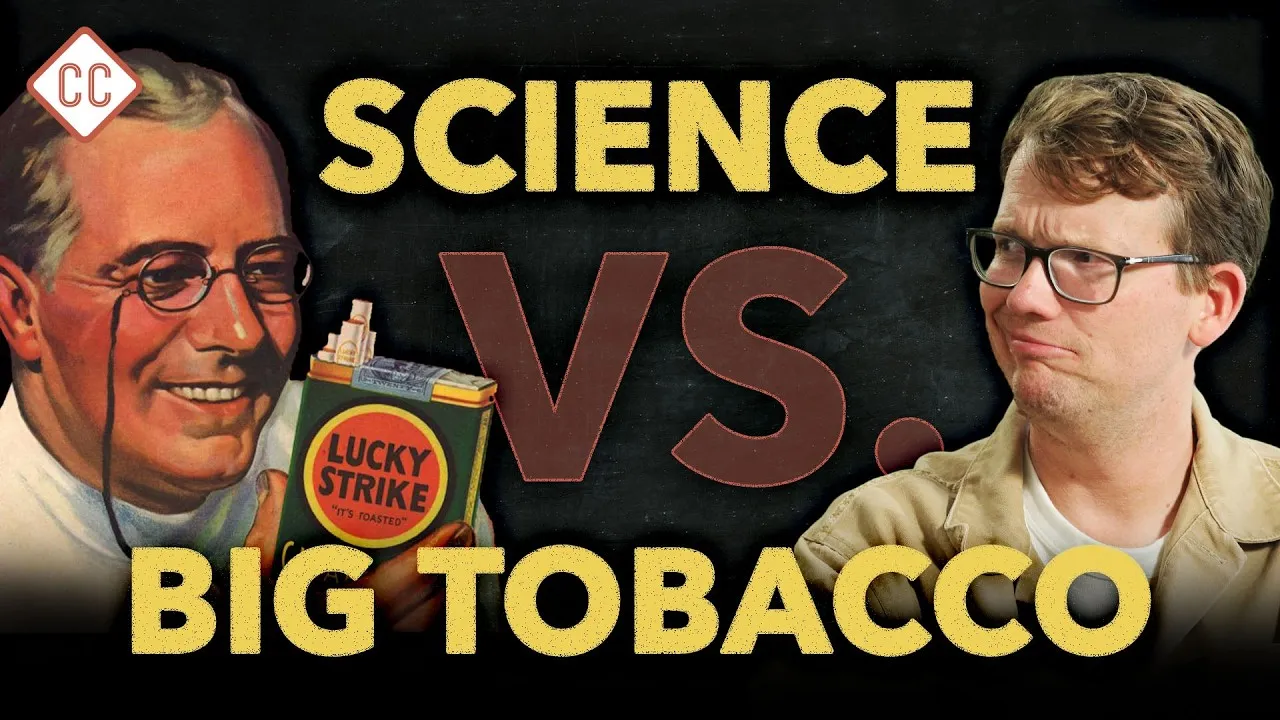
As early as the 1930s, some people suspected smoking was unhealthy. But tobacco companies advertised their cigarettes as safe and gentle. They even ran ads claiming, “More doctors smoke Camels than any other cigarette.” This statistic was gathered by giving doctors free cigarettes and then asking them what they smoked.
By the 1950s, tobacco companies knew about the growing evidence. But they were making too much money to stop. So, they changed their message. Instead of saying cigarettes were safe, they said, “We don’t know yet if cigarettes are bad for you.” This created a controversy that didn’t really exist among scientists.
In 1954, a group funded by tobacco companies, the Tobacco Industry Research Committee, claimed the link between smoking and lung cancer was not settled. They said they would research it themselves. This strategy continued for decades.
Tactics of Doubt
The tobacco industry used several tactics:
- They funded and promoted research into other causes of lung cancer.
- They attacked or ignored studies that showed smoking was harmful.
- They publicly denied that smoking was risky or addictive.
- They ran ads making smoking seem appealing.
An internal memo from a tobacco company in 1969 stated their goal: “Doubt is our product… It is the best means of competing with the ‘body of fact’ that exists in the mind of the general public.”
Why Doubt Worked
This strategy worked because it played on people’s natural tendencies. Our brains sometimes resist information that challenges our habits or beliefs. Smoking was very common, and many people, including doctors and movie stars, smoked. It was hard for some to accept that something so widespread could be so dangerous.
Also, cigarettes are addictive. When you’re addicted, you tend to look for reasons to keep doing the habit. The tobacco industry provided those reasons, even if they were false.
Turning the Tide
In the 1990s, scientists found the exact ways cigarette smoke can turn healthy cells into cancer cells. Then, in 1998, a big legal settlement made the tobacco industry pay billions for the harm they caused. This was a major turning point.
Science, Values, and Choices
Sometimes, scientific knowledge doesn’t just clash with beliefs, but also with values. Science can tell us *how* something happens, like how smoking causes cancer or how much it increases risk. But science can’t tell us *what we should do* with that knowledge.
For example, when the dangers of secondhand smoke became clear, many places banned smoking in public. People disagreed not about the science, but about whether personal freedom to smoke was more important than the right of others to breathe clean air. Science can’t answer these kinds of questions; they are up to individuals and society to decide.
Lessons for Understanding Science News
The story of smoking and lung cancer offers important lessons for how we understand science news:
1. Follow the Scientific Consensus
When most experts in a field agree on something, it means the idea has passed many tests. Trusting this agreement, or consensus, is like hiring an electrician for a wiring problem. You get better, safer results by trusting the experts who have studied the subject deeply.
Expert Note: Scientific consensus doesn’t mean every single scientist agrees on every tiny detail. It means there’s broad agreement on the main conclusions based on the available evidence.
2. Be Skeptical of Single Studies
Headlines often focus on surprising or attention-grabbing studies. But one study is just one piece of evidence. Before accepting a new scientific claim, see what other experts say about it. Consider how this one study fits with all the other evidence.
Warning: A single study rarely changes what we know for sure. Look for multiple studies and expert reviews to get a fuller picture.
3. Understand Scientific Debate
In science, “debating” an idea means openly sharing evidence and allowing others to test it. Scientists share their findings, even potential flaws, so their ideas can be challenged and improved. This is different from everyday arguments, where people might hide information.
Expert Note: When science sparks public controversy, it’s often because the findings challenge powerful interests, personal biases, or deeply held values, not because the science itself is uncertain among experts.
Conclusion
Understanding how science works helps make sense of the world. We can be critical of single studies while trusting the overall scientific process. We can appreciate that knowledge takes time to build but remain open to new evidence. By recognizing the difference between scientific consensus and manufactured doubt, we can become better at spotting reliable information and making informed decisions.
Source: What Happens When Science Clashes with the Public?: Crash Course Scientific Thinking #7 (YouTube)