Unlock the Secrets of Scientific Validation: How Peer Review Ensures Accuracy
Have you ever encountered conflicting scientific headlines and felt confused? The 2010 announcement of potential arsenic-based life on Earth, later revealed to be a misinterpretation, serves as a prime example of how science progresses through rigorous scrutiny. This article will guide you through the essential process of scientific peer review and the crucial concept of self-correction, showing how the scientific community validates new discoveries and corrects errors.
What You Will Learn
- The purpose and process of scientific peer review.
- How scientists examine and challenge published research.
- The role of replication in scientific validation.
- How scientific self-correction leads to more accurate knowledge.
- Why single studies, especially surprising ones, require further validation.
Prerequisites
No specific scientific background is required. An interest in how scientific knowledge is developed and validated is helpful.
Step 1: The Initial Discovery and Hypothesis
Scientific inquiry often begins with an observation or a hypothesis. In the case of the arsenic-based life study, researchers observed a bacterium, GFAJ-1, in Mono Lake, a harsh environment with little phosphorus and abundant arsenic. They hypothesized that this bacterium might be able to substitute arsenic for phosphorus in its fundamental molecular structures, a groundbreaking idea since arsenic is toxic and not a known building block of life.
Step 2: Experimentation and Data Collection
To test their hypothesis, the researchers designed an experiment. They placed the GFAJ-1 bacteria in a laboratory environment containing minimal phosphorus and high levels of arsenic. The observation that the bacteria survived and grew in this arsenic-rich medium led the team to believe they had found evidence supporting their hypothesis.
Step 3: Writing and Submitting the Study
Once the initial experiments were complete, the researchers documented their findings, methods, and conclusions in a scientific paper. This paper, titled “A Bacterium That Can Grow by Using Arsenic Instead of Phosphorus,” was then submitted to a scientific journal for publication. This submission marks the beginning of the formal peer review process.
Step 4: The Peer Review Process
Before a scientific paper can be published in a reputable journal, it undergoes peer review. Here’s how it works:
- Submission: The authors submit their manuscript to a journal.
- Assignment to Reviewers: The journal’s editors send the paper to several scientists who are experts in the same specific field (the “peers”). For the arsenic-based life study, these reviewers would likely be microbiologists or biochemists specializing in extremophiles or the molecular basis of life.
- Expert Evaluation: The peer reviewers critically assess the manuscript. They ask fundamental questions such as:
- Are the research methods sound and appropriate?
- Is the data collected and analyzed correctly?
- Do the conclusions drawn from the data logically follow?
- Is the study relevant to the current body of scientific knowledge?
- Does the research build upon or contradict existing findings in a meaningful way?
- Are there any potential flaws in the experimental design, sample size, or statistical analysis?
- Feedback and Revision: Reviewers provide feedback to the authors and editors. This feedback can range from suggesting minor clarifications to requesting significant revisions or even recommending rejection if the study is deemed fundamentally flawed. The goal is to improve the quality and accuracy of the research.
Expert Tip: Peer review is not about finding fault for its own sake. It’s a collaborative effort to strengthen scientific work, ensure its validity, and prevent the dissemination of inaccurate information.
Step 5: Post-Publication Scrutiny and Replication
While initial peer review is crucial, the scientific process doesn’t end with publication. Once a study is published, it becomes available to the broader scientific community, initiating a second, often more intense, phase of peer review through replication and further experimentation.
Scientists in other laboratories around the world will attempt to:
- Replicate the Results: They try to repeat the original study’s experiments exactly as described, using the same data or methodologies, to see if they arrive at the same conclusions.
- Test with New Data: They might use the same experimental design but collect entirely new sets of data to verify the findings.
- Explore Different Angles: Researchers may approach the research question from alternative perspectives or with different experimental setups to further test the validity of the original claims.
Warning: The most groundbreaking and surprising scientific claims often face the most scrutiny. Extraordinary claims require extraordinary evidence, and a single study, no matter how compelling, is rarely enough to overturn established scientific understanding.
Step 6: Self-Correction in Action: The Arsenic Study Case
In the case of the arsenic-based life study, other research teams attempted to replicate the findings. These subsequent studies revealed critical issues:
- Researchers found that the GFAJ-1 bacteria could not grow in an environment completely devoid of phosphorus.
- The original experiment’s growth medium likely contained residual amounts of phosphorus, sufficient to support the bacteria, rather than the bacteria utilizing arsenic.
- The original claim of arsenic-based life was not reproducible.
This situation highlights science’s power of self-correction. When other scientists could not reproduce the results, they published their own findings, challenging the original conclusions.
Step 7: Corrections and Retractions
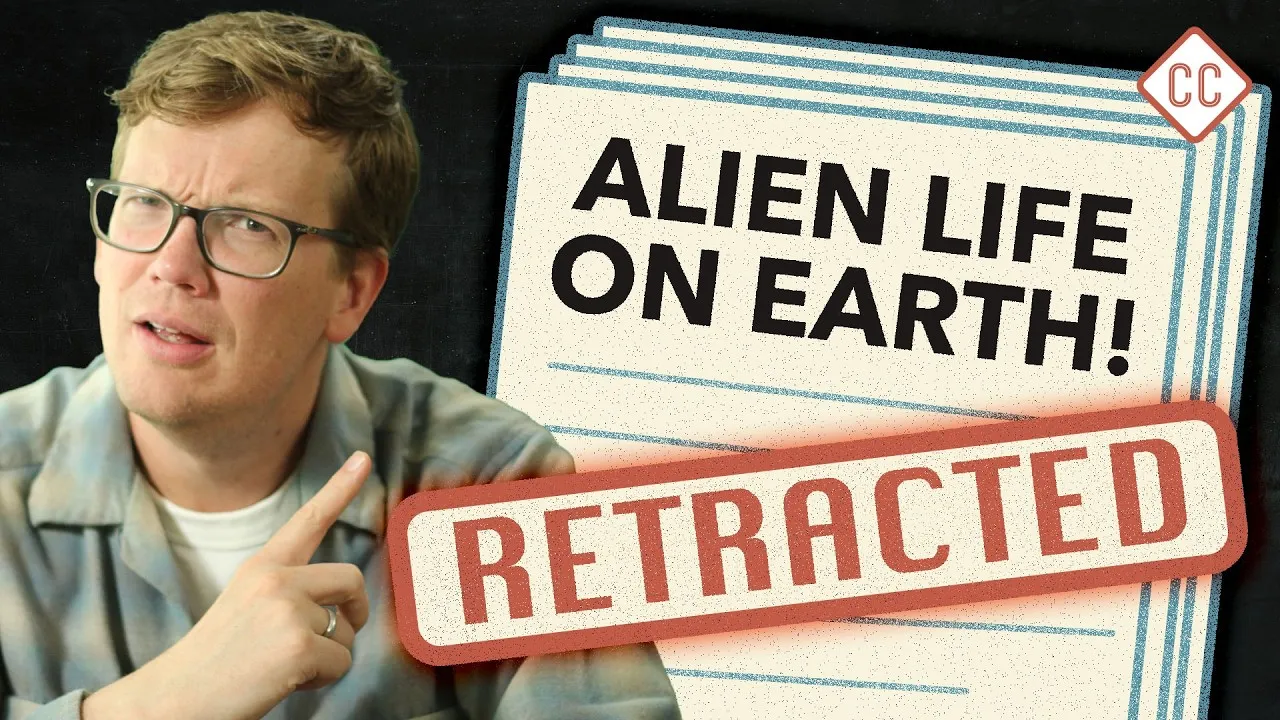
Following the failed replications, the journal Science accepted corrections from other researchers and appended them to the original study. This allowed readers to see the criticisms and the evidence contradicting the initial findings. In some cases, like this one, if errors are significant and unresolvable, a study may be officially retracted. Retraction involves adding a prominent notice to the published article, indicating that it has been withdrawn due to errors, while still keeping the original text accessible for transparency and historical record.
Expert Note: Retraction is not a failure of science but a successful outcome of its self-correcting mechanism. It ensures that the scientific record becomes more accurate over time.
Step 8: The Value of Failed Experiments and Ongoing Research
Even though the arsenic-based life study was ultimately retracted, it served a valuable purpose. It sparked important discussions about the criteria for identifying extraterrestrial or radically different life forms and underscored the necessity of rigorous validation processes. Furthermore, scientific knowledge is not built on single, isolated studies. It emerges from the collective work of a community of scientists who build upon, test, and refine previous findings over time. Both successful replications and failed attempts contribute to this cumulative understanding.
The scientific process, with its emphasis on evidence, testing, and community review, is designed to move us closer to understanding the universe, acknowledging both its successes and its limitations. This continuous cycle of questioning, experimentation, and validation is what makes science a powerful tool for discovery.
Source: Peer Review and the Quest for Truth: Crash Course Scientific Thinking #4 (YouTube)