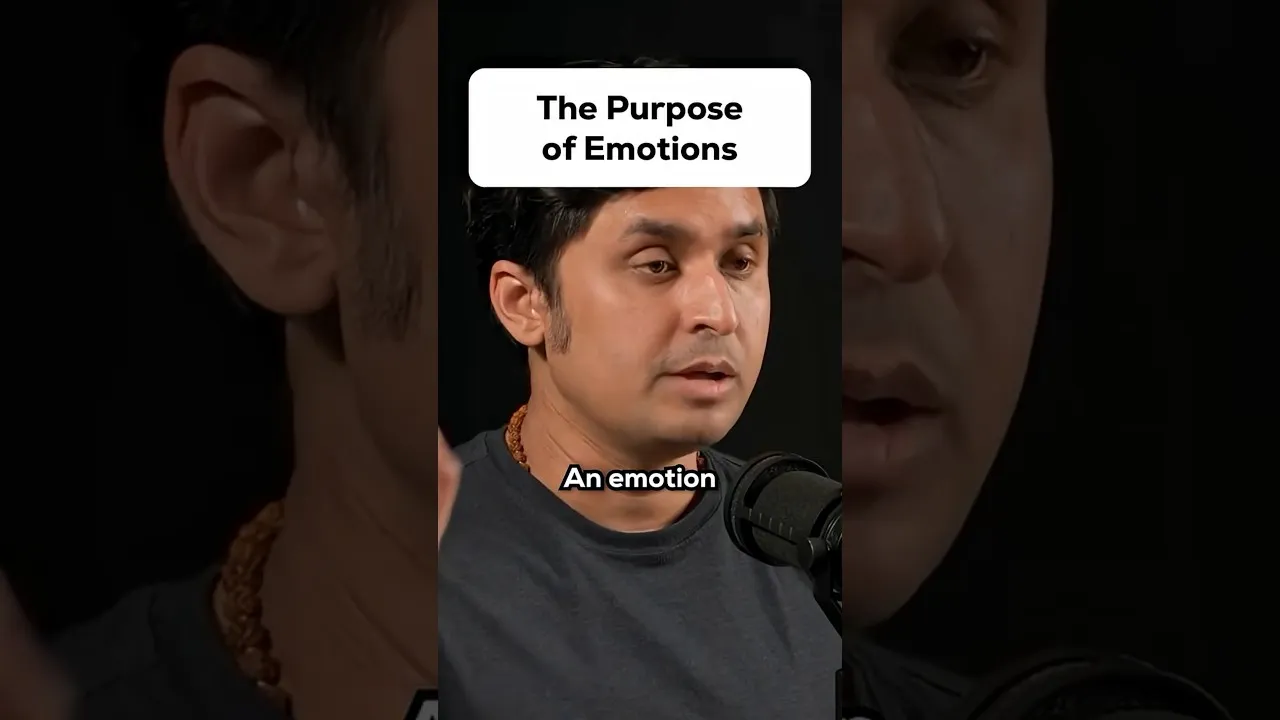
Understand Your Emotions: Key to Better Health
Emotions are powerful signals that can guide your actions and inform your decisions. From an evolutionary standpoint, emotions like fear serve as vital information and motivation. When you encounter a potential threat, your brain processes sensory input rapidly, often before you consciously understand the danger. This feeling of emotion then motivates a response, such as the urge to flee.
However, our modern lives present different challenges than those faced by our ancestors. The fears that once protected us from predators are now often triggered by everyday stressors like financial worries or job performance. These modern anxieties can lead to feelings of fear or stress that don’t have a clear, physical outlet like running away from a tiger.
Emotions as Information, Not Commands
It’s a common misconception to believe that feeling an emotion means you should let it control your behavior. Instead of letting emotions run the show, it’s more beneficial to ask what your emotions are trying to tell you. Think of emotions as messages that provide valuable insights into your needs and the environment around you.
For instance, if you feel fear, instead of just reacting, pause and consider the source of that fear. What specific situation or thought is triggering this emotion? What information is this fear trying to convey? Is it signaling a genuine threat, or is it a learned response to a less dangerous situation?
The Role of Motivation
Emotions also provide motivation, pushing you to act. Fear motivates you to protect yourself, anger might motivate you to address injustice, and joy can motivate you to seek out pleasurable experiences. Understanding this motivational aspect can help you channel emotions constructively.
For example, the motivation to escape a dangerous situation is a survival mechanism. In today’s world, this same motivational drive might push you to change a job that is causing you significant stress or to set boundaries in a relationship that is making you unhappy. It’s about recognizing the underlying drive and directing it toward a positive outcome.
Navigating Modern Stressors
The disconnect between our ancient emotional responses and modern life can be a source of distress. When emotions like anxiety or stress arise from situations that don’t require a physical fight-or-flight response, they can become chronic and detrimental to health. This is where learning to interpret emotions becomes crucial.
Instead of suppressing these feelings or being overwhelmed by them, try to identify the specific information they hold. Are you feeling anxious about a presentation? The information might be that you need to prepare more thoroughly. Are you feeling overwhelmed by your workload? The motivation might be to delegate tasks or seek support.
Expert Insights
Dr. Andrew Huberman, a neuroscientist at Stanford University, often discusses the adaptive functions of emotions. He emphasizes that emotions are not random feelings but rather sophisticated biological mechanisms that have evolved to help us survive and thrive. By understanding their purpose, we can use them as tools rather than letting them become obstacles.
Key Health Takeaways
- Emotions are evolutionary tools that provide information and motivation.
- Recognize that emotions signal needs or potential threats, but don’t always require an immediate, drastic action.
- Instead of letting emotions dictate your actions, ask yourself what information the emotion is conveying.
- Understand the motivational aspect of emotions and how to channel it constructively in modern life.
- Learn to differentiate between ancient threat responses and modern stressors to manage feelings like fear and anxiety more effectively.
Who This Information Applies To
This information is relevant to everyone. Understanding emotions can help improve mental well-being, reduce stress, and enhance decision-making for people of all ages and backgrounds. It is particularly helpful for individuals experiencing chronic stress, anxiety, or difficulty managing their reactions to challenging situations.
Disclaimer: This article is for informational purposes only and does not constitute medical advice. Always consult with a qualified healthcare provider for any health concerns or before making any decisions related to your health or treatment.
Source: The Purpose of Emotions @hubermanlab (YouTube)