Discover the Antikythera Mechanism: Humanity’s First Computer
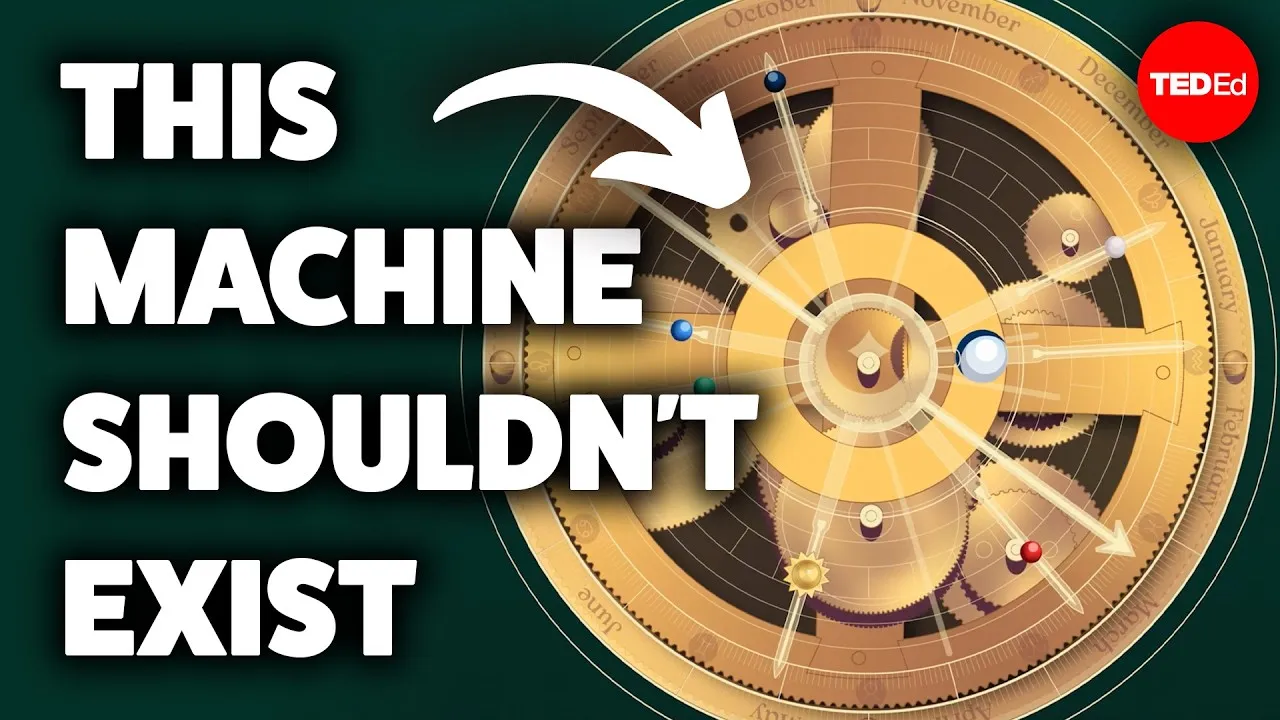
In 1900, a remarkable discovery by Greek divers off the coast of the island of Antikythera unearthed a shipwreck dating back 2,000 years. Among the corroded remnants of wood and metal lay fragments of an intricate device, its complex gear system suggesting a level of technological sophistication thought impossible for that era. This artifact, now known as the Antikythera mechanism, is not only the oldest known geared device but is widely considered to be humanity’s first analog computer.
Understanding Analog vs. Digital Computing
Before delving into the specifics of the Antikythera mechanism, it’s helpful to understand the difference between analog and digital computers. Modern devices like smartphones and laptops are digital computers. They store and process information using binary code – strings of zeros and ones – which are then translated into visual displays or audio output. In essence, they convert information into a digital format.
An analog computer, on the other hand, operates differently. Instead of binary bits, it takes signals directly from the real world – such as light or mechanical motion – and converts this information into a readable format. A classic example is a vinyl record. The grooves on the record are a physical representation, or analog, of sound waves. A record player reads these grooves and converts them back into audible sound.
How the Antikythera Mechanism Calculated Celestial Movements
The Antikythera mechanism was designed to tackle a complex problem faced by ancient Greek astronomers: predicting celestial events. While they understood the predictable movements of the Sun, Moon, and planets, performing the necessary calculations by hand to forecast events like solar eclipses was a laborious task. The mechanism was built to automate this process.
The Gears of the Cosmos
The core of the Antikythera mechanism was its intricate system of interlocking gears. By setting a dial to a specific date, the gears would engage and calculate the astronomical positions and phenomena for that day. Metallic hands would then point to the positions of the Sun, Moon, and the five planets known at the time (Mercury, Venus, Mars, Jupiter, and Saturn) relative to the twelve constellations of the zodiac.
Beyond Planetary Positions
The ingenuity of the Antikythera mechanism extended beyond simply tracking planetary movements. It incorporated several specialized functions:
- Lunar Phase Indicator: Another set of gears likely rotated a colored sphere to represent the current phase of the Moon.
- Saros Cycle Calendar: One dial was dedicated to tracking the Saros cycle, a period of approximately 6,585.3 days. This cycle is crucial for predicting the recurrence of solar and lunar eclipses, as it represents the time it takes for the Sun, Moon, and Earth to return to the same relative positions.
- Festival Timing: A separate dial was included to indicate the timing of significant Ancient Greek festivals, integrating astronomical and cultural calendars.
The Elegance of Analog Computation
What astounds researchers most about the Antikythera mechanism is the precision with which its gears were designed to simultaneously compute multiple complex astronomical rules. These rules govern not only the basic motion of celestial bodies but also their more subtle quirks, such as varying speeds and the Moon’s elliptical orbit. For instance, a specific arrangement of 13 gears was found to accurately model the Moon’s orbit, deviating from reality by only a matter of seconds.
Efficiency and Realism
The transcript highlights that analog computers, like the Antikythera mechanism, can be more efficient than their digital counterparts. A 4K movie, for example, is represented by billions of binary digits. These bits are abstract and require software to be interpreted into the visual and auditory experiences we perceive. While digital systems are reliable due to their exactness, they often require vast amounts of data and processing power, and their output is always an approximation of reality.
In contrast, an analog device like a simple weighing scale demonstrates direct conversion. The mechanical force of your weight presses a spring, which directly rotates a dial to show a number. This is a continuous input – a slightly heavier weight will move the spring more, resulting in a more precise reading. By acting continuously rather than discretely, analog computers are argued by some experts to be more faithful representations of real-world phenomena.
The Resurgence of Analog Technology
The elegant way analog computers represent real information has sparked renewed interest in this technology. Researchers are exploring how analog computing principles could be integrated with digital systems to improve efficiency. The Antikythera mechanism serves as a powerful reminder that ancient innovations can inspire modern advancements, proving that sometimes, what is old can indeed be new again.
Source: The machine that changed our understanding of human history – Max G. Levy (YouTube)