Unlock Faster Muscle Growth: Beat Your Genetics
The quest for building muscle can feel like a genetic lottery. Some individuals seem to pack on size with astonishing speed, while others struggle to see significant changes despite their best efforts. New research and expert insights reveal that while genetics play a role, they don’t dictate your ultimate potential. Understanding how your body responds to training and strategically adjusting your approach can unlock faster muscle growth, even if you believe you have less-than-ideal genetics.
Understanding Genetic Differences in Muscle Growth
The speed at which muscles grow, which muscle groups develop most prominently, and your ultimate muscle-building potential are all influenced by your genes. While some people are naturally predisposed to faster muscle hypertrophy, this doesn’t mean others are destined to remain small.
The Hyper-Responder Phenomenon
A compelling study published in 2016 shed light on these differences. Researchers had 287 participants follow the exact same full-body workout routine twice a week for six months. Using advanced imaging techniques like MRIs and DEXA scans, they observed significant variations in muscle growth. A subset of individuals, termed “hyper-responders,” grew muscle two to three times faster than average, with some experiencing up to a 30% increase in muscle size. In contrast, “low-responders” saw minimal muscle gains, and some even lost muscle mass, all with identical training protocols. Most participants fell into the “average responder” category, showing moderate gains of 5-10%.
Myostatin: The Body’s Muscle Brake
One genetic factor that influences muscle growth is myostatin. This protein acts as a natural brake, preventing muscles from growing too large. In our ancestral past, this was a survival mechanism, as excessive muscle mass requires significant energy. However, in modern times, this can limit muscle-building potential. Mutations in the myostatin gene are extremely rare, found in only a handful of people per million, leading to exceptional muscle mass from birth. While this explains some extreme cases, it doesn’t account for the widespread variations in muscle-building response seen among the general population.
Assessing and Working With Your Genetics
While you can’t change your genes, you can learn to work with them more effectively. Understanding your genetic predisposition can guide your training strategy.
Body Frame and Initial Muscle Mass
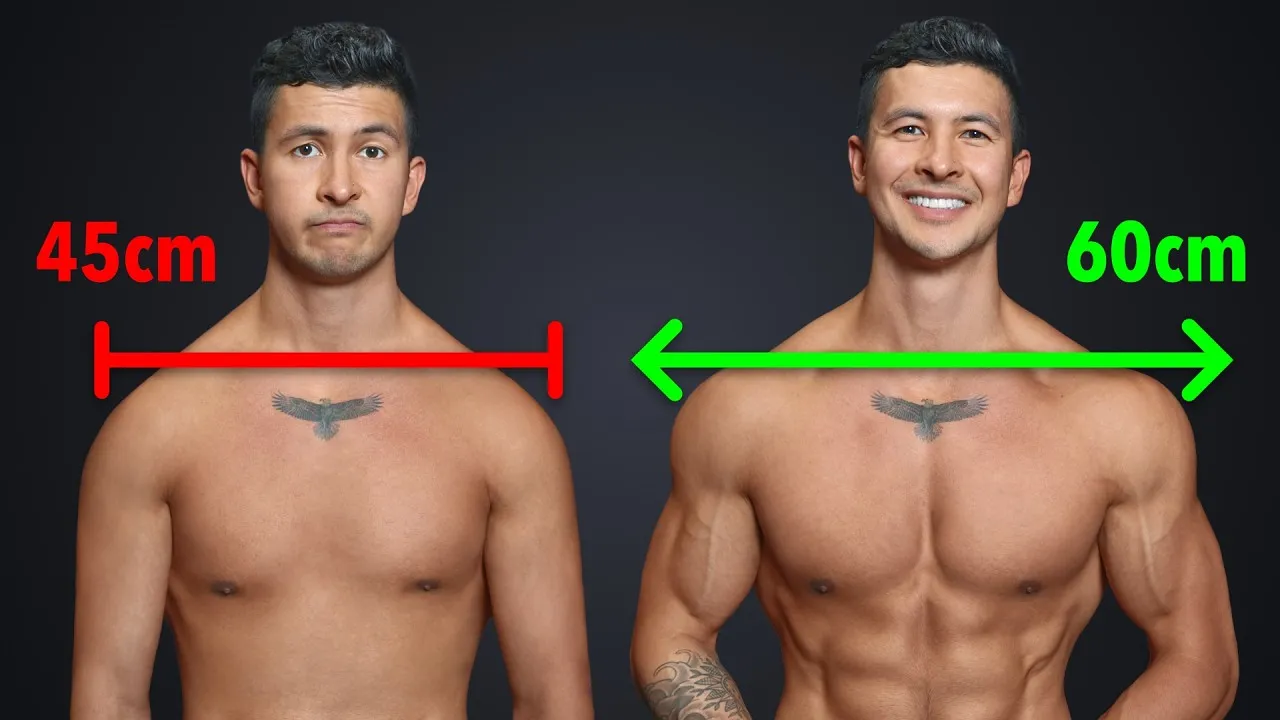
Some believe that a wider body frame indicates a genetic advantage for muscle building. Research suggests that individuals with wider frames may start with more muscle mass. However, the advantage in the *rate* of muscle growth compared to those with narrower frames is often minimal. A wider frame can also create the illusion of broader shoulders, which can be appealing aesthetically.
The First Year of Training: A Key Indicator
A more reliable indicator of your genetic response to training is how quickly you gain muscle and strength within your first year of lifting. Individuals who experience rapid progress in this initial period often have a genetic advantage. For example, individuals like natural bodybuilder Max and record-breaking lifter Ryan demonstrated significant strength and size gains within 7-8 months, far exceeding what is typical for most beginners.
Strategies to Accelerate Muscle Growth
Whether you’re an average or low responder, several strategies can significantly enhance your muscle-building progress:
1. Optimize Training Volume
Increasing training volume – the total amount of work done (sets x reps x weight) – is a powerful driver of muscle growth. Dr. Eric Helms, a renowned researcher and natural bodybuilder, notes that pushing training volume higher has consistently led to his fastest gains, even after two decades of lifting.
Recent research co-authored by Dr. Helms suggests that most individuals benefit from higher training volumes. A study involving a crossover design, where participants trained one limb with lower volume and the other with higher volume, found that the higher volume consistently led to better results for both limbs. This indicates that most people are not uniquely adapted to low-volume training.
Practical Application of Volume:
- Below 12 sets per muscle group per week: Aim to increase volume by 20-30%. This could mean adding a few extra sets to your current exercises or incorporating more exercises for each muscle group.
- 12-20 sets per muscle group per week: Gains from further volume increases are smaller. Only increase volume if your form, effort, and recovery are already optimized.
- Over 20 sets per muscle group per week: Additional volume is unlikely to provide significant benefits and may increase the risk of overtraining.
2. Implement Specialized Volume
If you have limited recovery capacity or time, focusing your training volume on specific muscle groups can yield the most visually impactful results. This is known as specialized volume.
For men, focusing on shoulders and arms can create the aesthetic V-taper often desired. For women, glutes are a common focus, though any muscle group can be targeted. For instance, dedicating 20-30 sets per week to glutes, while keeping other muscle groups at a lower maintenance volume (8-12 sets), can lead to significant visual changes.
How to Apply Specialized Volume:
- Identify 1-2 target muscle groups.
- Start these muscles at around 10 sets per week, trained at least twice weekly.
- Gradually increase by about 2 sets per week, aiming for 20-30 weekly sets, depending on your recovery.
- Reduce volume for non-target muscles to 8-12 sets per week, or even 4-6 sets for naturally strong areas to maintain them.
- Cycle this approach for a few months, then reassess or shift focus.
3. Understand Your Natural Limit: Fat-Free Mass Index (FFMI)
Your ultimate genetic potential for muscle mass can be estimated using the Fat-Free Mass Index (FFMI). This metric calculates the amount of lean muscle mass relative to your height, excluding body fat.
Dr. Eric Trexler, using extensive data, has modeled natural muscle growth potential based on FFMI:
- Average individuals: Typically start with an FFMI of 18-19 and can expect to reach a natural limit of around 22-23 FFMI. This represents a lean and athletic physique, more muscular than about 70% of the population.
- Low responders: May gain about half as much muscle, capping at an FFMI of 20-21.
- High responders: Can gain significantly more muscle, potentially exceeding 24 FFMI, placing them in the top 1% of natural athletes.
While some outliers can achieve higher FFMI scores naturally, the FFMI provides a realistic benchmark for your potential. For context, celebrities like Henry Cavill and the Rock have FFMI scores estimated in the mid-to-high 20s, indicating elite natural muscularity.
Beyond Genetics: The Controllable Factors
Research by Zach Robinson suggests that genetics explain only a portion of the differences in muscle growth observed. Crucial, controllable factors often play a larger role:
- Sleep: Essential for muscle repair and hormone regulation.
- Nutrition: Adequate protein intake and sufficient calories are vital for muscle synthesis.
- Training Effort: Consistent intensity and proper form are key to stimulating muscle growth.
Many individuals who believe they have poor genetics are actually held back by suboptimal training plans, poor nutrition, or insufficient recovery. By focusing on these controllable elements, you can often unlock significant progress, regardless of your genetic starting point.
Key Health Takeaways
- Genetics influence muscle growth speed and potential, but don’t limit you entirely. Understand that hyper-responders exist, but strategies can help others catch up.
- Optimize training volume: Most people benefit from increasing their weekly sets per muscle group, especially if currently performing fewer than 12.
- Utilize specialized volume: Focus your training efforts on 1-2 key muscle groups for the most visually impactful results.
- Assess your potential with FFMI: The Fat-Free Mass Index provides a realistic estimate of your natural muscle-building limit.
- Prioritize controllable factors: Sleep, nutrition, and training effort are critical for maximizing muscle growth and often have a greater impact than genetics alone.
Disclaimer: This article is for informational purposes only and does not constitute medical advice. Always consult with a qualified healthcare professional or certified personal trainer before making any changes to your diet, exercise routine, or health practices. They can help you create a personalized plan that is safe and effective for your individual needs and circumstances.
Source: Why Some Guys Build Muscle 3x Faster (How You Can Too) (YouTube)