Unlock Your Best Year: 9 Exercises You Need Now
As a new year dawns, many of us resolve to improve our fitness. But are you focusing on the exercises that will truly pay dividends for years to come? This article delves into a selection of powerful, often overlooked movements that can significantly enhance your strength, mobility, and overall physical well-being. From foundational hangs to dynamic push-ups, these exercises are designed to address common weaknesses and build a resilient, capable body.
The Power of Hanging and Core Strength
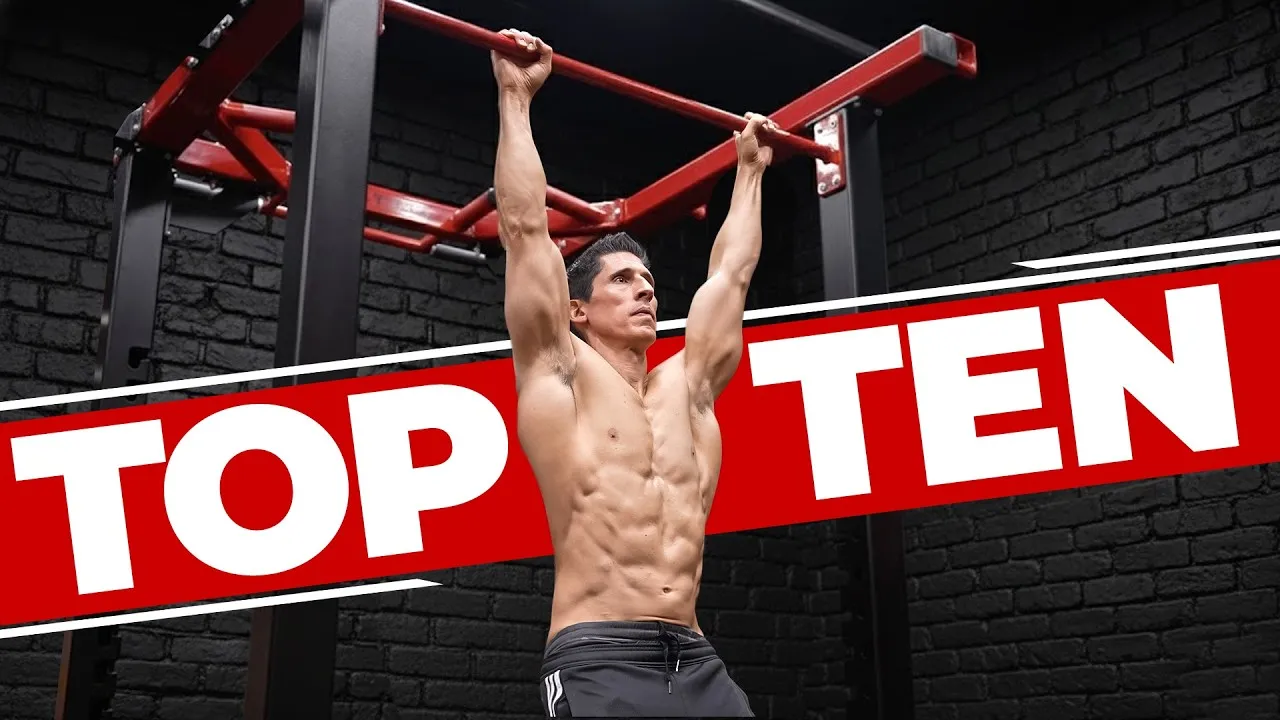
We begin with a simple yet profoundly effective exercise: the bar hang. This fundamental movement, recommended for its extensive benefits since around 2014, involves simply hanging from a bar for an extended period. Its advantages are manifold:
- Core Activation: It engages and strengthens your core muscles, providing a stable foundation for all movement.
- Shoulder Mobility: Achieving and maintaining a hang requires and improves your ability to move your arms overhead, crucial for healthy shoulder function.
- Thoracic Extension: This exercise actively promotes extension in the thoracic spine (the area between your neck and rib cage), counteracting the rounded posture common in modern life and improving spinal health.
The goal for men is to work towards a 2-minute hang, while women can aim for 1 minute and 30 seconds. Consistency is key, and even daily practice can yield significant results.
Strengthening Hips and Fortifying the Lower Back
Next, we move to the ground for the side plank, a variation that offers more challenge and benefit than a traditional plank. The true power of the side plank lies not just in core stability, but in its ability to strengthen the gluteus medius, a key hip muscle. To maximize these benefits, the exercise should progress beyond simply holding a static position. By lifting the top leg off the ground, you force the bottom hip to work harder, promoting hip abduction and strengthening the gluteus medius. This, in turn, fortifies the lower back, potentially preventing common bouts of back pain.
The Versatile Lunge for Knee Health
For those who experience knee pain with traditional leg training, the lunge, particularly the reverse lunge, offers a gentler yet highly effective alternative. Stepping backward instead of forward can significantly reduce stress on the knees. The torso’s position influences muscle engagement: an upright torso targets the quadriceps more, while a slight forward lean emphasizes the glutes. For a comprehensive approach, consider a three-way lunge, incorporating forward, side, and quarter-turn steps. This multi-dimensional training works muscles in all planes of motion, building robust leg strength without exacerbating knee issues, even when adding external weight.
Direct Arm Training: Bicep Curls with a Twist
Contrary to the idea that compound exercises alone suffice, direct arm training remains crucial for optimal development. The humble bicep curl, when performed with strategic intensity, can yield impressive results. Performing curls with both dumbbells simultaneously challenges the core more, while single-arm curls allow for greater focus and potentially heavier loads per arm. To push past plateaus, incorporate ‘cheat reps’ at the end of a set: use a slight momentum to lift the weight, then control the descent slowly (eccentric contraction). This overload can stimulate muscle growth effectively.
Shoulder-Friendly Pressing Variations
Shoulder pain can be a significant barrier to chest and overhead pressing exercises. However, modifications can make these movements accessible again. The dumbbell elevator press for the chest involves pressing one dumbbell up at a time, with the descending dumbbell meeting the ascending one. This controlled, slower movement enhances shoulder joint stability and keeps the supporting arm under tension for longer, providing a beneficial stretch and strengthening stimulus without aggravating pain. Similarly, for overhead pressing, performing with a single dumbbell allows for better joint stacking (wrist over elbow over shoulder), creating a more stable and pain-free pressing position. This variation also encourages pressing in the scapular plane (slightly forward of the body), a more natural and safer angle for the shoulder joint.
Carries: A Functional Strength and Conditioning Powerhouse
Don’t underestimate the power of carrying exercises for overall conditioning and strength. Simple dumbbell carries, often overlooked, challenge grip strength, forearm endurance, upper torso muscles (like the traps), and lower body stability with every step. They also serve as a mental toughness test. A recommended starting point is to carry half your body weight in each hand for a set number of steps (e.g., 50) without dropping the weights. Variations like one-arm overhead carries or farmer’s walks can further enhance the challenge and target different aspects of strength and posture.
Dynamic Push-Ups for Full-Body Engagement
The classic push-up can be elevated beyond a simple up-and-down motion. By altering the body’s position, such as bringing the feet closer to the hands (crawl position), you increase the load on the upper body. For added dynamism and mobility work, the Spider-Man push-up is exceptional. As you lower into a push-up, step one foot forward towards your hand, stretching the hip flexors and adductors. As you push up, crawl forward to the other side. This variation engages the core, enhances hip mobility, and provides a more challenging upper-body workout.
Band Work: Lateral Walks and Thoracic Extension
Resistance bands are versatile tools for building strength and mobility. The X-press lateral walk, using a band wrapped around the feet and crossed over the shins, challenges hip abduction strength. By holding the band in a rack position on your shoulders and performing overhead presses with each lateral step, you not only work the hips but also reinforce thoracic extension, benefiting posture. This exercise is excellent for targeting often-neglected lateral hip strength and can serve as a warm-up or finisher.
Face Pulls and Pull-Ups: Upper Body Essentials
Finally, no year-round fitness plan is complete without face pulls and pull-ups. Face pulls are crucial for shoulder health and posture, strengthening the muscles of the upper back and rear shoulders. The pull-up, a cornerstone of functional upper-body strength, is a non-negotiable exercise, even required by institutions like the military. The goal for men is 10-15 unbroken pull-ups, and for women, 5-7 is a strong starting point, with advanced individuals achieving 15-20. Tutorials for both exercises are widely available to ensure proper form.
Incorporating these exercises into your routine can lead to significant improvements in strength, mobility, and resilience, setting you up for a healthier and more capable year ahead.
Disclaimer: This article is for informational purposes only and does not constitute medical advice. Always consult with a qualified healthcare provider before beginning any new exercise program or making changes to your existing routine.
Source: The 10 Best Exercises You DIDN’T Do Last Year! (BUT NEED TO) (YouTube)