Move Beyond Routine: Discover the Power of Playful Exploration
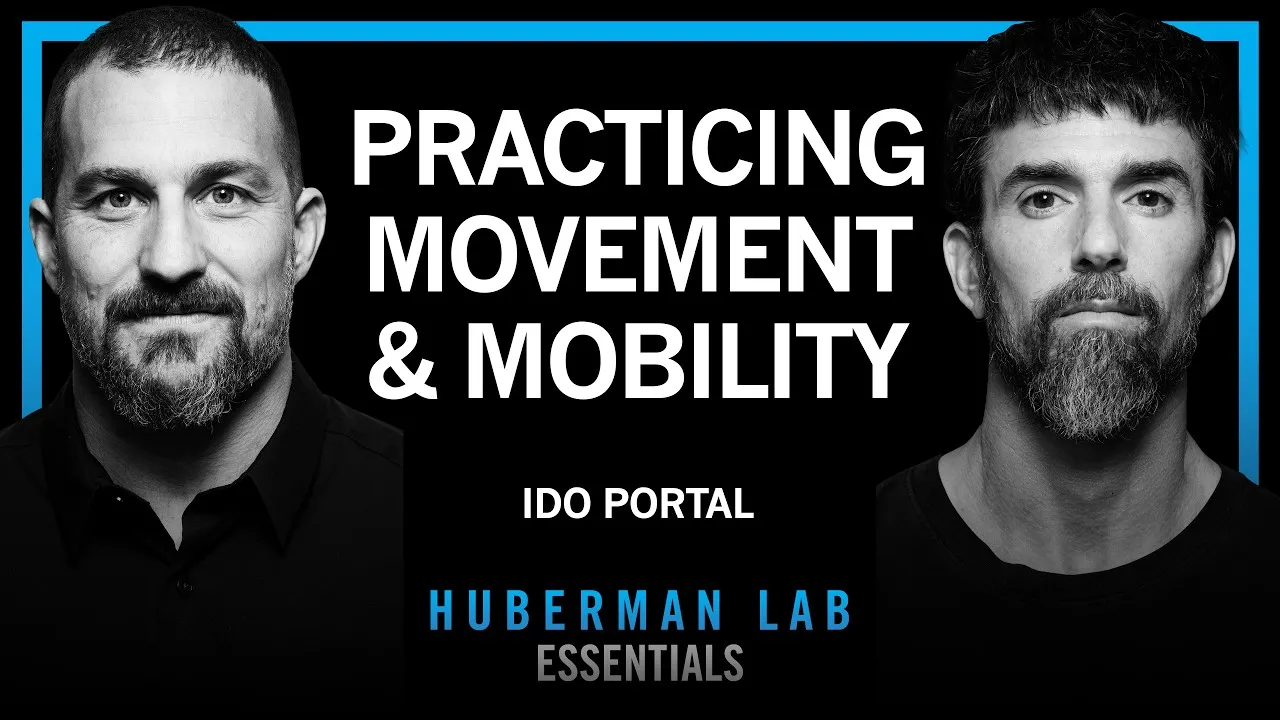
In a world increasingly focused on rigid exercise routines, a revolutionary approach to movement emphasizes playfulness, exploration, and a deeper connection with our bodies. This philosophy, championed by movement expert Ido Portal and discussed on Huberman Lab Essentials, suggests that true health and performance benefits stem not just from structured workouts, but from embracing a decentralized, open-ended practice that engages our innate curiosity and adaptability.
The Essence of Movement: An Open System
Ido Portal introduces movement practice as an “open system” with no fixed center, inviting individuals to engage from any starting point. This could be through physical awareness, playfulness, or even the simple acknowledgment of being alive in a moving body. The core idea is to cultivate awareness of motion – not just physical, but also the movement of thoughts, emotions, and life itself. This practice of mindful observation can provide a sanctuary from life’s challenges and unlock hidden potential, freshness, and strength.
The Feldenkrais Perspective: Body, Nervous System, and Environment
Portal draws inspiration from the work of Moshe Feldenkrais, who viewed the body through three interconnected elements: the nervous system, the mechanical system (muscles, skeleton), and the environment. Feldenkrais highlighted how the nervous system constantly receives and processes information from both internal and external sources. Movement practice, in this context, helps differentiate these signals, fostering a clearer understanding of self and surroundings. By paying attention to both internal and external motion – and stillness – we can begin to recognize the dynamic, ever-changing nature of our existence.
Practical Approaches to Movement Practice
Incorporating movement into daily life doesn’t require a dedicated gym session. Portal shares pragmatic examples, such as navigating crowded city streets with the intention of avoiding contact, turning a simple walk into a dynamic practice. Even seemingly static environments can be adapted; rocking on a chair or making seating more dynamic can introduce subtle yet beneficial movement. The key is to maintain a sense of freshness and avoid staleness, much like flowing water that never stands still.
Beyond Traditional Categories: Domains of Movement
While common exercise categories like strength, speed, and flexibility are useful, Portal suggests looking beyond them. He discusses concepts like “unique postures” that can manifest in thought, emotion, and movement. If unaddressed, these habitual postures can limit our potential. True freedom, he argues, comes from working with these postures to move towards a “postureless” way of being, where techniques become secondary to the emergent magic of movement itself. This leads to a “phase change,” a rare and profound jump in capability.
The Role of Vision and Sensory Awareness
Our visual system offers a powerful entry point into movement practice. The ability to shift between narrow focus and panoramic awareness, much like adjusting the aperture of a camera, has profound implications. A broad, peripheral gaze, facilitated by the magnocellular pathway, allows for faster reaction times and a more encompassing awareness, crucial for activities like driving or navigating dynamic environments. Conversely, focused vision is essential for detailed tasks. Portal emphasizes that training eye movement and exploring these different visual states can significantly impact our cognitive processes and physical coordination. Even subtle adjustments, like chin and eyebrow placement, can influence our state of alertness and perception.
Integrating Hearing into Movement
Similarly, auditory awareness plays a vital role. The placement of the head and ears, and even the shape of the ear, can influence how we perceive sound and, consequently, how we move. Understanding how the brain processes interaural time differences to localize sound highlights the intricate connection between our sensory architecture and our experience of the world. Exploring different ways of listening and orienting ourselves audibly can add another layer of richness to movement practice.
Embracing Variability and Virtuosity
Mastery in any field, including movement, is often followed by a higher tier: virtuosity. This is where practitioners intentionally invite variability and chance back into their practice, using them as opportunities for genuine innovation. Unlike rigid adherence to technique, virtuosity embraces adaptability. As Portal notes, the goal isn’t to point at the moon but to avoid fixating on the finger pointing at it. This freedom allows for a deeper engagement with the process, rather than just the outcome.
Challenging Linear Exercises: The Need for Play
Traditional, linear exercises like weightlifting, running, or even contemporary yoga, while beneficial, can become overly prescriptive. Portal critiques the “icing” industry that focuses on superficial additions without addressing the fundamental “cake” of dynamic, integrated movement. He points out that modern yoga, for instance, has become highly linear, diverging from its more rounded, natural origins seen in traditional dances and martial arts. The beauty of nature and animal movement, he suggests, offers a model for more fluid, efficient, and less constrained motion.
The Power of Playfulness and Experimentation
At the heart of Portal’s philosophy is the concept of playfulness and experimentation. This is what drives evolution and allows for the development of new skills and possibilities. Instead of seeking a single, “correct” way to move, individuals are encouraged to explore the “friction and challenge” at the edges of their capabilities. This approach fosters adaptability and resilience, moving away from rigid, goal-oriented actions towards a more exploratory mindset. The goal is not to achieve a specific outcome, but to engage in the process of discovery.
Navigating Proximity and Reactivity
The practice extends to social and interpersonal dynamics. Portal discusses the importance of exploring proximity and touch, areas often fraught with anxiety and reactivity in modern society. By intentionally engaging with scenarios that challenge our personal space boundaries, we can learn to manage our reactivity, leading to clearer thinking and improved performance. This involves disarming martial or defensive responses and learning to be present and adaptable in various forms of interaction, from playful games to more intimate connections.
Making Movement Your Own
Ultimately, the most effective movement practice is one that is deeply personal. While scientific insights and expert guidance are valuable, they serve as starting points for individual exploration. Portal stresses that individuals must “make it their own” through diligent practice, experimentation with various stimuli (heat, cold, light, movement, awareness), and honest self-inquiry. This personal investigation, rather than passively accepting information as gospel, is the key to unlocking lasting benefits and genuine strength.
Disclaimer: This article is for informational purposes only and does not constitute medical advice. Always consult with a qualified healthcare professional before making any decisions related to your health or treatment.
Source: Essentials: The Science & Practice of Movement | Ido Portal (YouTube)