US Funds War Machine With Chinese Debt
In a complex and potentially precarious geopolitical and economic dance, the United States finds itself in a position of borrowing from China, its primary geopolitical adversary, to fund the very military buildup designed to counter China’s growing influence. This strategy, which involves utilizing Chinese components in the manufacturing of weapons aimed at confronting China, raises significant questions about national security and economic resilience.
The Paradox of Funding Defense
The core of this strategic paradox lies in the flow of capital. While the U.S. government issues debt to finance its defense expenditures, a substantial portion of this debt, particularly U.S. Treasury bonds, is held by foreign entities, including China. This means that American taxpayers are effectively paying interest on debt that has been purchased by a nation identified as a strategic competitor. Furthermore, the supply chains for many modern defense systems are globalized, and in some cases, components manufactured in China are incorporated into U.S. military hardware. This creates a scenario where U.S. defense spending, intended to project power and deter aggression, indirectly supports Chinese manufacturing and financial markets.
Market Volatility and Uncertainty
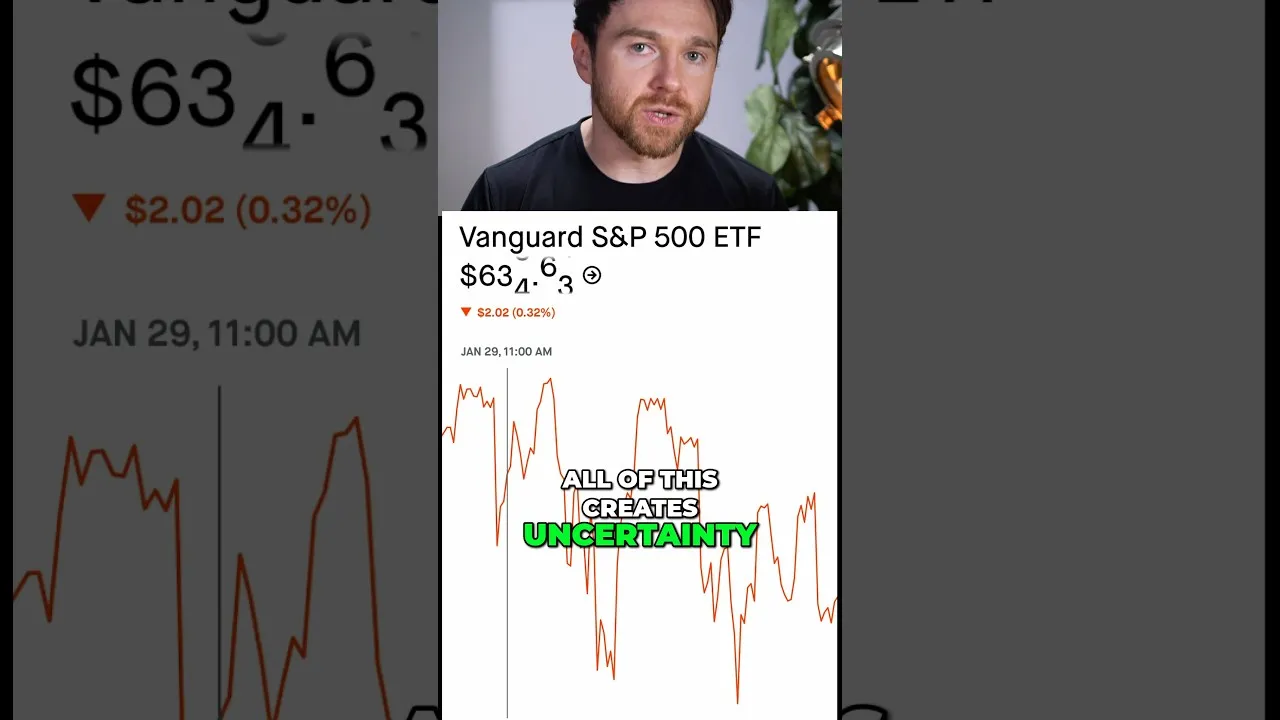
This intricate geopolitical dynamic inevitably breeds market uncertainty. Investors are grappling with the implications of escalating U.S.-China tensions, supply chain vulnerabilities, and the broader economic consequences of a potential decoupling or increased trade friction. This uncertainty is manifesting as increased volatility across various asset classes.
“All of this creates uncertainty, right? And that’s what we’re seeing in the markets. That’s volatility, especially in markets that are supposed to be stable in times like this, which is gold.”
While traditional safe-haven assets like gold are expected to perform well during times of geopolitical stress, the transcript notes that these markets are also experiencing significant fluctuations. This suggests that the current environment is characterized by a high degree of unpredictability, where even traditional safe havens are subject to sharp price swings.
Front-Running Volatility
The transcript highlights a key aspect of modern financial markets: the ability of sophisticated players to capitalize on anticipated volatility. Those with access to advanced information, predictive analytics, or superior trading infrastructure can identify potential market movements before they occur. This allows them to “front-run” the volatility, positioning their portfolios to profit from the price swings that catch less informed investors off guard.
This phenomenon underscores the increasing complexity of market dynamics, where information asymmetry and algorithmic trading play crucial roles. For the average investor, this can create a challenging environment, as market movements may appear erratic or driven by factors that are not immediately apparent.
What Investors Should Know
- Geopolitical Risk Premium: The ongoing strategic competition between the U.S. and China, coupled with the funding paradox, injects a persistent geopolitical risk premium into financial markets. Investors should be aware that global political developments can have a significant and immediate impact on asset prices.
- Supply Chain Diversification: The reliance on components from geopolitical rivals exposes businesses and economies to potential disruptions. Companies and investors may need to consider strategies for diversifying supply chains to mitigate these risks.
- Market Volatility: Expect continued volatility, particularly in sectors and assets that are sensitive to geopolitical developments and trade relations. This includes technology, defense, commodities, and currency markets.
- Information Advantage: The ability to anticipate and react to market movements is increasingly critical. Investors who rely on traditional analysis may find it challenging to keep pace with rapid shifts driven by real-time information and algorithmic trading.
Long-Term Implications
The long-term implications of this U.S. borrowing strategy from China are multifaceted. Economically, it could lead to increased interest payments on U.S. debt, potentially straining the national budget. It also raises concerns about China’s leverage over the U.S. economy and its ability to influence global financial markets. Geopolitically, it highlights the challenges of maintaining economic interdependence while simultaneously engaging in strategic competition. The U.S. may face pressure to reduce its reliance on Chinese financing and components, potentially leading to shifts in global trade patterns and investment flows. This could accelerate trends such as reshoring, near-shoring, and the formation of alternative economic blocs.
For investors, this environment necessitates a strategic approach that accounts for geopolitical risks, supply chain resilience, and the increasing speed of market reactions. Diversification across geographies and asset classes, coupled with a thorough understanding of global macroeconomic trends, will be crucial for navigating the complexities of an interconnected yet increasingly competitive world economy.
Source: Borrowing From China to Compete With China (YouTube)