Yoga for Stress Relief: Naturally Lower Cortisol Levels
In our fast-paced world, stress has become an unwelcome constant for many. Chronic stress can lead to elevated levels of the hormone cortisol, which, over time, can negatively impact our health. Fortunately, practices like yoga offer a natural and effective way to manage stress and reduce cortisol. This article explores a specific yoga sequence designed to help you find calm and lower stress hormone levels.
Understanding Cortisol and Stress
Cortisol is a vital hormone produced by the adrenal glands. It plays a crucial role in regulating various bodily functions, including metabolism, immune response, and blood pressure. However, when we experience chronic stress, our bodies continuously release cortisol. Sustained high levels of cortisol can contribute to a range of health issues, such as weight gain, sleep disturbances, anxiety, and impaired cognitive function.
The Power of Yoga for Stress Reduction
Yoga, an ancient practice that combines physical postures (asanas), breathing techniques (pranayama), and meditation, has been scientifically recognized for its ability to reduce stress and promote relaxation. By engaging in mindful movement and controlled breathing, yoga helps to calm the nervous system, lower heart rate, and decrease the production of stress hormones like cortisol.
A Natural Approach to Lowering Cortisol: A Yoga Sequence
This yoga practice, inspired by Adriene Mishler of Yoga With Adriene, focuses on slow, deliberate movements and breathwork to promote a state of relaxation and reduce cortisol. The key is to approach the practice with intention, allowing yourself to slow down and tune into your body’s needs.
1. Setting the Foundation: Comfortable Seating and Breath Awareness
Begin by finding a comfortable seated position. You can sit on a yoga mat, a blanket, or a block to support your spine. The goal is to create a stable and relaxed posture. Gently close your eyes or soften your gaze. Take a few moments to simply notice your breath without trying to change it. Observe how you feel in your body and mind. This initial check-in is crucial for establishing a connection with yourself.
Next, gently deepen your breath. With each inhale, feel your belly expand, and with each exhale, allow your shoulders to relax. This conscious breathing helps to signal to your body that it’s safe to release tension. Remember, the practice is for you; if all you do is focus on your breath, that is perfectly beneficial.
2. Alternate Nostril Breathing (Nadi Shodhana Pranayama)
Alternate nostril breathing is a powerful pranayama technique known for its balancing and calming effects. It is believed to harmonize the left and right hemispheres of the brain, promoting mental clarity and reducing anxiety.
To practice:
- Sit tall with your spine elongated.
- Bring your right thumb to your right nostril and your right ring finger to your left nostril.
- Inhale through your left nostril.
- At the top of the inhale, pause briefly, then close your left nostril with your ring finger.
- Exhale through your right nostril.
- Inhale through your right nostril.
- Pause briefly, then close your right nostril with your thumb.
- Exhale through your left nostril.
- Continue this cycle, maintaining a slow, steady breath.
Focus on the sensation of the breath and the gentle sealing of the nostrils. If you are new to this, you can find more detailed step-by-step instructions in dedicated pranayama resources. This practice is excellent for calming the mind and preparing the body for deeper relaxation.
3. Gentle Warm-up: Cat-Cow and Calf Stretches
Transition to a tabletop position on your hands and knees. Ensure your wrists are stacked under your shoulders and your knees under your hips. Gently engage your core by drawing your navel towards your spine to support your lower back.
- Cat-Cow Pose: Inhale as you drop your belly, open your chest, and gaze slightly upward. Exhale as you round your spine, tuck your chin to your chest, and press the mat away. Move fluidly with your breath, noticing the contrasting sensations in your front and back body.
- Calf Stretches: From tabletop, curl your toes under and gently rock forward and back, stretching your calves. You can do this one leg at a time, sending one leg back while keeping the other knee on the mat, then switching sides. This simple movement can release tension in the lower legs, which often hold stress.
4. Core Engagement and Hip Stability
From tabletop, curl your toes under. Inhale, and as you exhale, engage your core and send one leg back, lifting the foot off the ground. Aim to keep your hips level. Inhale to extend the leg, and exhale to draw the knee towards your nose, rounding your spine. Repeat this a few times on each side. This sequence builds core strength and stability, which can help manage physical tension associated with stress.
5. Releasing Tension: Child’s Pose and Modified Seated Forward Fold
After the core work, return to a Child’s Pose by sending your hips back towards your heels, resting your forehead on the mat. Allow your arms to extend forward or rest alongside your body. Breathe deeply into your back body, releasing any remaining tension.
Next, come to a seated position with your legs extended in front of you. Inhale and reach your arms overhead. As you exhale, hinge at your hips and fold forward, draping your torso over your thighs. This modified seated forward fold (Paschimottanasana variation) can be deeply relaxing for the low back and hamstrings. Allow your head and neck to be heavy. If it feels good, you can exhale with a sigh or through pursed lips to release more tension.
6. Spinal Mobility and Nervous System Regulation: Twists
Come to a comfortable cross-legged seat. Place your fingertips on your shoulders and gently circle your elbows forward and then back. This movement opens up the chest and shoulders.
From here, you can move into gentle spinal twists. Bring your elbows in line with your shoulders. Slowly twist your torso to the left, bringing your gaze, nose, and heart in alignment. Return to center and twist to the right. Continue to move rhythmically with your breath. These twists can help to release tension stored in the spine and support the nervous system.
7. Deep Relaxation: Reclined Twist and Bridge Pose
Lie down on your back. Extend your arms out to the sides in a ‘T’ shape. Hug your knees into your chest, and then allow your knees to fall to one side for a gentle reclined twist. Hold for a few breaths, feeling a release along your spine. Return to center and repeat on the other side.
Follow with a gentle Bridge Pose (Setu Bandhasana). With your feet planted on the floor, inhale and lift your hips off the mat, engaging your glutes and back. You can gently slide your shoulder blades underneath you to open the chest. Hold for a few breaths, focusing on your breath, then slowly lower back down. This pose can help to counteract the effects of prolonged sitting and promote a sense of openness.
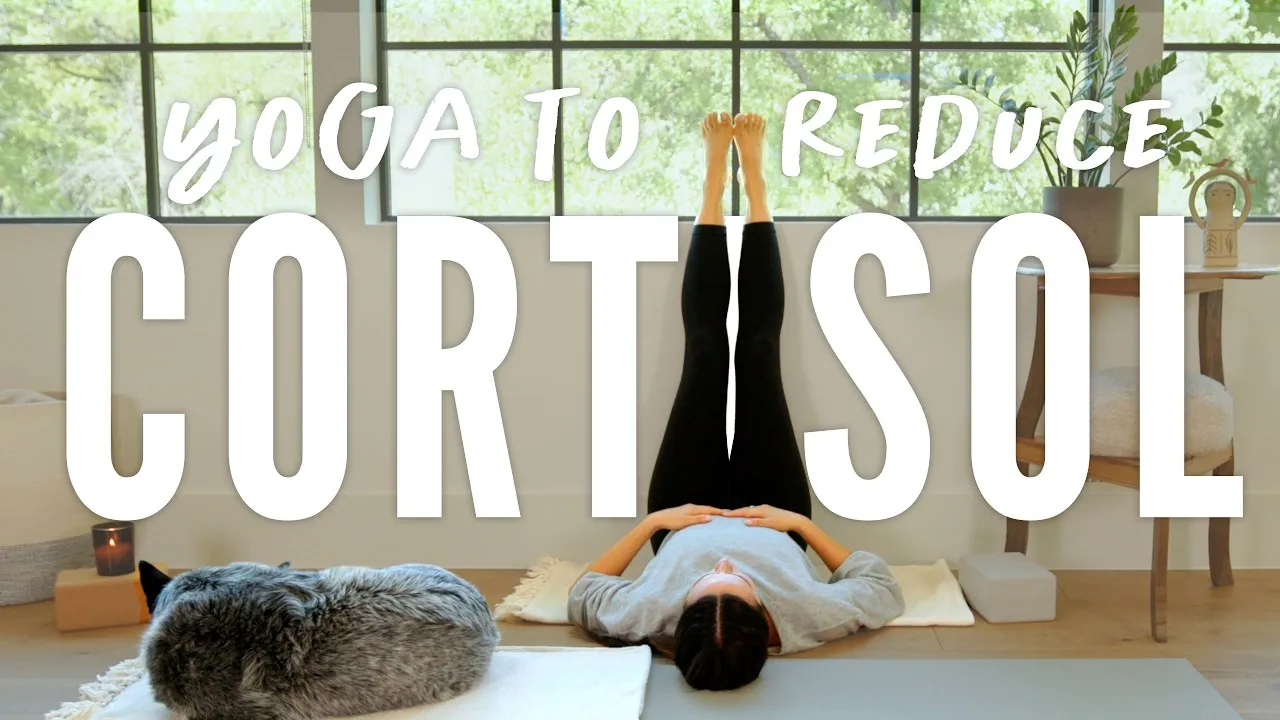
8. The Ultimate Calming Pose: Legs Up the Wall (Viparita Karani)
The practice culminates with Legs Up the Wall pose, a restorative inversion highly effective for calming the nervous system and reducing cortisol. If you have a wall available, place a folded blanket or pillow near it and lie down on your back, bringing your hips as close to the wall as comfortable. Extend your legs up the wall.
If a wall is not accessible, you can practice Waterfall pose by lying on your back and lifting your legs towards the ceiling, perhaps using a block under your sacrum for support. The key is to elevate your legs above your heart.
Rest in this pose for several minutes, allowing your body to relax completely. Close your eyes, rest your hands on your body, and simply breathe. This inversion promotes circulation, calms the mind, and is profoundly stress-reducing.
Concluding the Practice
To come out of Legs Up the Wall, slowly bend your knees and gently roll to one side before coming back to a comfortable seated position. Bring your palms together at your heart center. Take a moment to acknowledge the time you’ve dedicated to yourself and the benefits you’ve cultivated. Close your eyes, feel the warmth of your palms, and notice where you are in your body and mind. Express gratitude for your practice.
Key Health Takeaways
- Mindful Breathing: Conscious breathing techniques, like deep diaphragmatic breaths and alternate nostril breathing, are powerful tools for calming the nervous system and reducing stress hormones.
- Slow, Deliberate Movement: Yoga poses, when practiced slowly and with awareness, help to release physical tension and promote mental relaxation.
- Restorative Poses: Poses like Child’s Pose and Legs Up the Wall are crucial for deep relaxation and can significantly lower cortisol levels.
- Consistency is Key: Regular practice of yoga and mindfulness can lead to sustained improvements in stress management and overall well-being.
- Listen to Your Body: Adapt the practice to your individual needs and physical condition. There is no one-size-fits-all approach to yoga.
Who Can Benefit?
This yoga practice is suitable for most individuals looking to manage stress and reduce cortisol levels. It is particularly beneficial for those experiencing symptoms of chronic stress, anxiety, or burnout. Modifications can be made to accommodate different fitness levels and physical limitations. Always listen to your body and consult with a healthcare professional if you have any pre-existing health conditions or concerns.
Disclaimer
This article provides general information and is not a substitute for professional medical advice. Always consult with your doctor or a qualified healthcare provider before beginning any new exercise program, especially if you have any health concerns. The yoga practices described are intended for educational purposes and should be performed with proper guidance and awareness.
Source: Are You Stressed Out? Reduce Cortisol Naturally With This Yoga Practice (YouTube)