Yoga’s Sensory Reset: Reconnect With Your Body
In our fast-paced world, it’s easy to become disconnected from our physical selves. Yoga, however, offers a powerful pathway back to embodied awareness. A recent practice led by Adriene Mishler, known for her accessible “Yoga With Adriene” YouTube channel, emphasizes the profound benefits of tuning into our senses. This practice, designed as a return to self, encourages participants to deeply feel their physical experience, fostering a sense of presence and calm.
Finding Stillness in the Senses
The practice begins in a comfortable seated position, whether on the floor or in a chair. The initial invitation is simple yet profound: to simply notice. Participants are encouraged to observe the sensations in their body – the feeling of the ground or chair beneath them, the temperature of the air, any subtle sounds or smells. This act of non-judgmental observation is the first step in returning to the present moment.
“Just allowing yourself to notice and observe,” Mishler explains. “You might notice the temperature. You might notice the sensation of your body against the earth or your chair. You may observe some sounds. You might notice some smell. Subtle scent in the air.”
The practice gently guides participants to lengthen their spine and relax their shoulders, acknowledging that slowing down can be challenging but offering support throughout. This deliberate act of stillness creates space for a deeper connection with oneself.
The Breath as an Anchor
Once a sense of grounding is established, attention shifts to the breath. Instead of forcing a specific breathing pattern, the emphasis is on observing how the breath naturally changes when awareness is brought to it. The practice then guides participants to gently elongate the inhalation and extend the exhalation, fostering a deeper, more calming breath. This mindful breathing technique, often referred to as diaphragmatic breathing, can help to activate the body’s relaxation response.
“You might notice, as you bring your awareness to your breath in, it inevitably begins to shift. It begins to change. So let’s lean in that. Let’s lean in towards that,” Mishler instructs.
Movement Synchronized with Breath
The practice progresses to gentle movements, synchronizing the breath with physical actions. Simple arm raises, flowing with the inhale and lowering with the exhale, help to build body awareness and energy. This mindful coordination of breath and movement is a hallmark of many yoga practices and is known to enhance the mind-body connection.
Mishler introduces the concept of energy currents in the body – an upward flow through the front and a downward flow through the back – encouraging participants to engage their core to support an upright spine. Neck rolls and gentle twists further awaken the body, always with an emphasis on moving with self-compassion.
Exploring Through Asana
The physical postures, or asanas, are introduced with a focus on sensation. In tabletop position, the classic Cat-Cow movement is performed, linking the spinal flexion and extension to the breath. This gentle spinal articulation can help to improve flexibility and relieve tension in the back.
Extended Child’s Pose offers a moment of surrender, with the heart melting towards the earth. The practice then guides participants to explore side body stretches by walking the hands to one side, feeling the expansion and release in the torso. This mindful exploration continues into Downward-Facing Dog, where improvisational movement is encouraged to address the body’s specific needs.
Building Heat and Focus with Ujjayi Breath
As the practice moves towards standing poses, Mishler introduces Ujjayi breath, often called “ocean breath.” This technique involves a slight constriction at the back of the throat, creating a soft, audible sound during inhalation and exhalation. Ujjayi breath helps to build internal heat, focus the mind, and regulate the breath.
“You’ll sense this soft, almost hissing sound as you breathe in the back of the throat,” Mishler explains. “It helps to build internal heat, focus the mind, and regulate the breath.”
The practice then integrates Ujjayi breath with Sun Salutations and Warrior I poses, emphasizing the synchronization of breath, movement, and sensation. This dynamic flow builds strength, stamina, and a profound sense of presence.
Grounding and Integration
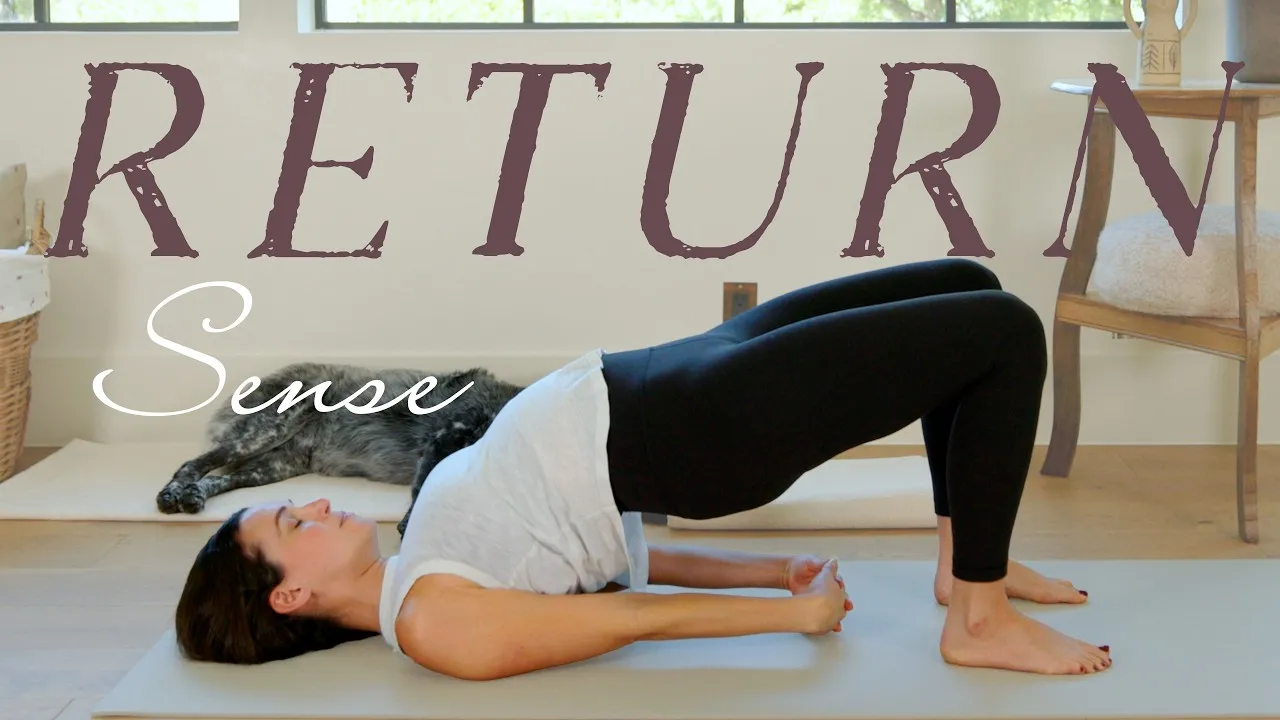
The practice concludes with a series of grounding and integrating poses. A gentle supine bridge pose helps to activate the glutes and open the chest, while knee-to-chest stretches offer release for the lower back. The sequence finishes with a moment of Savasana (Corpse Pose) or a supine resting pose, where participants are encouraged to fully relax and allow the benefits of the practice to integrate.
“Allowing yourself to return back to a space and a place that feels calm, steady, compassionate and present,” Mishler guides.
The Power of Sensory Awareness
This yoga practice, rooted in sensory awareness, offers a potent antidote to the stresses of modern life. By intentionally tuning into our senses, we can anchor ourselves in the present moment, cultivate self-compassion, and foster a deeper connection with our bodies. It’s a reminder that the journey back to ourselves often begins with simply paying attention to what we can feel, hear, and sense right now.
Key Health Takeaways
- Mindful Observation: Begin by simply noticing physical sensations, sounds, and smells without judgment to anchor yourself in the present moment.
- Conscious Breathing: Gently elongate your inhales and exhales to deepen your breath and activate your body’s relaxation response.
- Synchronized Movement: Coordinate your breath with physical movements to enhance mind-body connection and build body awareness.
- Sensory Exploration in Asana: Use yoga postures to explore and understand the sensations within your body, fostering a deeper connection.
- Ujjayi Breath for Focus: Practice Ujjayi breath to build internal heat, improve focus, and regulate your breath during movement.
- Self-Compassion: Move with kindness and awareness, acknowledging that slowing down can be challenging and offering yourself support.
Who Can Benefit?
This type of sensory-focused yoga practice is beneficial for almost everyone, particularly those experiencing stress, anxiety, or a feeling of disconnection from their bodies. It requires no prior yoga experience and can be adapted to various physical abilities. Modifications are often suggested to accommodate different needs.
Disclaimer: This article is for informational purposes only and does not constitute medical advice. Always consult with a qualified healthcare provider before beginning any new exercise program or making changes to your health routine.
Source: Return – 1 – Sense (YouTube)