Young Blood Factors May Reverse Aging, Boost Brain Health
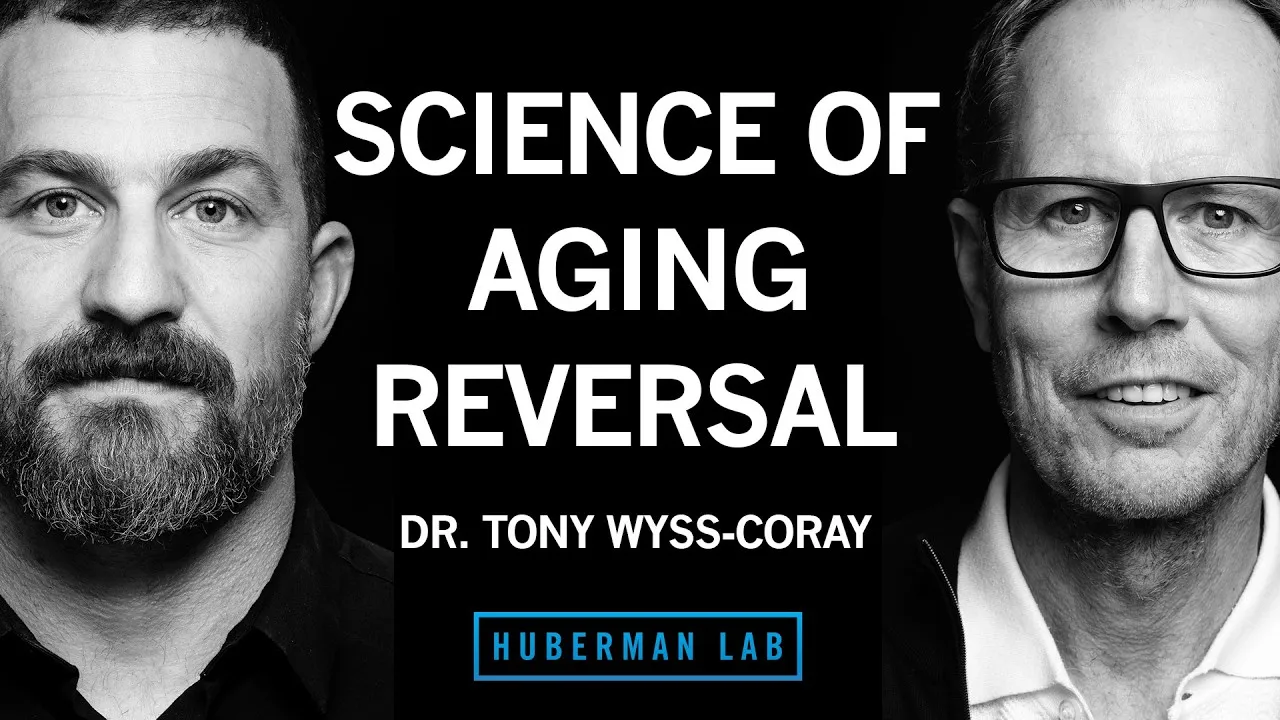
In a groundbreaking area of research, scientists are exploring how factors found in young blood can potentially reverse key aspects of aging in older individuals, including improvements in brain function and tissue rejuvenation. Dr. Tony Wyss-Coray, a leading expert in the field and Professor of Neurology at Stanford School of Medicine, discusses the intricate science behind these findings, which suggest that the composition of our blood changes dramatically with age, impacting cellular and organ health.
The Science of Parabiosis and Blood Factors
The concept of using young blood to rejuvenate the old has roots in a technique called parabiosis, where young and old mice are surgically joined to allow their circulatory systems to mix. Early research using this model demonstrated that an old mouse’s muscle tissue could regenerate and appear younger when exposed to the circulation of a young mouse. Dr. Wyss-Coray’s lab collaborated on this research, expanding the investigation to observe the effects on the brain.
These studies revealed that exposing aged mouse brains to factors from younger organisms led to a reactivation of brain stem cells, reduced inflammation, increased neuronal activity, and, most significantly, improved memory function. This suggested that blood is not merely a transport system for oxygen and nutrients but also a crucial carrier of molecular signals that actively influence the aging process.
Blood as a “Medicine” for Aging
Traditionally, blood has been viewed as a diagnostic tool – a reflection of an organism’s health status. However, Dr. Wyss-Coray’s work highlights bloodborne factors as potential therapeutic agents. “Over the past few years, people started to look at that many of these proteins and probably other molecules in the blood, they’re not just reflecting the status of the body, if you will, but they’re actively influencing how it works,” he explained.
His lab has identified thousands of proteins in the blood, observing dramatic differences in their concentrations between young and old individuals. This observation led to the fundamental question: do these proteins change as a consequence of aging, or do they actively drive the aging process? The parabiosis experiments provided evidence for the latter.
Translating Findings to Humans
The research has moved beyond animal models to explore human applications. Dr. Wyss-Coray co-founded Alkahest, a company aimed at investigating whether blood factors from young humans could influence the aging of mouse brains, confirming similar effects as observed with mouse blood. Further collaborations have involved companies like Grifols, which process plasma donations into medical treatments.
By testing different fractions of human plasma, researchers identified specific components that showed potent effects in mice. This led to small-scale clinical trials in patients with Alzheimer’s and Parkinson’s diseases, infusing them with these plasma fractions. Initial results were promising, aligning with anecdotal observations of people feeling invigorated or experiencing clearer thinking after blood transfusions.
A larger, placebo-controlled study by Grifols in 500 Alzheimer’s patients, involving therapeutic plasma exchange followed by infusion of albumin (a major blood component), also showed significant benefits. The field is now working towards larger clinical trials to seek FDA approval for potential treatments.
Organ-Specific Aging and Health Gaps
Aging is not a uniform process. Research indicates that different organs and even cells within an organism can age at varying rates. This concept is being explored using molecular tools that can assess the age of specific tissues.
“We clearly see is that organs and cells within an organism can have slightly different rates of aging,” Dr. Wyss-Coray stated. By analyzing thousands of proteins in a drop of blood, scientists can now estimate the biological age of specific organs, such as the liver, heart, or brain. This allows for the identification of an “age gap” – the difference between a person’s chronological age and the estimated age of their organs.
This age gap is emerging as a strong predictor of future disease risk. For instance, if an individual’s heart shows signs of aging faster than their chronological age, they may have an increased risk of heart disease. Vero Biosciences, a company co-founded by Dr. Wyss-Coray, aims to use these insights to predict organ-specific aging and guide personalized interventions.
Personalized Interventions and Future Directions
The ability to measure organ-specific aging opens doors for highly personalized health strategies. By identifying which organs are aging prematurely, interventions—whether lifestyle changes (exercise, diet) or medical treatments—can be tailored to address specific needs. This approach could also revolutionize clinical trials by allowing researchers to test drugs on patient subgroups most likely to benefit, rather than broad “all-comer” trials.
“The idea that we’re already sitting on good treatments and cures that wouldn’t have to pass through all the testing is very interesting,” Dr. Huberman remarked, referencing similar concepts in drug repurposing. The challenge remains in identifying the precise combination of factors that mimic nature’s rejuvenating effects and in developing methods to deliver these factors effectively and safely.
Key Health Takeaways
- Young blood contains factors that can rejuvenate aged tissues and improve brain function, including memory.
- Blood composition changes significantly with age, with some factors declining and others accumulating, influencing the aging process.
- Research is translating findings from animal models (parabiosis) into potential human therapies, including plasma-derived treatments.
- Organs can age at different rates, and measuring this “organ age” via blood protein analysis can predict future disease risk.
- Personalized interventions, tailored to specific organ aging rates, hold promise for preventing chronic diseases and extending healthspan.
Disclaimer
This article is for informational purposes only and does not constitute medical advice. Always consult with a qualified healthcare professional before making any decisions about your health or treatment. The research discussed involves complex scientific concepts and potential therapies that are still under investigation.
Source: Restore Youthfulness & Vitality to the Aging Brain & Body | Dr. Tony Wyss-Coray (YouTube)