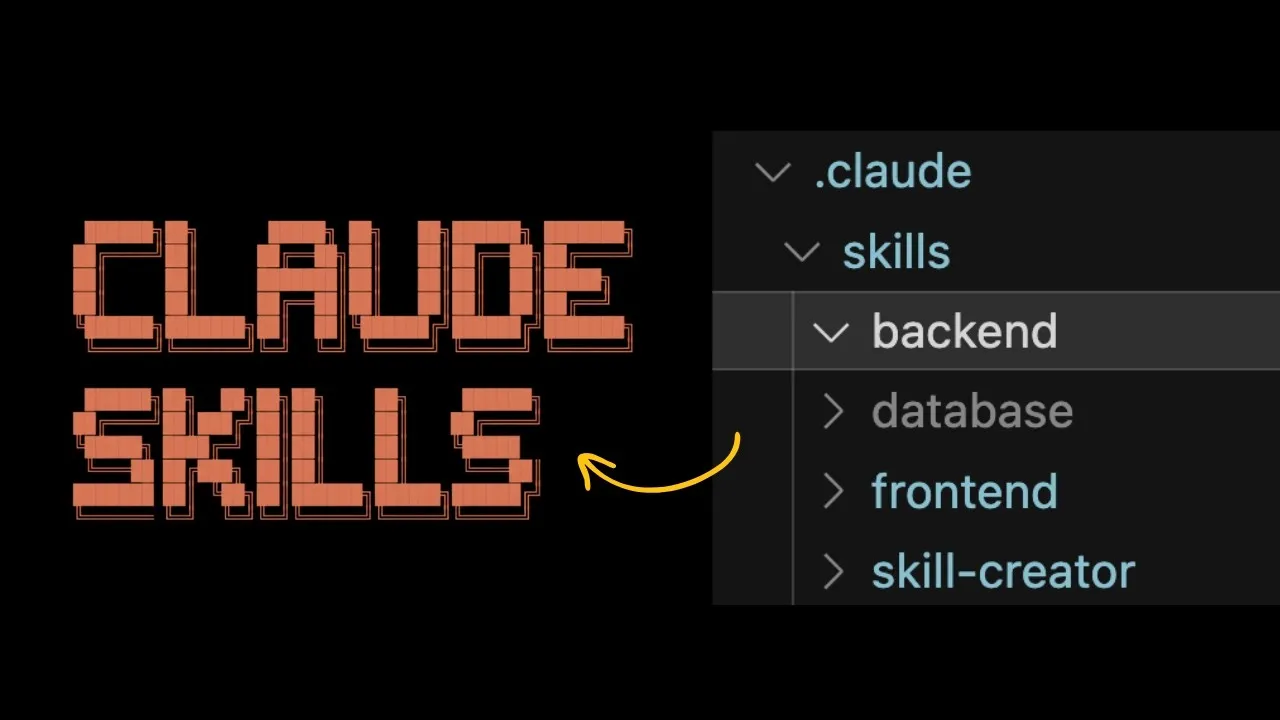
Claude Introduces Agent Skills, A New Paradigm for AI Agent Functionality
Anthropic, the AI research company behind the Claude large language model, has unveiled a significant new feature called ‘Agent Skills’. This innovative system allows developers to imbue AI agents with specialized capabilities, acting as a more efficient and powerful alternative to previous methods like Meta-Commercial-Product (MCP) integrations. Agent Skills offer a streamlined way to enhance an AI’s performance, making complex tasks more manageable and potentially enabling more sophisticated AI applications.
Understanding Claude Agent Skills
Fundamentally, an Agent Skill is a sophisticated combination of a precise prompt instruction and a curated set of assets and tools. These assets can include predefined functions, templates, and guidelines designed to ensure the AI produces consistent and high-quality results.
While the inclusion of tools and assets is optional, a skill can be as simple as a single, well-crafted prompt. This flexibility allows for a wide range of applications, from adhering to strict brand guidelines to generating complex algorithmic art.
The Anatomy of a Skill
Each skill begins with a ‘Skill.md’ file. This file contains a short description that explains to the agent when to utilize the skill. This description is automatically added to the agent’s context, ensuring the AI understands its available capabilities.
When the agent decides to invoke a skill, the rest of the context from the ‘Skill.md’ file is loaded. For more complex skills, additional resources can be included.
For instance, a skill designed to generate algorithmic art might include example implementations or references. The agent can be instructed to review these examples before generating its output, promoting greater consistency.
Predefined Functions and Enhanced Capabilities
A key differentiator for Agent Skills is the ability to incorporate predefined functions. In a ‘Slack GIF Creator’ skill example, the system imports necessary packages and provides functions that instruct the agent on how to use them to generate a GIF. This procedural guidance allows the AI to execute specific tasks with a high degree of accuracy and efficiency.
Agent Skills vs. MCPs: A Comparative Advantage
The introduction of Agent Skills is presented as a significant improvement over the existing MCP system. While MCPs have been instrumental in extending agent capabilities by connecting them to new tools, they often come with practical limitations. One major drawback is token consumption.
MCPs can bundle numerous tools, each with descriptions and input schemas, which are loaded into the agent’s context regardless of whether they are actively used. This can lead to unnecessary token usage, especially for complex MCPs.
MCPs are often built in a modular fashion for reusability and composability. However, this modularity can necessitate detailed instructions for the agent regarding the order of tool usage, leading to complex setup processes. Agent Skills address these issues by:
- Reduced Token Consumption: Skills are designed to be highly efficient, potentially reducing token usage significantly compared to equivalent MCPs. For example, a Shadcn MCP with seven tools consumes approximately 4,200 tokens, whereas a comparable Shadcn skill could potentially reduce this to just 70 tokens.
- Simplified Complexity: By embedding instructions and references directly within the ‘Skill.md’ file, skills can handle complex tasks more intuitively. This means agents can be equipped with a larger number of skills that function effectively right out of the box.
Demonstrating Agent Skills in Action
The effectiveness of Agent Skills is illustrated through practical examples. The ‘Slack GIF Creator’ skill, when prompted to generate a GIF for a daily standup, successfully calls the skill and executes Python code to produce the desired output. The system highlights that even if the initial output isn’t perfect, the underlying pipeline is easily improvable by refining the predefined functions.
Another demonstration involves an ‘Algorithmic Art’ skill. When asked to create an animated, zen-style mountain artwork, the agent uses the associated ‘Skill.md’ file to plan the artwork, references a template file, and then generates the animated art using P5.js.
Self-Improving Agents with Custom Codebases
Agent Skills also offer a powerful mechanism for making AI agents self-improving within a company’s own codebase. A developer showcased how they created a skill for their ‘Claude platform for super design’ codebase, which resides in a large monorepo. By using a ‘skill creator’ skill, the agent was prompted to investigate the codebase’s conventions for adding new UI components.
The AI performed a deep investigation and identified best practices. This information was then used to create a new ‘frontend’ skill, complete with descriptions, best practices for UI implementation, and references for component and style guides. The next time the agent is asked to create a UI component, such as an emoji and image picker, it first utilizes this newly created ‘frontend’ skill to gather coding conventions and best practices before proceeding with the development, ensuring consistency and adherence to established standards.
The Future of Agent Skills and Community Contributions
Anthropic has launched a repository named ‘Awesome Claude Skills,’ which initially features many official skills but is open for community contributions. Developers are encouraged to add their own skills, such as UI design prompts, and submit pull requests. The company also plans to delve deeper into Agent Skills in upcoming workshops, offering further opportunities for learning and engagement.
Why This Matters
The introduction of Agent Skills by Anthropic represents a significant step forward in making AI agents more practical, efficient, and adaptable. By drastically reducing token overhead and simplifying the integration of complex functionalities, these skills enable developers to build more capable AI systems without the steep learning curve or resource intensiveness associated with older methods. This could lead to wider adoption of AI agents in various business processes, from customer support and content creation to complex software development and data analysis.
The ability for agents to learn and adhere to specific codebase conventions also promises to enhance developer productivity and ensure consistency in large-scale projects. Ultimately, Agent Skills empower a more modular, efficient, and intelligent approach to AI agent development.
Source: Claude Skills – the SOP for your agent that is bigger than MCP (YouTube)