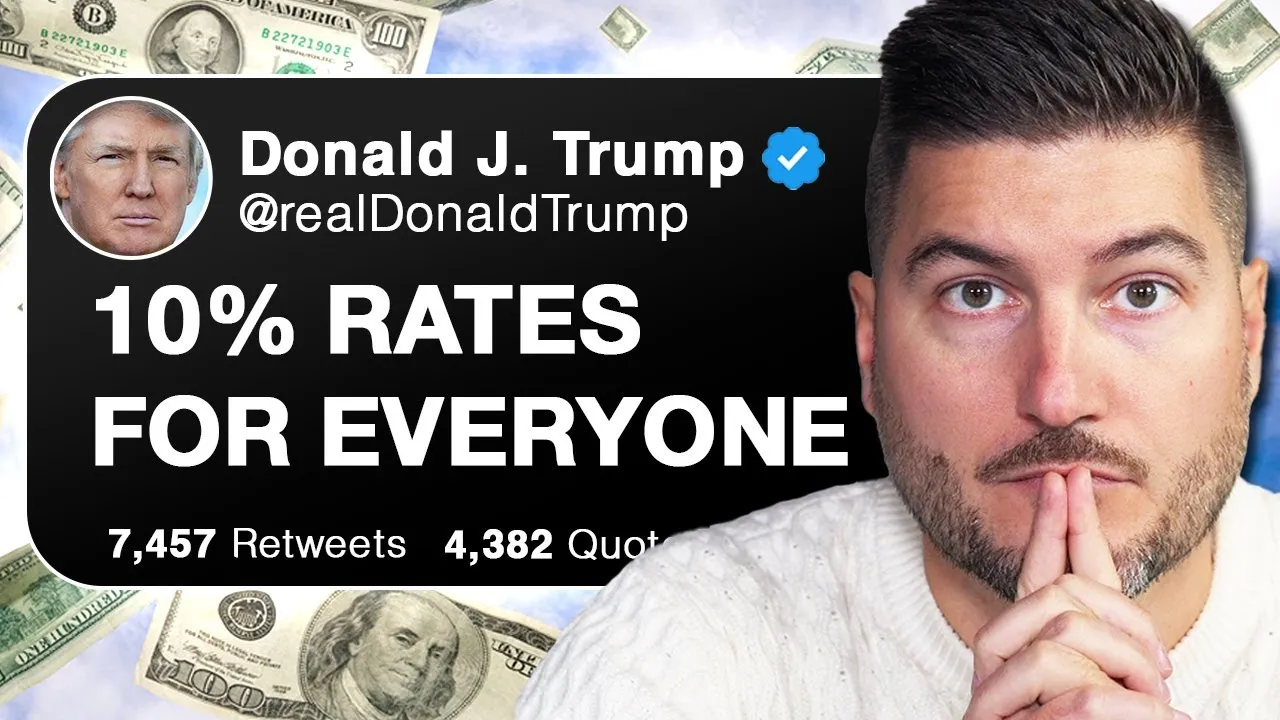
Trump’s Proposed 10% Credit Card Interest Rate Cap Faces Significant Legal and Market Challenges
A recent proposal by former President Donald Trump to cap credit card interest rates at 10% for one year, effective January 20, 2026, has ignited debate about its potential economic impact and legal feasibility. While the idea aims to provide relief to millions of Americans burdened by rising debt, market analysts and legal experts suggest the path to implementation is fraught with obstacles, primarily centering on congressional authority and the potential for unintended economic consequences.
The Proposal and Its Origins
The proposition, initially articulated via a Truth Social post, calls for a nationwide one-year cap on credit card interest rates at 10%. This statement, however, was a ‘call for’ rather than a direct executive order.
Critics and legal analyses, including those leveraging AI and consultations with legal professionals, indicate that such a sweeping change to private lending rates would necessitate legislative action by Congress. Senator Elizabeth Warren has publicly stated that without a bill passed by Congress, the call for a rate cap holds no legal weight.
The Scale of American Credit Card Debt
The context for this proposal is the alarming scale of consumer debt in the United States. Data from the New York Federal Reserve for the third quarter of 2025 reveals that total outstanding debt stands at approximately $5.1 trillion. Of this, credit card debt constitutes a significant $1.23 trillion, with roughly half of all cardholders carrying a balance.
Credit card balances alone saw an increase of $24 billion in that quarter. This substantial debt load is carried by consumers who are often paying interest rates far exceeding the proposed 10% cap, with average Annual Percentage Rates (APRs) frequently surpassing 20%.
Potential Savings vs. Economic Realities
A study by Vanderbilt University suggests that a 10% cap could translate into substantial annual savings for consumers, potentially ranging from $100 billion to $150 billion. The study outlines tiered savings based on hypothetical cap rates:
- An 18% cap could yield $16 billion in annual interest savings, with average monthly savings of $361 per person, and no expected reduction in rewards programs.
- A 15% cap could offer $48 billion in annual savings and $563 in monthly savings per person.
- The proposed 10% cap could save consumers approximately $900 per month.
However, the same study highlights a critical caveat: to maintain profitability, particularly for customers with FICO scores below 760, financial institutions might need to reduce credit card rewards programs by as much as $27 billion annually. This trade-off suggests that while interest costs could decrease, other benefits associated with credit cards might diminish.
Legal Authority and Implementation Challenges
The primary hurdle for the 10% cap is its legal foundation. The U.S. President generally does not possess the unilateral authority to impose interest rate caps on private lending through executive orders. Such authority typically resides with Congress.
Any attempt to implement such a cap via executive action would likely face immediate legal challenges and probable invalidation by the courts. Trade groups like the American Bankers Association, while sometimes referring to such proposals as executive orders, have also expressed strong opposition, highlighting the perceived unconstitutionality and economic disruption.
Market Reaction and Investor Sentiment
The announcement and subsequent discussion of the proposed cap sent ripples through the financial markets. Major credit card issuers experienced a notable downturn in their stock prices.
As of the reporting period, Bank of America was down 1.75%, American Express fell 4.29%, and JP Morgan Chase declined 2.1%. This immediate negative reaction reflects investor concern about the potential impact on profitability within the credit card industry.
Some market analysts suggest that if the proposal fails to materialize, these stocks could see a rebound. The potential for such volatility has led some to consider strategies involving options trading, betting on a recovery if the cap is deemed unworkable.
Potential Consequences of a Rate Cap
Beyond the immediate stock market impact, a mandated 10% cap could trigger a cascade of adjustments within the financial system:
- Reduced Credit Availability: Lenders might tighten lending standards, leading to fewer credit card approvals, lower credit limits, and increased difficulty for individuals with lower credit scores to access credit.
- Shift to Alternative Lending: Consumers denied traditional credit might turn to less regulated, higher-cost lenders, such as loan sharks, potentially facing even worse terms.
- Fee Increases and Reward Reductions: To offset lost interest income, banks could increase annual fees, transaction fees, or significantly curtail valuable rewards programs that many consumers rely on.
- Impact on Small Businesses: Small businesses that depend on credit lines for operational cash flow could face reduced access to capital or higher costs if credit becomes scarcer.
One former banking credit analyst noted that during periods of economic pressure, companies often pass increased costs onto consumers through higher prices. If lending becomes more expensive for banks due to rate caps, this cost could ultimately be reflected in the prices of goods and services.
What Investors Should Know
The proposal is currently more of a political statement than a concrete policy. Analysts from firms like Jefferies have deemed the likelihood of such a cap being enacted in its current form as ‘highly unlikely.’ Investors should view this proposal with caution:
- Legislative Uncertainty: The path through Congress is uncertain, with similar past proposals failing to gain traction.
- Economic Trade-offs: While consumer interest savings are appealing, the potential for reduced credit access, loss of rewards, and increased fees presents significant economic trade-offs.
- Market Volatility: The mere discussion of such a policy can create short-term volatility in financial stocks. A failure to pass could lead to a rebound, while unexpected progress could trigger further sell-offs.
Long-Term Financial Health vs. Short-Term Relief
The resonance of the 10% cap proposal stems from the very real financial pressures faced by many Americans, including rising costs for essentials like groceries and housing. Credit cards often serve as a temporary financial buffer. However, relying on debt to manage household expenses is not a sustainable long-term strategy.
The core message from financial educators is that while a rate cap might offer immediate relief to those carrying balances, it does not address the underlying issues of affordability and cash flow management. The ultimate goal for financial well-being remains minimizing or eliminating consumer debt by focusing on increased savings, improved cash flow, and reduced fixed expenses. Utilizing credit cards responsibly—paying balances in full each month—is presented as the strategy to avoid becoming dependent on debt and to outpace inflation through investment in assets.
In conclusion, while the 10% credit card interest rate cap proposal captures headlines and speaks to current economic anxieties, its practical implementation faces substantial legal and economic barriers. The focus for consumers and investors alike should remain on sound financial principles and long-term wealth-building strategies rather than relying on potentially unachievable policy interventions.
Source: Trump's 10% Credit Card Interest Rate Cap (Here’s What Happens Next) (YouTube)