Unlearn Negative Patterns for Better Mental Health
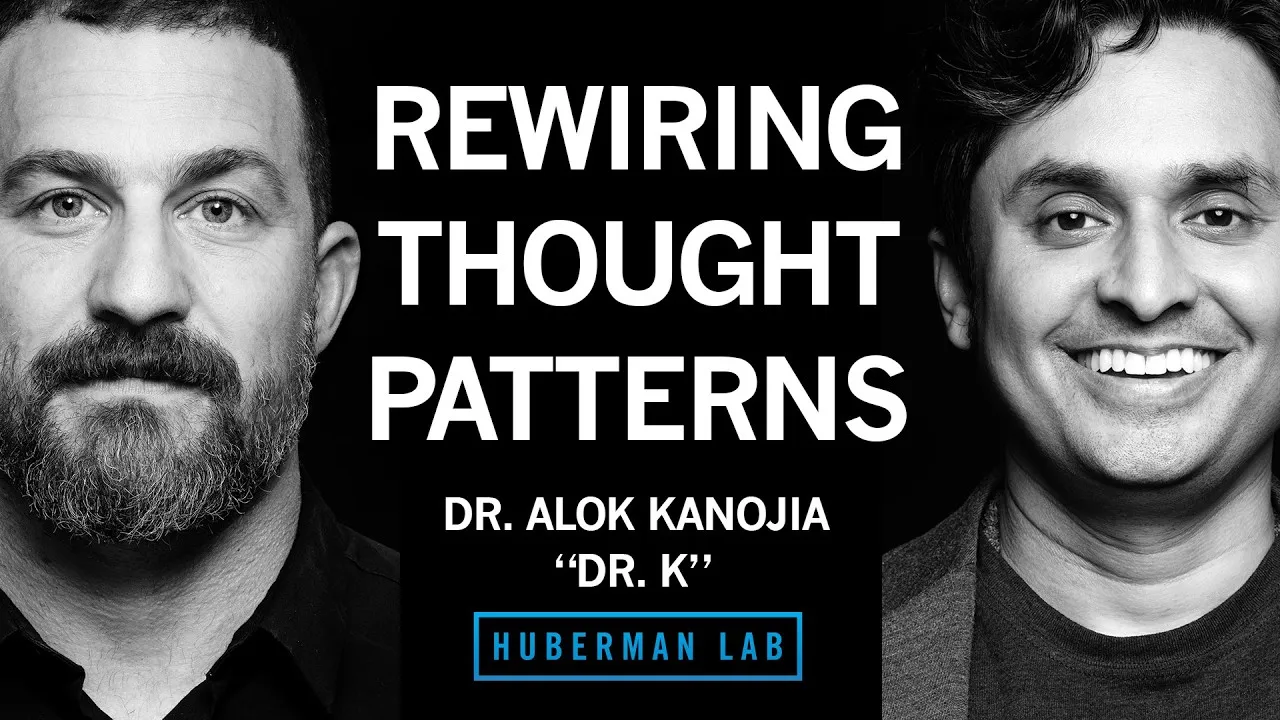
In a world often focused on willpower and behavioral change, psychiatrist Dr. Alok Kanojia, also known as Dr. K, offers a compelling alternative: changing the underlying tendencies that drive our thoughts and actions. Drawing on his unique background as a psychiatrist and former monk, Dr. K, in conversation with neuroscientist Andrew Huberman on the Huberman Lab podcast, emphasizes that true transformation comes not from battling negative patterns, but from fundamentally altering them.
The Limitations of Willpower
The common approach to overcoming undesirable habits or negative thought cycles involves summoning willpower. However, Dr. K argues that willpower is only necessary when you are actively trying to suppress a deeply ingrained tendency.
If that tendency is successfully changed, the need for constant willpower diminishes significantly. This is the core principle behind effective psychotherapy, where the goal is to reshape a person’s core sense of self and their perception of the world, leading to natural shifts in behavior.
Eastern vs. Western Perspectives on Self
Dr. K’s insights are informed by a blend of Eastern and Western psychological and philosophical traditions. He highlights how Western psychology often focuses on the ego and self-concept, while Eastern philosophies delve deeper into the nature of self and consciousness.
Understanding these differences can provide a more nuanced perspective on why we behave the way we do and how to initiate profound personal change. This exploration can lead to a clearer understanding of one’s intrinsic motivations, energy levels, and overall drive.
The Rise of Mental Health Awareness and Its Pitfalls
The conversation touches upon the increased awareness of mental health, trauma, and emotions in recent generations. While this awareness is generally beneficial, Dr. K cautions against its potential misuse. He observes that the language of mental health, including concepts like boundaries and feelings, can sometimes be co-opted by the ego for manipulation or control.
For instance, boundaries, intended to protect well-being, can be weaponized to dictate others’ behavior. Similarly, a focus on feeling victimized can be exploited, leading to a decrease in personal responsibility.
Distress Tolerance: A Critical Transdiagnostic Factor
A key concept discussed is ‘distress tolerance’ – an individual’s capacity to withstand uncomfortable emotions and situations. Dr. K points to research suggesting that a decline in distress tolerance is a significant ‘transdiagnostic factor,’ meaning it contributes to a wide range of mental health issues, including anxiety, depression, and addiction.
As people become less able to tolerate discomfort, the prevalence of mental illness increases. This is exacerbated by the internet’s tendency to foster an environment of constant emotional activation and a demand for immediate solutions, rather than the patient cultivation of resilience.
The Internet’s Impact on Social Skills and Ambiguity
The digital age, particularly social media and text-based communication, is altering our social skills. Dr. K notes that relying heavily on these mediums can lead to an ‘atrophy’ of the parts of the brain responsible for interpreting subtle social cues like body language and tone. This makes navigating ambiguous social situations, which are a natural and healthy part of human interaction, increasingly difficult.
Flirting, for example, relies on ambiguity to maintain plausible deniability and safety, allowing individuals to explore connection without immediate commitment or risk. When people struggle with ambiguity, they may misinterpret social signals or feel unsafe in situations that require nuanced understanding.
Dating in the Digital Age
The challenges are particularly evident in the dating world. Younger individuals often feel immense pressure to perform perfectly, fearing that any misstep will be publicly documented and judged online. This fear of judgment, coupled with the internet’s tendency to amplify emotionally charged and polarizing content, creates an environment where ambiguity feels dangerous.
Dr. K suggests that the internet thrives on emotional arousal, often achieved through a dichotomy of intense, contrasting emotions. This constant stimulation can be cognitively draining and may hinder the development of genuine emotional regulation and self-awareness.
Rewiring Your Nervous System for Lasting Change
The core message is that lasting change stems from altering fundamental patterns rather than relying on fleeting willpower. This involves understanding the self at a deeper level, cultivating emotional resilience, and relearning how to navigate social interactions with greater nuance.
While the path isn’t always clearly defined, the principles of psychotherapy and insights from various traditions offer a framework for achieving these profound shifts. By focusing on changing the tendency itself, individuals can move beyond the exhausting struggle of willpower and cultivate a more authentic and fulfilling way of being.
Key Health Takeaways
- Shift Focus from Willpower to Tendency Change: True behavioral change comes from altering underlying patterns, not just exerting willpower.
- Cultivate Distress Tolerance: Improve your capacity to sit with discomfort, as low distress tolerance is linked to increased mental health issues.
- Understand Emotional Activation Online: Recognize that the internet often selects for emotionally charged content, which can be draining and distort social perceptions.
- Embrace Ambiguity in Social Interactions: Learn to navigate nuanced social cues and ambiguity, which are essential for healthy relationships and communication.
- Seek Deeper Self-Understanding: Explore the roots of your thoughts and behaviors, integrating insights from psychology and philosophy to foster intrinsic motivation and well-being.
Disclaimer: This article is for informational purposes only and does not constitute medical advice. Always consult with a qualified healthcare professional for any health concerns or before making any decisions related to your health or treatment.
Source: Unlearn Negative Thoughts & Behaviors Patterns | Dr. Alok Kanojia (Healthy Gamer) (YouTube)