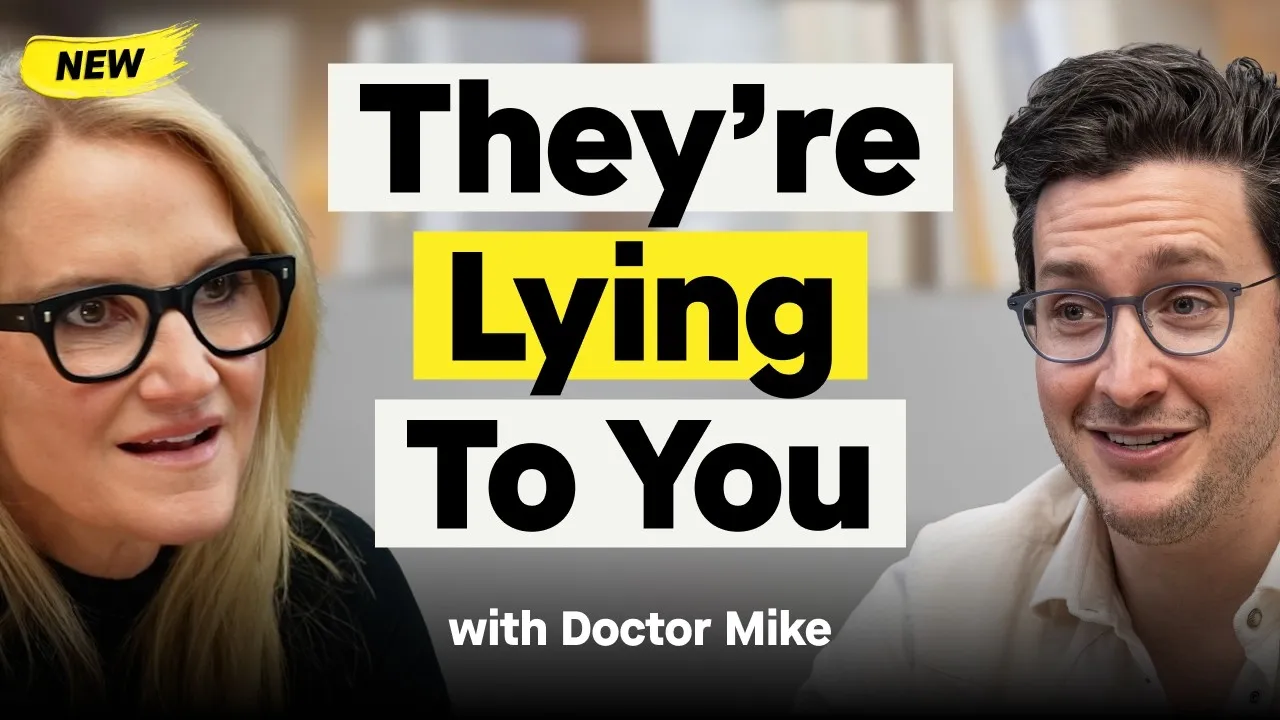
Doctor Explains How to Navigate Health Misinformation
In today’s world, finding reliable health information can feel like searching for a needle in a haystack. With so much conflicting advice online and confusing messages from various sources, it’s easy to feel overwhelmed. Dr. Mike, a highly followed medical doctor online, joined Mel Robbins to discuss common health myths and offer practical advice on how to make informed decisions about your well-being.
The Challenge of Modern Healthcare
Dr. Mike highlighted that the healthcare system itself often contributes to the confusion. He explained that the traditional doctor-patient relationship was sometimes too paternalistic, with doctors telling patients what to do rather than empowering them to make choices.
“A patient doesn’t have to do anything,” he stated, emphasizing that everyone has different risk tolerances and life goals. True good medicine, he believes, is based on informed consent, where patients are given clear, honest information to make decisions that fit their lives.
As a practicing physician, Dr. Mike sees firsthand how misinformation affects patients. He started his social media presence to combat the fear-mongering and miracle cures often promoted by those with larger platforms. “The reason why I started out in making this content trying to become the most followed doctor on social media was simply to compete with all these loud voices who are leading my patients astray,” he explained.
Why Health Feels Harder Than Ever
The sheer amount of noise, not just from healthcare but also from technology and politics, makes decision-making difficult. We live in an “attention-focused economy,” where many things compete for our attention, leading to overwhelm. Dr. Mike sympathizes with patients struggling to make the right health choices when faced with opposing advice.
He noted that the basic pillars of health—sleeping well, eating a balanced diet with fruits and vegetables, exercising, and maintaining social connections—are often overshadowed by the allure of quick fixes and shortcuts. These shortcuts are easy to sell, but hard to sustain, and can lead to negative spirals where anxiety fuels unhealthy eating, which then impacts weight and chronic conditions.
The Internet: A Double-Edged Sword
When people experience symptoms or receive a diagnosis, their first instinct is often to search online. Dr. Mike compared this to shaking a “magic eight-ball,” where the answers can vary wildly depending on the echo chamber you find yourself in or who is digitally targeting your demographic. “It’s even more nefarious than the traditional magic eightball,” he warned, suggesting that some online information is pre-programmed to make specific entities money, rather than providing accurate guidance.
He clarified that he doesn’t have an issue with people making money, but he does object when it comes at the expense of informed consent. Hiding information or providing only partial truths for profit is what he considers problematic. “I want people to be making the choice on good information,” he urged.
The Broken Healthcare System and Its Impact
Dr. Mike pointed out that the people who often need the most care—those who are busy, working multiple jobs, or caring for family—are frequently left behind by the system. He is proud of his community health center model, which uses his social media success to provide high-level care to underinsured and uninsured individuals.
He explained that many doctors are pressured by the healthcare system to see a specific number of patients or perform a certain number of procedures, which limits the time they can spend with each patient. This lack of time hinders the development of trust and the ability to truly understand a patient’s needs and goals. “Time is that most important variable that allows that alliance that we’ve lost focus on to be formed, trust to be earned, information to be adequately processed by both parties,” he said.
This system can leave patients feeling unheard or that their symptoms are being dismissed, especially if they have a more passive personality or lack an advocate. This feeling can be exacerbated for minorities or those with fewer financial resources, as healthcare budgets can be more strained in certain communities, leading to longer wait times and less personalized care.
Battling Medical Bills
The fear of overwhelming medical bills and potential bankruptcy is a significant concern. Dr. Mike’s advice for anyone receiving a medical bill is to “argue everything.” He stressed that many underutilized programs and financial aid options exist, and patients often get reductions by simply questioning the charges. He shared an anecdote about a man whose hundreds-of-thousands-dollar bill for a heart attack was reduced to $100 after he went to the media about predatory billing practices.
Fighting medical bills can involve calling the billing office for explanations, asking the medical office for clarification on coding, and even understanding how small details like capsules versus tablets can affect insurance coverage. “What an ineffective, terrible system,” he lamented.
The Need for Transparency and Primary Care
Dr. Mike believes transparency is the number one issue that needs to be addressed in healthcare. He criticized Pharmacy Benefit Managers (PBMs), which were created to save money but have become massive entities that decide which medications are covered. These PBMs are often owned by pharmacies, healthcare insurers, or the same companies that own pharmacies, creating a lack of transparency and allowing them to profit at the expense of patients.
He also highlighted the decline in primary care physicians, as medical students are often drawn to higher-paying, procedure-based specialties. This leaves many people without a regular doctor, relying on urgent care or ERs, where providers don’t know their history. This lack of continuity can be dangerous, as demonstrated by a patient who came in for back pain but was experiencing a heart attack, a condition that might have been missed by a doctor seeing her for the first time.
“The foundational layer of plaque that can form in the blood vessels in your heart start happening during your teenage years,” Dr. Mike noted, emphasizing the importance of early conversations and preventative strategies, even for those who don’t live the most optimal lifestyles.
Key Health Takeaways
- Seek Informed Consent: Always aim to get clear, honest information from healthcare providers so you can make the best decisions for yourself.
- Be Wary of Online Information: Treat online health advice with skepticism. Cross-reference information and prioritize sources from qualified medical professionals.
- Question Medical Bills: Don’t hesitate to dispute charges or seek financial assistance for medical bills. Many reduction programs and aid options are available.
- Value Primary Care: If possible, establish a relationship with a primary care physician who knows your history and can provide continuous, personalized care.
- Focus on Foundational Health: Prioritize basic healthy habits like sleep, balanced nutrition, and exercise, as these have a significant long-term impact.
- Advocate for Transparency: Support efforts to increase transparency in the healthcare system, particularly regarding drug pricing and insurance coverage.
Disclaimer: This article is for informational purposes only and does not constitute medical advice. Always consult with a qualified healthcare professional for any health concerns or before making any decisions related to your health or treatment.
Source: The Top 5 Health Lies & The Truth You Need to Feel Better Today | Doctor Mike (YouTube)