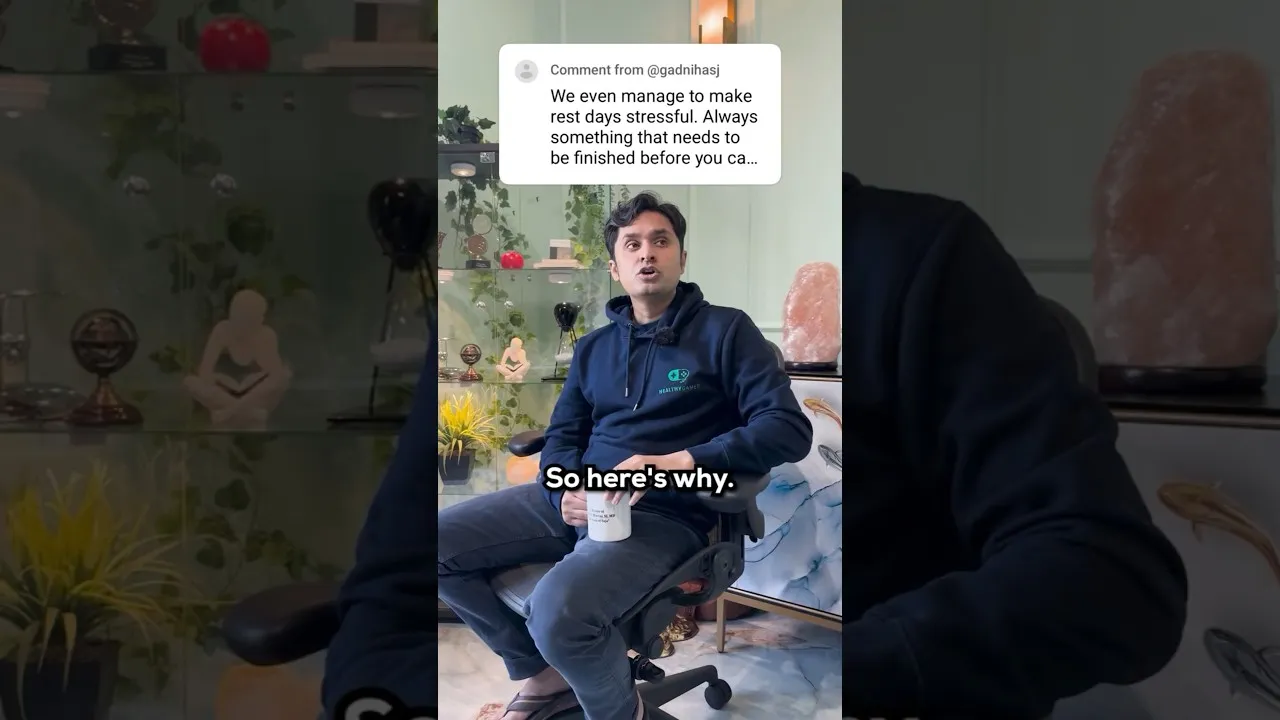
Stop Feeling Guilty About Rest Days
Many people struggle with rest days, feeling stressed and guilty about taking time off. This is often because our minds race with all the tasks we still need to complete. It’s a common feeling: “I can’t afford to rest right now.” This constant pressure can be exhausting.
While procrastination is often seen as the main problem, some people face the opposite. They feel they cannot rest until every single task is finished. Trying to relax when your to-do list is long makes true rest impossible. You might think, “I need to finish everything first, then I can finally relax.”
The Modern World vs. Our Ancestors
This mindset might have worked in the past when life was simpler. For example, in agrarian societies, work often stopped when the sun went down. There wasn’t much left to do in the dark. Life was more predictable, and the amount of work was manageable.
However, we now live in a 24-hour society. There always seems to be more to do, and demands on our time are constant. Technology and constant connectivity mean work and tasks can follow us everywhere. This makes it much harder to switch off and truly rest.
Understanding the ‘Overwhelmed Rest’ Cycle
When you feel you must finish everything before resting, you create a cycle of feeling overwhelmed. You believe rest is a reward for completing tasks, rather than a necessity for well-being. This can lead to burnout, where you feel completely drained and unable to function.
The key is to shift your perspective. Rest is not a luxury; it’s a vital part of productivity and health. Think of it like charging your phone. You wouldn’t expect your phone to work without charging it regularly.
Strategies for Embracing Rest
Learning to rest effectively is a skill that can be developed. It involves setting boundaries and managing your workload. Here are some practical steps to help you reclaim your rest days:
1. Schedule Your Rest
Just like you schedule meetings or appointments, schedule your rest time. Put it in your calendar. This makes it feel like a real commitment, not just something you might do if you have time.
2. Break Down Large Tasks
Big projects can feel overwhelming. Break them down into smaller, manageable steps. Completing these smaller steps can give you a sense of accomplishment without needing to finish the entire project to feel relief.
3. Set Realistic Expectations
It’s okay if not everything gets done today. Prioritize your tasks and accept that some things can wait. Focus on what is most important and let go of the pressure to be perfect.
4. Practice Mindfulness
When you do take a break, try to be present. Instead of thinking about what’s next, focus on your breath or your surroundings. Simple mindfulness exercises can help calm a racing mind.
5. Communicate Your Needs
If you work with others, communicate your need for downtime. Setting expectations with colleagues or family can reduce pressure and help you feel more supported in taking breaks.
Key Health Takeaways
- Rest days are crucial for preventing burnout and maintaining overall health.
- Feeling stressed about rest often stems from an overwhelming to-do list and a belief that rest must be earned.
- Our modern 24/7 society contributes to the difficulty in switching off and resting effectively.
- Schedule rest as a non-negotiable part of your routine.
- Break large tasks into smaller, manageable steps to reduce feelings of overwhelm.
- Practice mindfulness to stay present and calm your mind during rest periods.
- Setting realistic expectations and communicating your needs are vital for embracing downtime.
This article provides general information and does not constitute medical advice. Always consult with a qualified healthcare provider for any health concerns or before making any decisions related to your health or treatment.
Source: Why Rest Days Feel Stressful (YouTube)