Market Stages Strong Comeback Amidst Geopolitical Tensions
The stock market demonstrated surprising resilience this morning, defying expectations with a significant rebound. Analysts at Meet Kevin’s Alpha Report had predicted a market bottom within 15 minutes, anticipating a period of relative stability thereafter. However, the market surpassed these predictions, climbing all the way back to the 617 level. This level was previously projected to take two to four weeks to reach, according to earlier analysis concerning call options and the market’s potential bottom.
Key Market Levels Reached
Looking at a one-hour chart, the market’s low point was around 555. It then surged to 618 before settling back to 617. This performance represents a strong day, with the market holding the 607 line during pre-market trading. This recovery suggests that the market may have indeed secured a bottom, offering a positive outlook for investors in the short term.
Geopolitical Tensions Escalate: The Iran Blockade
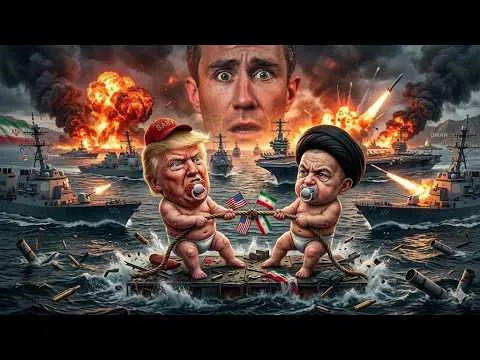
The primary driver behind market volatility appears to be escalating geopolitical tensions involving Iran. Reports indicate that Iran has not opened its shipping lanes during a ceasefire, leading to a strategic decision to blockade the blockaders. This move, while intended to pressure Iran, carries significant economic implications and risks. The Wall Street Journal editorial board suggested this action is akin to calling Iran’s bluff, potentially incentivizing both Iran and China to restore traffic through crucial waterways.
Economic Pressure on Iran
A blockade of this nature could impose substantial costs on Iran, potentially losing up to $435 million daily in revenue. This includes an estimated $276 million in lost export earnings each day. Such economic pressure could severely impact Iran’s economy. While Iran possesses oil reserves and floating storage that could mitigate some losses, and allies like China and Russia could offer support, the blockade is a powerful tool for economic squeeze.
China’s Role and Potential for Inflation
Approximately 80% of Iran’s oil shipments reportedly went to China in 2025, making China a key player in this scenario. The blockade could force China to seek more expensive oil elsewhere, driving up global prices. Data firm Vortexa suggests that a combined export collapse and lack of import revenue could lead to hyperinflation and currency devaluation in Iran. This economic distress could, in theory, motivate internal dissent against the Iranian regime, a scenario that has been discussed since the war’s onset.
Diplomacy vs. Military Might
The current strategy appears to be a departure from previous diplomatic efforts like the Joint Comprehensive Plan of Action (JCPOA), also known as the Iran nuclear deal. The JCPOA, which returned sanctioned funds to Iran and temporarily suspended its nuclear weapons program, aimed for inspections and further negotiations. However, it did not address long-term missile or weapons programs, a point of contention for countries like Israel. The current approach leans towards military pressure, forcing Iran into submission, a method favored by Donald Trump.
Market Impact and Investor Considerations
What Investors Should Know
The escalating situation carries significant risks. A potential confrontation involving naval assets, including US warships and destroyers, could lead to loss of life and escalate the conflict. Such an event would drastically increase the costs of war and embolden the Iranian regime. The blockade, while designed to pressure Iran and China, also increases costs for the entire global economy by driving up oil prices and reducing supply elsewhere.
Interest Rates and Financial Stability
The increased oil prices and geopolitical uncertainty have had a noticeable impact on interest rate expectations. The probability of a rate cut by December fell to approximately 34.6%, a decrease of about 5 to 10 percentage points. Furthermore, the International Financial Stability Board has warned that the Middle East crisis poses a risk to bonds, asset values, and private credit, potentially leading to a simultaneous collapse of multiple vulnerabilities. This comes as tensions remain high, with Hezbollah rejecting talks between Lebanon and Israel, highlighting the volatile nature of the region.
Sector Opportunities and Caution
Despite the broader risks, opportunities may arise. The recent market rebound saw strong performance in software stocks, partly fueled by enthusiasm around companies like Oracle. The market experienced significant short covering last week, which contributed to calling the bottom. Investors are advised to remain cautious but observant, as geopolitical nervousness can create opportunities. For instance, some analysts are monitoring stocks like Palantir, which, despite recent price drops, has shown substantial growth and projected earnings increases, presenting potential long-term value for patient investors.
The Path Forward: Hope for De-escalation
The situation remains fluid, with a ceasefire set to expire soon. While Israel has shown restraint in bombing Lebanon recently, suggesting a potential for renewed talks, the threat of escalation is ever-present. The hope is that diplomatic channels can be reopened, potentially leading to de-escalation and the easing of economic pressures. The involvement of China, which is negatively impacted by the blockade, could be a crucial factor in pushing for productive negotiations. The market’s ability to absorb these geopolitical shocks will be a key indicator of its underlying strength in the coming weeks.
Source: Crap: The Real Danger NOW (YouTube)