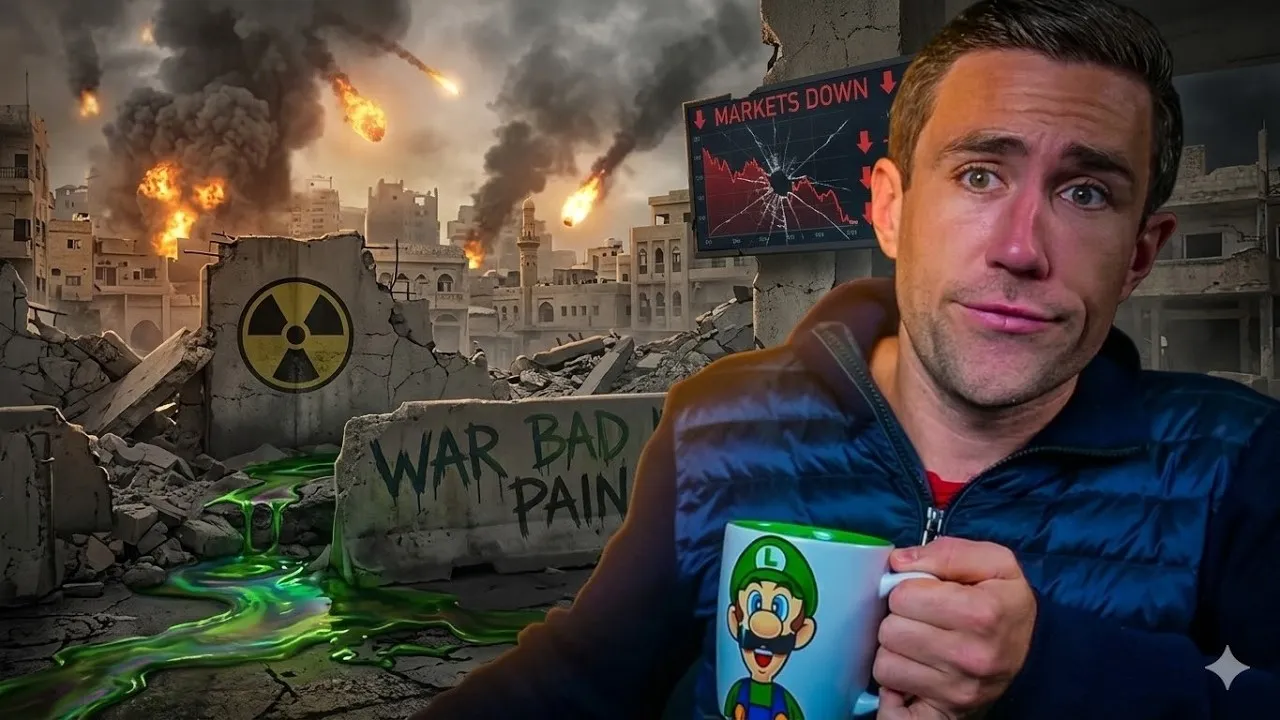
Iran Tensions Surge, Oil Spikes 19%, Futures Plunge Amid Leadership Change and Geopolitical Risks
Global markets experienced a sharp sell-off on Sunday evening, March 8th, as escalating tensions in Iran and a significant surge in oil prices sent futures plummeting. The international blend of crude oil saw a dramatic 17% increase, while West Texas Intermediate (WTI) crude futures jumped 19%, with both benchmarks now trading around $108 per barrel. This marks a substantial leap from Friday’s closing prices near $90, signaling heightened geopolitical risk and potential for further supply disruptions.
New Supreme Leader and Escalating Conflict
The primary driver behind the market’s distress appears to be the selection of the son of the former Supreme Leader as his successor in Iran. This development is viewed as particularly concerning due to his perceived hardline stance and alignment with his father’s policies. Adding to the unease, former President Donald Trump has publicly stated that the selection is “unacceptable” and has not ruled out the possibility of deploying U.S. Special forces on the ground in a later stage of the conflict, should the need arise for specific operations, such as raids on nuclear sites.
The situation was further exacerbated by reports of the U.S. Embassy in Saudi Arabia ordering the evacuation of non-emergency personnel and family members due to security risks. This is the first such evacuation order in the region related to the current conflict, suggesting a potential worsening of the security environment.
Oil Market Volatility and Investor Sentiment
The surge in oil prices has caught many by surprise, especially after recent assessments from institutions like J.P. Morgan suggested that most of the damage to oil prices might have already occurred. The nearly 20% spike in futures trading immediately following this assessment highlights the market’s sensitivity to developments in the Middle East.
This volatility has also impacted other markets, with Bitcoin sliding and pre-market futures for major U.S. Indices showing significant declines. NASDAQ futures were down 2.22%, the S&P 500 futures fell by 183 points, and Dow futures also dropped by 183 points.
While typically a safe-haven asset, gold and silver have not seen a corresponding surge. This is attributed by some analysts to a prior peak reached around January 30th, following a prior market event.
Iran’s Nuclear Ambitions and Military Capabilities
The article digs into Iran’s nuclear program, noting that the late Supreme Leader, Ayatollah, had supported Iran’s nuclear ambitions and maintained alliances with nuclear-armed nations like North Korea, Russia, and China. United Nations inspectors had previously estimated Iran possessed approximately 460 kg of highly enriched uranium at 60% purity, which, with a few more weeks of processing, could be enriched to weapons-grade. While there is no definitive evidence of further enrichment, the potential remains a significant concern.
The military structure of Iran is also highlighted as a complex challenge. Beyond the Islamic Revolutionary Guard Corps (IRGC) with its estimated 150,000 soldiers, Iran possesses the Basij militia, a paramilitary force that could potentially mobilize millions. Both the IRGC and the Basij are trained in guerrilla and suburban warfare, making any potential military intervention difficult and unpredictable, even for special forces, due to the pervasive threat landscape.
Foreign Selling and Economic Indicators
A significant factor contributing to the current market sell-off is attributed to substantial foreign institutional selling. Reports indicate that foreign investors have been net sellers, exacerbating the downturn.
This selling pressure coincides with concerning economic indicators, including a slight annualized decline in retail sales over the last three months, as reported by Goldman Sachs. Underlying job growth is estimated to be around 37,000 per month, with break-even points suggesting a potential risk to the economy, particularly when combined with the current oil price shock.
Market Outlook and Central Bank Reactions
Analysts suggest that the current market environment points more towards a correction, potentially around 10% on index levels, rather than a full-blown bear market. The NASDAQ, for instance, could be nearing a 10% decline based on current futures trading. Investors are closely watching upcoming economic data, including inflation figures (CPI and PCE) and GDP estimates, which will be crucial in determining the Federal Reserve’s future policy decisions.
The Bank of England has already signaled uncertainty about its ability to overlook further inflationary pressures stemming from energy shocks, suggesting a potential for higher interest rates for longer. This stance, if mirrored by the U.S. Federal Reserve, could further dampen market sentiment and lead to additional near-term pain.
Key Economic Catalysts This Week
- Tuesday: Weekly Employment Change (5:15 AM EST)
- Wednesday: Consumer Price Index (CPI) Month-over-Month (Expected 0.3%, Core 0.2%)
- Friday: Personal Consumption Expenditures (PCE) Price Index
- Friday: Q4 GDP Secondary Estimates and University of Michigan Consumer Sentiment
The confluence of geopolitical instability, rising energy costs, and persistent inflation presents a challenging outlook for markets. Investors will need to closely monitor geopolitical developments and upcoming economic data for insights into potential market direction and central bank policy responses.
Source: The Iran War JUST got Worse | Futures are Crashing. (YouTube)