AI Crafts Its Own Interfaces for Users
Imagine telling your computer what you want it to do, and instead of just getting words back, it shows you a custom-made chart or an interactive card designed just for that task. This is now possible thanks to a new way of building AI agents, called Generative UI. This technology allows AI to create its own visual interfaces, making interactions much more helpful and intuitive.
Traditionally, when you interact with an AI agent, it responds with text. Even advanced AI assistants often present information as a block of words.
While useful, this text-only approach can sometimes be clunky for complex data or specific actions. Generative UI aims to fix this by letting the AI understand when a visual element would be a better way to communicate.
How Generative UI Works
The core idea behind Generative UI is that you can define custom building blocks, like charts or information cards, that your AI agent can use. Think of these as special Lego bricks that you give to the AI. You then tell the AI, using simple descriptions, when it should use these bricks to show information instead of just typing it out.
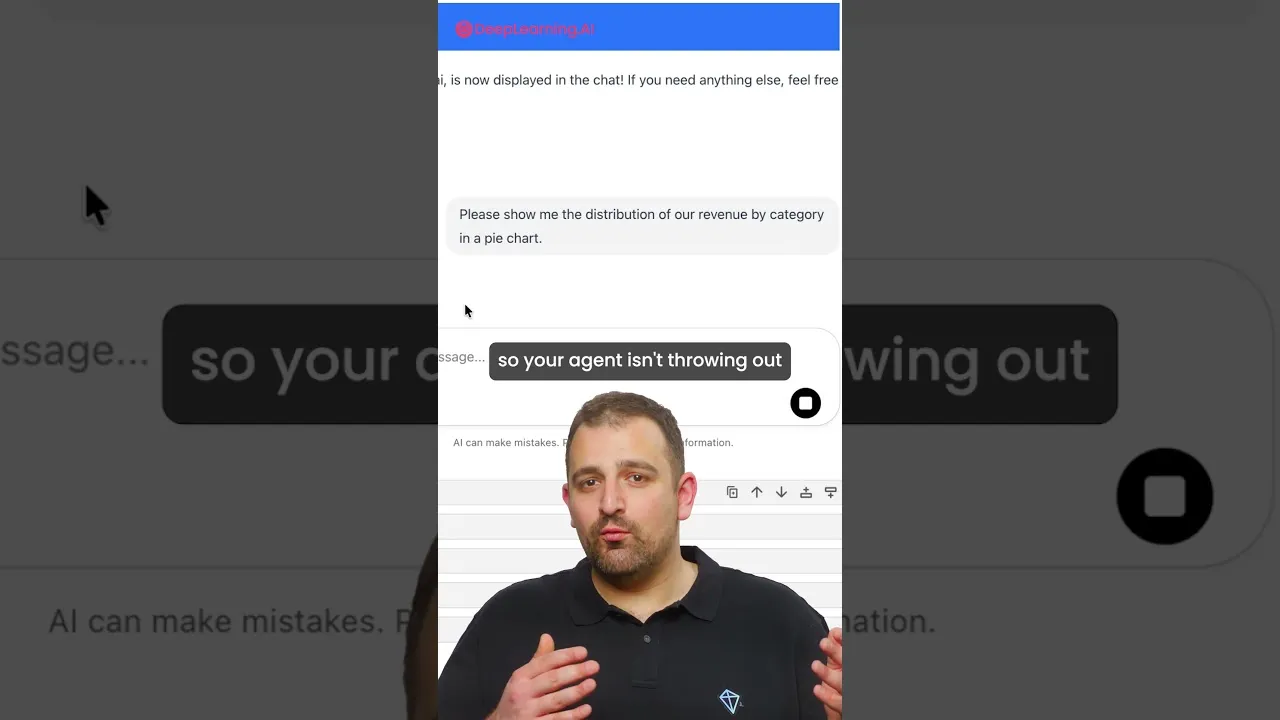
For example, you might have a pie chart component ready. If a user asks the AI about their spending breakdown, the AI can instantly recognize this request and use the pie chart component to display the data visually. This is far more effective than just listing numbers in a text response.
Similarly, if a user asks about an upcoming flight, the AI can choose to display an interactive flight card. This card could show details like flight number, departure time, gate information, and even offer options to check in or change seats. This makes the AI’s response not just informative but also actionable.
Custom Components and Simple Schemas
The custom components are built using simple descriptions, called schemas. These schemas tell the AI what kind of information each component needs to work.
For instance, a flight card schema might specify fields for flight number, airline, departure time, and destination. The AI then fills these fields with the relevant data when a user asks about their flight.
This approach is powerful because it bridges the gap between understanding user requests and presenting information in the most effective format. Instead of the AI guessing how to show data, you provide it with the tools and instructions to create clear, visual, and interactive outputs.
Comparing to Existing Tools
Before Generative UI, building interfaces for AI agents often required significant programming effort. Developers had to write code to create every button, chart, and layout. This was time-consuming and limited how dynamic AI interactions could be.
Existing AI models, like large language models (LLMs), are excellent at understanding and generating text. However, they typically lack the ability to directly create visual elements or interactive components. Generative UI adds this crucial visual layer, allowing AI to go beyond text and engage users through richer, more graphical means.
Think of it like this: an LLM is like a brilliant writer who can describe anything. Generative UI is like giving that writer a set of drawing tools and a stage, so they can not only describe a scene but also show it to you, let you interact with it, and even make changes.
Why This Matters
The ability for AI to generate its own user interfaces has significant real-world implications. For businesses, it means creating more engaging and efficient customer service bots. Imagine a banking app where your AI assistant can show you a personalized spending report as a dynamic chart, or help you book a new flight with an interactive booking form generated on the fly.
For productivity tools, this could mean AI assistants that can visualize project timelines, display data dashboards, or create interactive reports. Users would spend less time trying to interpret raw data and more time acting on insights presented clearly and visually.
This technology also promises to make AI more accessible. By allowing AI to create its own interfaces, the need for complex coding to build user-friendly AI applications is reduced. This could empower more people to build and use sophisticated AI tools.
Availability and Future
The concept of Generative UI is still emerging, with companies and developers exploring its potential. While specific product releases tied directly to this transcript are not detailed, the underlying technology builds upon advancements in AI model understanding and interface design.
As AI models become more sophisticated, their ability to interpret requests and generate appropriate visual responses will only improve. This means we can expect to see more AI applications that don’t just talk to us but also show us information in dynamic and interactive ways.
The next steps will likely involve wider adoption of these tools by developers and the creation of more pre-built components that AI can utilize. This will make it easier for anyone to build AI agents that offer a more visual and interactive experience for their users.
Source: Coming Soon: Build Interactive Agents with Generative UI (YouTube)