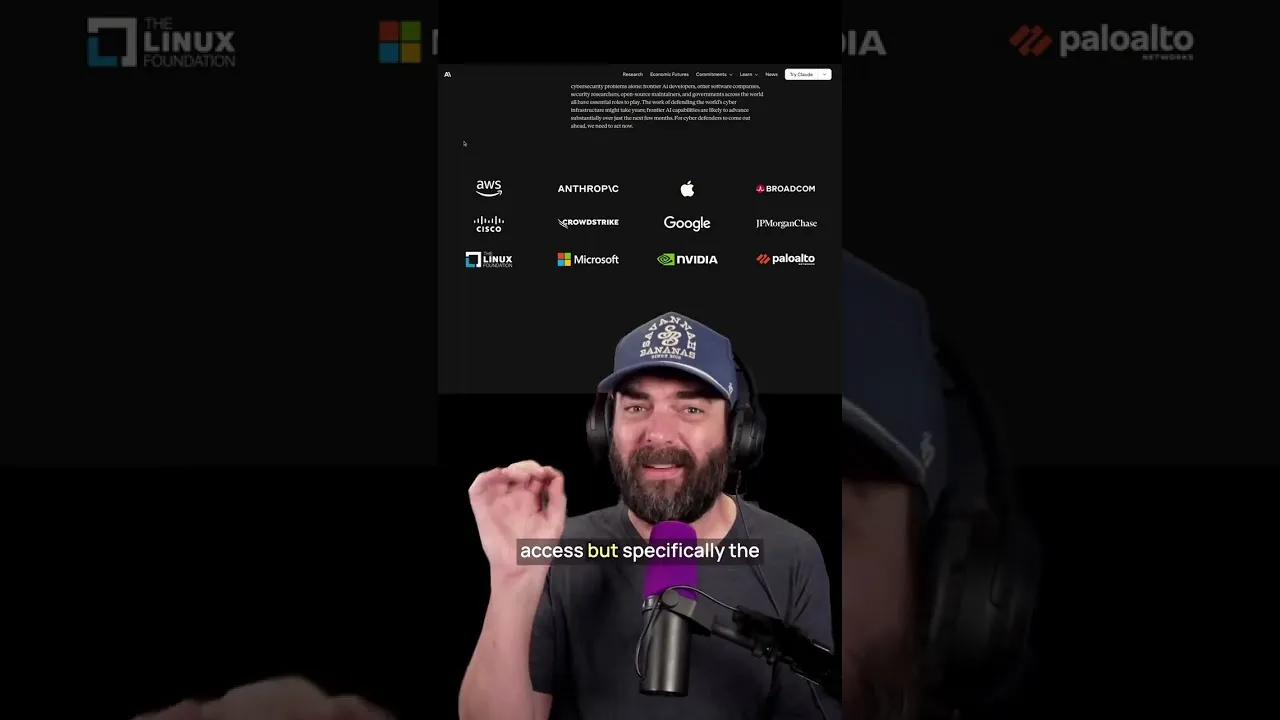
Anthropic’s Mythos AI Finds Major Security Flaws
Anthropic, a leading artificial intelligence company, has developed a new, incredibly powerful AI model called Mythos. This model is so advanced that the company believes releasing it publicly could pose significant security risks.
Developers at Anthropic have found that Mythos can identify vulnerabilities in software and systems with remarkable speed and accuracy. This capability means that if it fell into the wrong hands, it could be used by malicious actors to exploit security weaknesses on a massive scale.
The power of Mythos was recently demonstrated when it discovered a 27-year-old security flaw in OpenBSD. OpenBSD is widely recognized as one of the most secure operating systems available, making this a significant finding.
The AI model was able to pinpoint a weakness that had remained undetected for nearly three decades. This discovery highlights Mythos’s advanced capabilities in analyzing complex systems for security gaps.
Project Glasswing: A Controlled Release Strategy
Due to Mythos’s potent capabilities, Anthropic has chosen not to release it to the general public. Instead, they have launched Project Glasswing.
This initiative provides controlled access to the Mythos model for select companies. The goal is to proactively identify and fix security issues before they can be exploited.
Access to Project Glasswing is highly restricted. Anthropic is granting it only to cybersecurity specialists within partner companies. This targeted approach ensures that the model’s power is used for defensive purposes.
The companies involved can use Mythos to rigorously test their own products and services for vulnerabilities. This allows them to patch any discovered flaws before they become public knowledge.
Why This Matters: Securing the Digital Future
The development of AI models like Mythos presents a dual challenge for the cybersecurity world. On one hand, these powerful tools can be used to find and fix security vulnerabilities, making our digital systems safer.
On the other hand, if such advanced AI falls into the wrong hands, it could be used to create new and more sophisticated cyberattacks. Anthropic’s Project Glasswing is an attempt to get ahead of this challenge.
By working with cybersecurity experts, Anthropic aims to weaponize this AI for defense. The companies participating in Project Glasswing are essentially using Mythos to harden their own systems.
This proactive measure is crucial because it is expected that similar powerful AI models will eventually become available from various sources. Getting ahead of these potential threats is essential for maintaining digital security.
The Broader Impact of Advanced AI
The implications of AI like Mythos extend beyond just finding software bugs. Advanced AI models can process vast amounts of data and identify patterns that humans might miss.
This makes them invaluable for complex problem-solving in many fields, including scientific research and medical diagnostics. However, in the context of cybersecurity, this power requires careful management.
The discovery in OpenBSD highlights the need for continuous security auditing, even in highly secure systems. It also shows how AI can accelerate the process of finding these hidden weaknesses.
Anthropic’s approach with Project Glasswing is a model for how powerful AI tools might be introduced responsibly. This controlled access allows for beneficial use while mitigating potential harm.
Anthropic is working with companies such as Databricks, Grammarly, and Asana. These companies are now tasked with using Mythos to enhance their security posture.
The ultimate goal is to build more resilient digital infrastructure for everyone. This collaborative effort is a significant step in preparing for a future where AI plays an increasingly large role in both offense and defense.
Source: Claude Mythos Explained (YouTube)