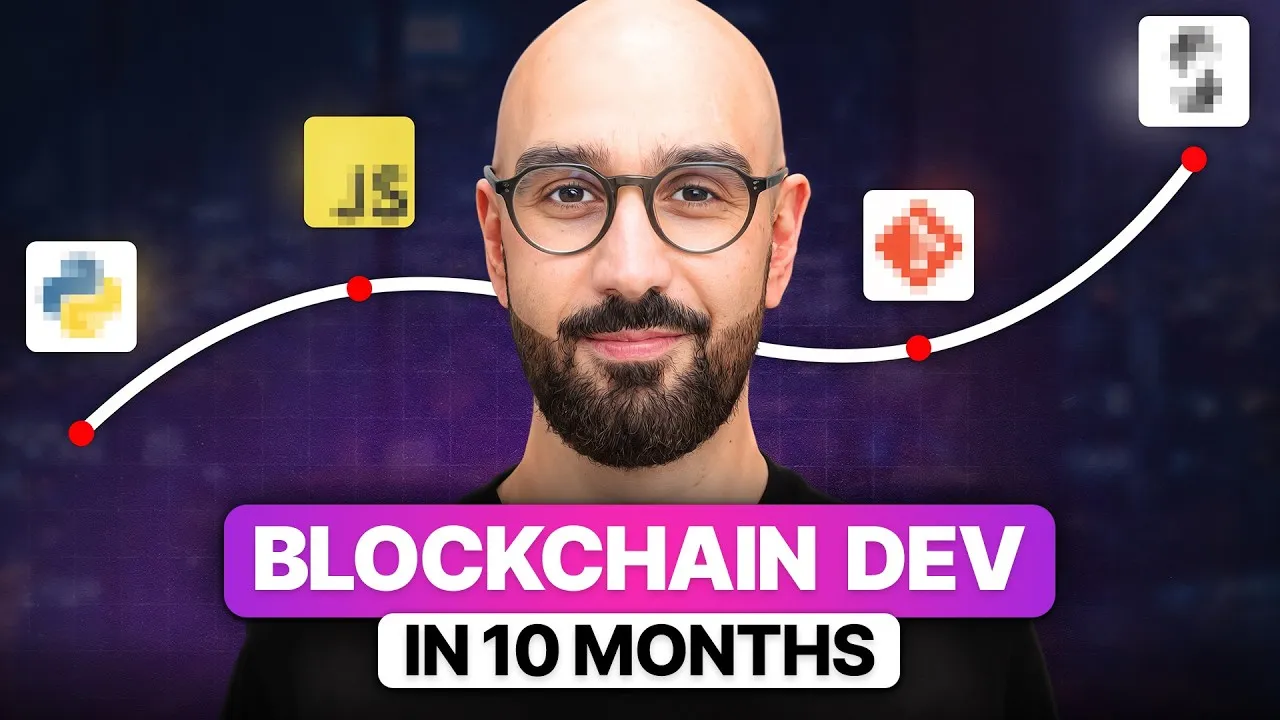
Master Blockchain Development: Your 8-10 Month Roadmap
Embarking on a journey to become a blockchain developer can seem daunting, but with a structured approach, it’s an achievable goal. This guide provides a comprehensive roadmap, outlining the essential skills, recommended tools, and time commitments needed to transition into blockchain development within 8 to 10 months, assuming a dedication of 3 to 5 hours of study per day.
What You’ll Learn
This roadmap will guide you through the foundational programming languages, essential development tools, critical computer science concepts, and the specific technologies required for smart contract and decentralized application (dApp) development. By following these steps, you’ll build a robust skill set necessary to pursue entry-level blockchain developer roles.
Prerequisites
- A computer with internet access.
- A willingness to dedicate 3-5 hours per day to study and practice.
The Roadmap Steps
Step 1: Master a Core Programming Language (2 Months)
The first crucial step is to learn a programming language widely used in blockchain development. The two most popular choices are Python and JavaScript.
- Python: Recommended for beginners due to its easier learning curve. It’s extensively used for scripting within the blockchain space.
- JavaScript: Essential for frontend development and Web3 frameworks, which you’ll encounter later.
Recommendation: Start with one language, preferably Python, to avoid confusion. Once you have a solid grasp of Python, learning JavaScript will be significantly faster. Dedicate approximately 2 months to learning the basics of your chosen language through consistent daily study and coding.
Tip: A supplementary PDF is available (link in description) that details specific concepts for each skill, which can help track progress and identify knowledge gaps.
Step 2: Learn Version Control with Git (1-2 Weeks)
Version control systems are fundamental tools for any developer. Git is the industry standard.
- Git: A system for tracking changes in your code over time.
- GitHub: A popular platform for hosting Git repositories, enabling collaboration and code management.
Focus: While Git has many features, concentrate on the 20% of functionalities used 80% of the time for everyday development tasks. 1 to 2 weeks of focused practice should be sufficient to become proficient in its core usage.
Expert Note: Git and GitHub are non-negotiable skills for professional developers. Understanding how to manage code versions and collaborate effectively is critical.
Step 3: Study Data Structures and Algorithms (1-2 Months)
This area is often overlooked by self-taught developers but is vital for interviews and efficient programming, especially in blockchain.
- Importance in Blockchain: Blockchain operations can incur costs, making efficient data processing and storage paramount. Understanding data structures helps you choose the right method for specific problems.
- Key Concepts: Study classic data structures such as arrays, linked lists, stacks, queues, trees, and graphs.
Time Commitment: Allocate about 1 to 2 months to thoroughly understand these concepts. This knowledge will significantly improve your problem-solving abilities and code efficiency.
Step 4: Learn Smart Contract Development (1-2 Months)
Smart contracts are self-executing programs that run on a blockchain, enforcing predefined rules.
- Solidity: The most popular language for writing smart contracts on the Ethereum blockchain. It shares similarities with other programming languages, making it learnable once you have a programming foundation.
- Remix IDE: A web-based Integrated Development Environment (IDE) perfect for beginners. It allows you to start coding, testing, and deploying smart contracts immediately without complex local setup.
- Hardhat: A professional, local development environment recommended after gaining familiarity with Remix. It provides a robust framework and tools for building, testing, and debugging smart contracts on a larger scale.
Practice Projects: Spend 1 to 2 months building small projects like basic tokens or Non-Fungible Tokens (NFTs) to solidify your understanding.
Step 5: Develop Decentralized Applications (dApps) (2-3 Months)
Once you can deploy smart contracts, you’ll need to build user-facing applications that interact with them.
- dApps Explained: Decentralized Applications (dApps) function like traditional web or mobile apps but utilize a blockchain network for their backend operations instead of centralized servers.
- Frontend Frameworks: You’ll need to learn a frontend framework to build the user interface. Popular choices include React, Angular, and Vue.
- React: Currently the most popular choice for building user interfaces.
- JavaScript & TypeScript: To effectively use React, a strong understanding of JavaScript is essential. Learning TypeScript, a superset of JavaScript widely adopted in React projects, is also highly recommended.
- Web3 Libraries: Familiarize yourself with libraries like Web3.js or Ethers.js. These are crucial for connecting your frontend dApp to the blockchain network, allowing it to read data and send transactions.
Time Allocation: Expect to spend about 2 months mastering the core concepts of JavaScript and TypeScript, followed by another 1 to 2 months dedicated to learning React and integrating Web3 libraries.
Conclusion: Your Path to a Blockchain Career
By dedicating 3 to 5 hours daily and following this structured roadmap, you can acquire the necessary skills to apply for entry-level blockchain developer positions within approximately 8 to 10 months. Consistent practice, building projects, and continuous learning are key to success in this rapidly evolving field.
Source: From Zero to Blockchain Developer in 10 Months: Complete Roadmap (YouTube)