Claude Co-work Introduces Live Artifacts, Connecting Your Apps Seamlessly
Artificial intelligence company Claude has launched a significant new feature for its desktop application, Claude Co-work. Called “Live Artifacts,” this update allows users to create dynamic, interactive dashboards that pull real-time data from their connected apps. This means your digital tools can now update information directly within Claude’s interface, offering a more connected and efficient workflow.
Artifacts, in Claude’s system, are like small, custom-built applications or visual tools. Users can tell Claude to generate them from scratch, build website prototypes, or analyze uploaded data. The “live” aspect is the key innovation here, transforming static displays into active information hubs.
How Live Artifacts Work: Real-time Data at Your Fingertips
Imagine a dashboard that shows your upcoming calendar events, recent emails, and client notes from your CRM, all updating as changes happen. That’s the promise of Live Artifacts. Before this update, artifacts were static; once created, they didn’t reflect new information unless manually refreshed or rebuilt.
Now, when you connect tools like Notion, Slack, Gmail, or Google Calendar to Claude Co-work, any updates made in those applications can automatically appear in your Live Artifact. This creates a central point of access for critical, up-to-the-minute information, essentially building a personalized “dashboard operating system” on your computer.
A Practical Example: Building a Daily Briefing Dashboard
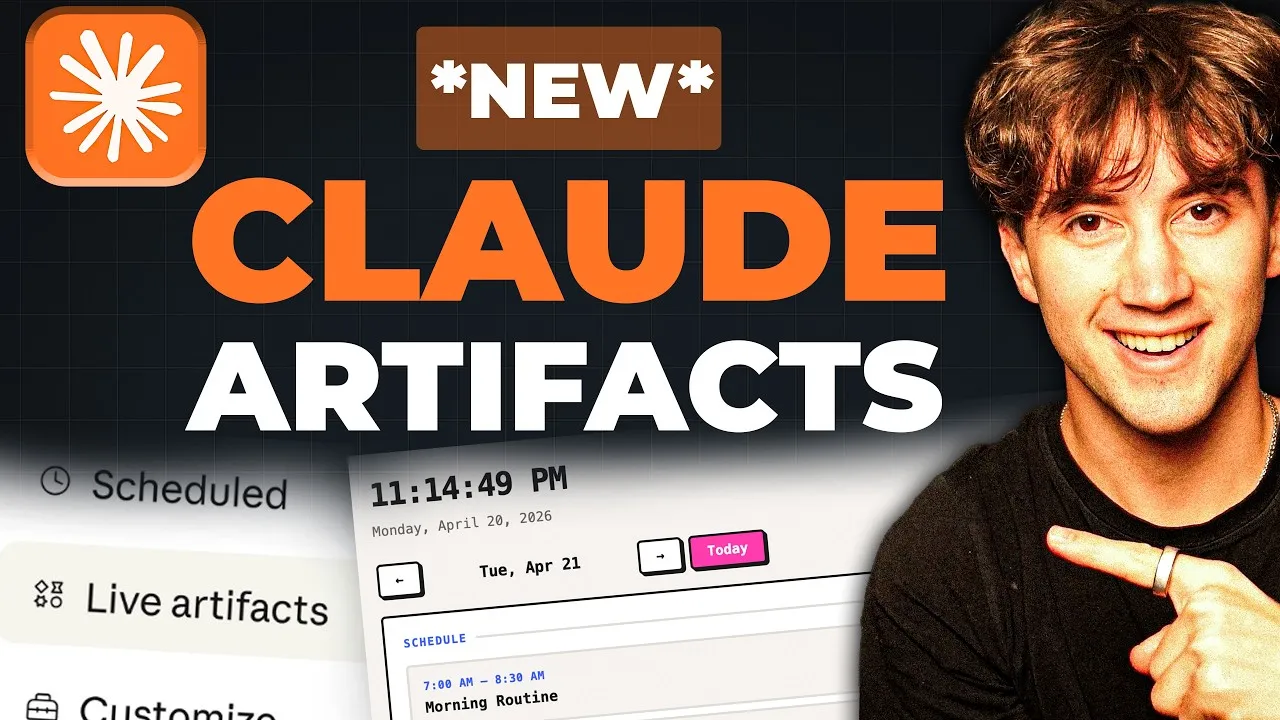
To demonstrate the feature, one user connected Claude Co-work to their Google Calendar, a Notion CRM, and Gmail. The goal was to create a daily briefing dashboard. This dashboard would show upcoming calls, relevant client notes from Notion, and any missed emails for the day.
The user instructed Claude to pull data from these sources, filtering for the current day and time. As they added test events to their Google Calendar and updated client statuses in Notion, the Live Artifact successfully reflected these changes in near real-time. For instance, changing a client’s status in Notion from “discovery scheduled” to “active client” was immediately visible on the artifact.
Customization and Integration: Tailoring Your Command Center
The Live Artifacts feature goes beyond just displaying data; it allows for significant customization. Users can ask Claude to adjust the visual style, color schemes, and even integrate additional functionalities. In the demonstration, the user requested a “soft brutalism” style with specific neon accents and asked to integrate live time updates.
Claude, using its Opus 4.6 model (with a note that Opus 4.7 might be better suited for complex tasks), processed these requests, redesigning the dashboard. The result was a visually appealing and highly functional command center. This dashboard can be expanded to view upcoming days or weeks, with summaries and notes readily available.
Why This Matters: Bridging the Gap Between AI and Your Workflow
Live Artifacts represent a significant step in making AI tools more integrated into daily work. Instead of switching between multiple applications, users can consolidate essential information into a single, dynamic interface powered by AI. This can save time, reduce context switching, and potentially improve decision-making by providing immediate access to relevant data.
The ability to connect hundreds, or even thousands, of tools opens up possibilities for creating highly specialized dashboards for various professional needs. Whether it’s managing sales pipelines, tracking project progress, or monitoring support tickets, Live Artifacts offer a flexible platform for building personalized AI-powered command centers.
Availability and Future Outlook
Live Artifacts were released on April 20th, 2026, within the Claude Co-work desktop application. While the initial reception has been mixed, the potential for creating personalized, data-driven dashboards is immense. The feature allows users to build custom buttons that can trigger specific automations on their machines, further enhancing workflow efficiency.
Claude’s rapid update cycle suggests that this feature will likely see continuous improvement. The ability to connect personal tools and have them directly influence an AI-generated interface marks a new phase in how we interact with both AI and our digital lives.
Source: Claude Just Released LIVE Artifacts… (Amazing Results) (YouTube)