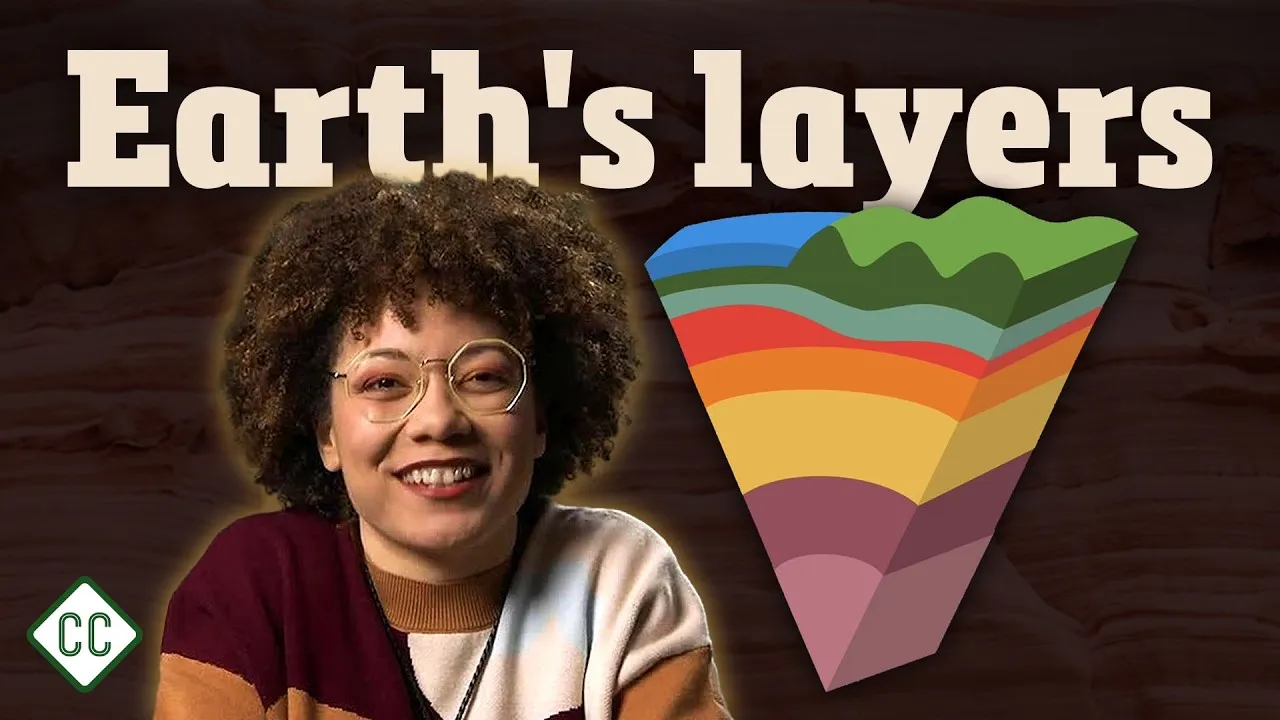
Explore Earth’s Hidden Layers: Crust and Mantle
Have you ever wondered what lies deep beneath your feet? Humans have dreamed of exploring Earth’s interior for centuries, imagining hollow worlds or hidden prehistoric life.
While we haven’t found those, we have learned a lot about our planet’s rocky shell and the dense layer below it. This guide will help you understand the Earth’s crust and mantle, how they are different, and how scientists study them.
Prerequisites
No special tools or prior knowledge are needed for this exploration. All you need is a curious mind!
Step 1: Understanding the Earth’s Crust
The Earth’s crust is the thin, rocky outer layer where we live. It makes up only a tiny fraction of the planet’s total volume, about 1.4 percent. This is the layer that holds all the fossils, fuel, and even the buildings we construct.
The crust is made of solid rock, mainly oxygen and silicon, mixed with other elements like aluminum, iron, and calcium. These rocky sections are called tectonic plates.
These plates constantly move, crashing into, sliding past, or pulling away from each other. This movement shapes our continents, creates mountains, and forms deep ocean trenches.
The crust’s thickness varies. Underneath large mountain ranges, it can be as deep as 70 kilometers. However, the crust beneath the oceans is much thinner, usually only 5 to 10 kilometers thick.
Step 2: Journeying to the Mantle
As you dig deeper, you reach the mantle, Earth’s thick middle layer. This layer makes up a huge part of our planet, about 84 percent of its total volume, and is roughly 2900 kilometers deep.
The mantle is crucial because it generates heat and movement, called convection currents. These currents are what drive the movement of the tectonic plates on the crust above.
The uppermost part of the mantle, along with the crust, forms the lithosphere. This is the rigid, cool, rocky shell of the Earth.
Below the lithosphere lies the asthenosphere, a hotter and more pressurized part of the mantle. Here, the rock becomes less solid and more like very thick, stretchy taffy.
The mantle’s composition changes with depth. The upper mantle, for instance, contains a mineral called olivine, which gives it a greenish-black color.
As you go deeper into the mantle transition zone, the increasing heat and pressure cause the minerals to rearrange. This changes their color to black, red, and blue as they become more densely packed.
Step 3: Discovering the Lower Mantle and Beyond
Further down, around 660 kilometers below the surface, you’d encounter a rugged landscape within the mantle transition zone. Imagine vast mountain ranges and jagged peaks, some potentially taller than Mount Everest, all hidden deep within the Earth.
Beyond this zone is the lower mantle, which extends to about 2700 kilometers deep. This region is even hotter and denser than the upper mantle.
The high pressure here means the rocks flow much more slowly. The lower mantle alone accounts for about half of Earth’s entire volume.
Even deeper, scientists have detected strange, continent-sized blobs within the mantle. These mysterious formations, nicknamed “Tuzo” and “Jason,” are not fully understood. They might be remnants of ancient planetary collisions or pieces of tectonic plates that broke off long ago.
Step 4: How Scientists Study Earth’s Interior
Since drilling through the crust is incredibly difficult, scientists use clever methods to study Earth’s deep layers. One way is by examining volcanic eruptions. When volcanoes erupt, they bring up melted mantle rock or chunks of mantle material to the surface, giving geologists a sample to study.
Scientists also look to space for clues. By studying iron meteorites, which are ancient space rocks, they’ve learned that Earth’s core is made of similar metals.
These metals sank to the planet’s center as Earth formed. In 2014, a 4.5-billion-year-old meteorite helped scientists identify bridgmanite, the most common mineral in Earth’s hot lower mantle.
Another powerful tool is seismology, the study of earthquake waves. By analyzing how seismic waves travel through the Earth, geologists can essentially create “X-rays” of the planet’s interior. This helps them understand the properties and structure of each layer, from the crust to the mantle.
Step 5: The Significance of Early Exploration
Projects like the Kola Superdeep Borehole in Russia and the earlier Project Mohole in the United States, though they didn’t reach the mantle, were not failures. These ambitious attempts helped develop new techniques for drilling and sampling. These methods have since allowed scientists to learn much more about Earth’s insides and its past.
By drilling and collecting samples from the ocean floor, researchers have gained insights into ancient climates and how tectonic plates have shaped the planet over millions of years. Recent expeditions, like one in 2023 that retrieved mantle rock from an underwater mountain, are even exploring how these rocks might have provided the basic ingredients for life to begin.
While we still know less about our planet’s interior than we do about outer space, these ongoing efforts continue to reveal the secrets hidden beneath our feet. Understanding these deep layers helps us comprehend how our planet works and how it connects to everything on its surface.
Source: Earth's Crust and Mantle Explained: Crash Course Geology #3 (YouTube)