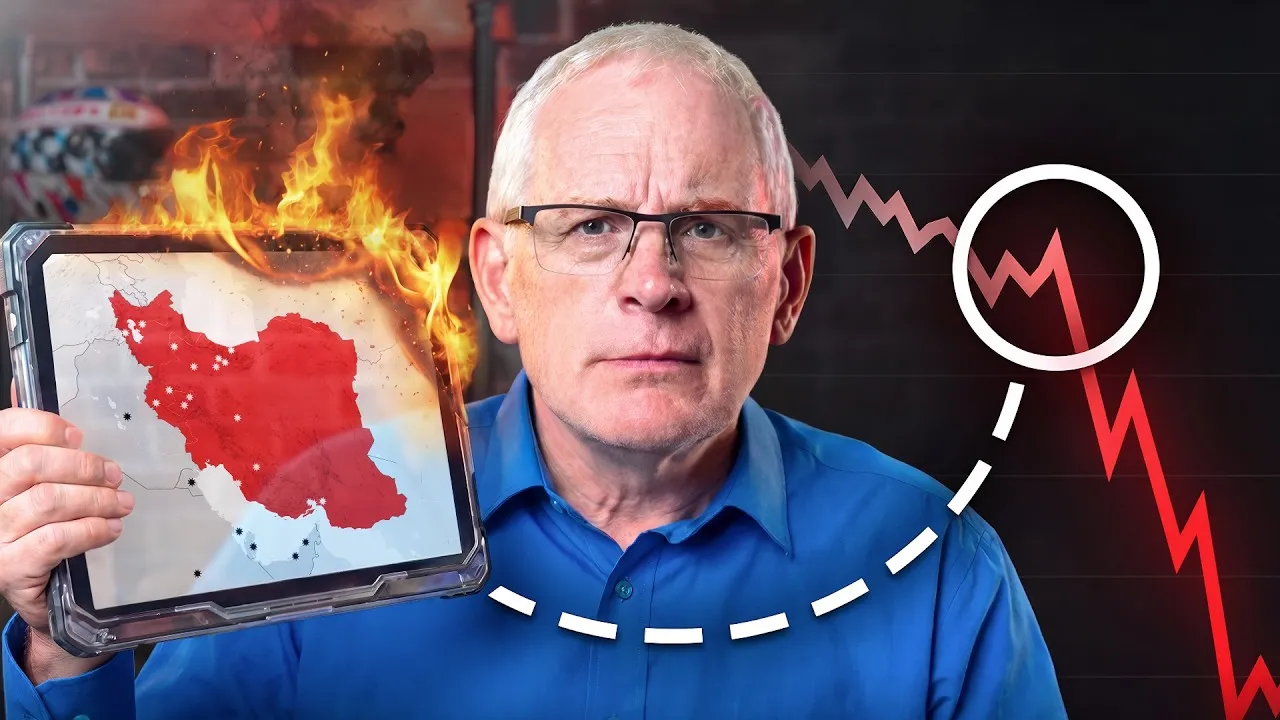
Iran Conflict Sparks Economic Shockwaves, Oil Prices Soar
The global economy is facing a significant shock, driven by escalating tensions in the Middle East, particularly involving Iran. While mainstream news may focus on de-escalating military actions, the real financial consequences are only beginning to impact everyday people. This situation has already triggered a dramatic rise in oil prices and threatens to affect jobs, household budgets, and the stability of the U.S. dollar.
Key Events Triggering Market Volatility
The current economic instability traces back to a coordinated strike by the U.S. and Israel on Iran in late February, dubbed Operation Epic Fury. This operation involved nearly 900 strikes targeting military sites and nuclear facilities within a 12-hour period. Iran retaliated with missile and drone attacks on Israel and U.S. bases across the region.
A critical turning point occurred on March 2nd when Iran closed the Strait of Hormuz. This narrow waterway is vital for global trade, serving as the passage for approximately 20% of the world’s oil supply daily. Its closure, even temporarily, acts like a single point of failure for a major global supply route.
Oil Prices Skyrocket, Affecting Everyday Costs
The closure of the Strait of Hormuz had an immediate and dramatic effect on oil prices. By the end of March, oil prices had surged to over $118 a barrel, nearly doubling from around $61 at the start of the year. This represents the largest price increase in almost 40 years.
Although a ceasefire was later announced, leading to a temporary drop in oil prices and a market rally, the situation remains uncertain. Both Iran and the U.S. have claimed the strait is open, but there is confusion about who controls it and for how long. The U.S. Navy continues to warn vessels about potential sea mine threats, highlighting the ongoing risk and uncertainty.
This uncertainty is enough to sustain economic damage. The shockwave from the oil price surge is already in motion, impacting more than just fuel costs. Every product purchased has a supply chain that relies on energy for production, packaging, and transportation.
Impact on Household Budgets
Higher oil prices translate directly into increased costs for consumers. Energy bills have already seen double-digit percentage increases this year, and experts fear further rises in the next three to six months as the shock works through the system. This means consumers can expect higher expenses for energy, food, and transportation.
What Investors Should Know: The primary financial advice is to be cautious about making major financial commitments based on the assumption that costs will decrease soon. Monthly expenses are likely to continue rising for some time. It is advisable to build up extra savings to create a financial cushion during this period of rising costs.
Threat to Job Security
The economic impact extends to the job market. When energy prices spike, businesses face a dual challenge: their operating costs increase due to higher expenses for transport, manufacturing, and electricity, while consumer spending decreases as households grapple with rising bills. This squeeze can force companies to make difficult decisions.
Initially, this might involve cutting overtime or freezing hiring. However, if the economic pressure persists, layoffs become a likely outcome. Warning signs were already present before the oil shock, with slowing job growth and companies cautiously pulling back, mirroring trends seen during the 2008 financial crisis.
What Investors Should Know: Individuals should not assume their income is guaranteed, even in seemingly stable jobs. Focusing on becoming indispensable to an employer by taking on more responsibility or improving skills can help mitigate personal risk. Exploring online side hustles with the potential for significant income is also a recommended strategy for building financial resilience.
Government’s Limited Response Options
Historically, governments and central banks have used tools like cutting interest rates or printing money to stabilize the economy during crises. However, the current situation presents a challenge to these traditional responses.
Cutting interest rates is typically used to stimulate borrowing and economic activity. But with rising inflation, lowering rates could further increase prices.
Printing more money, as was done during the pandemic, is also problematic given the U.S. national debt of $39 trillion. The annual interest alone on this debt is approximately $1 trillion, with 19 cents of every tax dollar collected now going towards interest payments.
What Investors Should Know: Relying on government intervention as a primary solution may be unwise. The usual economic playbook is no longer as effective, suggesting that individuals need to take proactive steps to secure their own financial well-being rather than expecting traditional government support.
Risk of Stagflation Looms
The combination of rising prices, a weakening job market, and limited government response tools creates a scenario known as stagflation. This is an economic condition where prices remain high while the economy slows down, leading to job losses and reduced purchasing power.
Unlike a typical recession where prices tend to fall, stagflation involves rising costs alongside economic stagnation. The tools used to combat inflation, like raising interest rates, can worsen a recession, while tools to fight a recession, like cutting rates, can fuel inflation. This creates a difficult situation where efforts to fix one problem exacerbate the other.
Recent data shows U.S. inflation at 3.3%, up from 2.4% the previous month, while GDP growth forecasts have been lowered. A predictive AI model from Moody’s, which has accurately forecasted recessions in the past, is currently at a 49% probability threshold, just one point away from a level that has historically preceded a recession within 12 months. This prediction was made before the recent escalation of the Iran conflict.
What Investors Should Know: During stagflation, cash loses value due to inflation, and risky investments can also decline. Historically, real assets that people need regardless of economic conditions have held their value best. Diversification beyond cash and growth stocks may be a prudent strategy.
Threat to the U.S. Dollar’s Reserve Status
The U.S. dollar serves as the world’s reserve currency, meaning it is widely used for international trade and as a store of wealth by governments. However, the current geopolitical and economic climate puts the dollar’s dominance at risk.
The U.S. faces difficult choices: continue raising interest rates to fight inflation (risking a recession), print more money (risking hyperinflation), or step back from the Iran situation. If the U.S. cannot ensure the security of critical shipping lanes, other countries may question its strength and the necessity of the dollar.
Data shows a significant shift away from U.S. Treasuries by foreign central banks, with holdings falling to their lowest level since 2012. Instead, these funds are increasingly being allocated to gold, which now represents a larger portion of central bank reserves than U.S. Treasuries. This trend suggests a potential decrease in confidence in the dollar and U.S. debt instruments.
What Investors Should Know: While a dollar collapse is not imminent, the trend of reducing dollar exposure by major global players warrants consideration. Investors should evaluate whether their savings and investments are overly concentrated in a single currency or asset type. A weaker dollar means less purchasing power globally.
Disproportionate Impact on Lower-Income Households
Economic crises do not affect everyone equally. For households with lower incomes, essential expenses like food and energy make up a much larger portion of their budget. Research indicates that low-income households spend nearly 33% of their income on food, compared to about 13% for middle-income households.
When oil and food prices rise, the impact is felt far more acutely by those on lower incomes, potentially changing their daily lives and ability to afford necessities like commuting to work. While government subsidies and price caps are intended to protect consumers, evidence suggests that these measures can sometimes benefit corporations, with profits flowing to shareholders rather than directly to those in need.
What Investors Should Know: The economic squeeze is particularly hard on lower and middle-income individuals, with historical data showing that the top 1% of earners capture a disproportionate share of income gains during economic recoveries. This highlights the importance of personal responsibility for income growth and financial knowledge, especially during challenging economic periods.
Preparing for Economic Uncertainty
The current economic situation, marked by rising energy costs, potential job market instability, and limited government response options, points towards a period of significant uncertainty. The risk of stagflation and a potential challenge to the U.S. dollar’s global standing add further complexity.
Individuals are advised to avoid making large financial commitments based on assumptions of falling costs and to build emergency savings. Focusing on job security through skill development and exploring additional income streams can provide a buffer. Understanding the changing economic landscape and diversifying assets may be crucial for navigating the challenges ahead.
The future economic trajectory remains uncertain, with key indicators suggesting a potential slowdown. Investors and individuals alike are encouraged to stay informed and adapt their financial strategies to this evolving environment.
Source: The Iran Economic Shock Just Started (how to protect yourself) (YouTube)