OpenAI Explores “Super App” Concept and Enhanced Image Generation
Artificial intelligence company OpenAI appears to be working on a major expansion of its tools, with leaks suggesting a new “Super App” designed for coding and general work, alongside advancements in its image generation technology. These developments signal OpenAI’s ambition to move beyond simple chatbots and offer more integrated, practical AI solutions.
CodeX “Super App” Promises Integrated AI Assistance
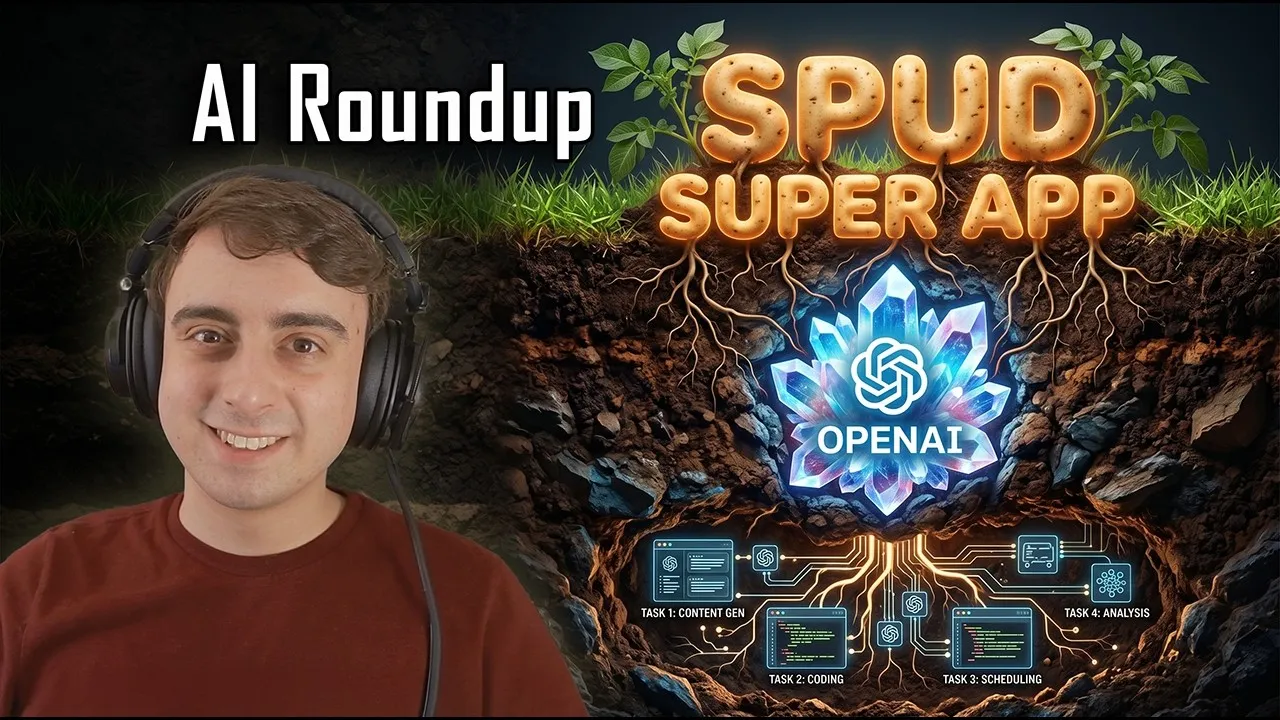
Information emerging from community sources points to a new application from OpenAI, codenamed “CodeX.” This app seems to be designed as a central hub for AI-powered tasks, potentially integrating various OpenAI models and functionalities. Early glimpses suggest a customizable interface, offering both basic and advanced modes. The advanced mode reportedly resembles Google’s anti-gravity interface, while the basic mode draws comparisons to tools like Clawed Co-work. This suggests the app aims to support both general work and more specialized coding tasks, expanding the scope of AI assistance beyond just text generation.
One leaked video clip shows the app using an inline browser to perform a search on Google, demonstrating a basic but crucial capability for an AI assistant. This functionality aligns with the concept of an AI agent, similar to those explored by other companies like Perplexity. The app also hints at experimental features, such as persistent JavaScript support for website debugging and execution, indicating a focus on developer tools and interactive web tasks.
“Spud” Model Could Drive Economic Change
Whispers within the AI community suggest that a new, highly capable model referred to as “Spud” is in development. This model is described as being more “agentic,” meaning it’s designed to proactively perform tasks and achieve real-world goals. Some speculate that the CodeX Super App could be the primary platform through which users interact with and benefit from Spud’s advanced capabilities. The potential impact of Spud is so significant that it’s been described as an “economy mover,” though specific details remain scarce.
Anthropic Also Developing Full-Stack App Creator
OpenAI is not alone in exploring integrated AI application development. Reports indicate that Anthropic, another leading AI company, is also working on a similar tool. Leaked screenshots suggest Anthropic is building a full-stack app creator that allows a Claude agent to directly manipulate and work with code. Features shown include verifying code, scanning for security risks, and exploring design options. While these leaks are considered less solid than those concerning OpenAI, they highlight a shared industry trend towards creating AI tools that simplify the process of bringing digital ideas to life.
Both OpenAI and Anthropic seem focused on reducing the friction involved in taking an idea from concept to completion. The ability to perform these tasks digitally first is where AI can have the most immediate impact, leveraging the existing digital infrastructure.
New Robotics and Large Language Models Emerge
Beyond application development, the AI landscape continues to see rapid model releases. Google has announced Gemini Robotics ER 1.6, a state-of-the-art model for robotics that excels in visual and spatial reasoning. This model is available via the Gemini API and is already showing significant improvements, with one user noting a four-fold jump in instrument reading accuracy from 23% to 93% in a single release. This suggests the model has overcome previous limitations.
Another notable release is the stealth model “Elephant Alpha,” reportedly boasting 100 billion parameters. This model is described as being strong in code completion, debugging, and document processing, with potential capabilities similar to GPT-4.5. However, it has reportedly failed simple reasoning tests, such as deciding whether to walk or drive to a nearby car wash, highlighting that even large models can struggle with common sense.
Uncensored Gemma 4 Offers Enhanced Local Performance
A community-developed version of Google’s Gemma 4 model, dubbed “Super Gemma 4 26B,” has gained attention for being completely uncensored. This fine-tuned model reportedly offers improved performance over the standard Gemma 4, with faster prompt processing and sharper responses. It can be run locally on systems with sufficient VRAM (around 18-22 GB). The uncensored nature means it is less likely to refuse prompts, which some users find allows for more natural and less restricted creative output. This version also demonstrates impressive adherence to custom system prompts, such as adopting an angry New Yorker persona, and can generate detailed, albeit fictional, scenarios like heist plans or complex recipes.
OpenAI’s Images V2 Shows Promising Results
OpenAI’s upcoming Images V2 model is generating significant excitement. While not yet publicly released, early access users and testers are sharing examples that showcase remarkable capabilities. Images generated appear highly realistic and contextually accurate, with examples including a detailed mock-up of an OpenAI YouTube live stream featuring a humanoid robot, and candid high school scenes from the early 2000s. These images exhibit fine details like accurate era-specific clothing, hairstyles, and even legible text on posters and logos, suggesting a significant leap over previous image generation models. Comparisons suggest Images V2 may outperform leading models like Midjourney and Stable Diffusion in certain aspects, particularly in its ability to accurately reference original images and render complex scenes with high fidelity.
Why This Matters
The ongoing developments from OpenAI and its competitors signify a shift towards more integrated and capable AI tools. The potential “Super App” could streamline workflows for professionals, making AI a more accessible and essential part of daily work, especially for coders and content creators. The advancements in image generation suggest that AI will soon be able to produce highly realistic and contextually relevant visuals, impacting fields like design, marketing, and entertainment. Furthermore, the emergence of powerful, potentially uncensored models like Super Gemma 4 highlights the growing power of open-source AI and the community’s ability to refine and adapt these technologies for specific uses, even if it raises questions about responsible deployment. The focus on robotics models like Gemini Robotics ER 1.6 also points to AI’s expanding role in physical automation and interaction with the real world.
Source: Open AI in High Gear! Super App, Image Gen, & Uncensored Gemma 4! (YouTube)