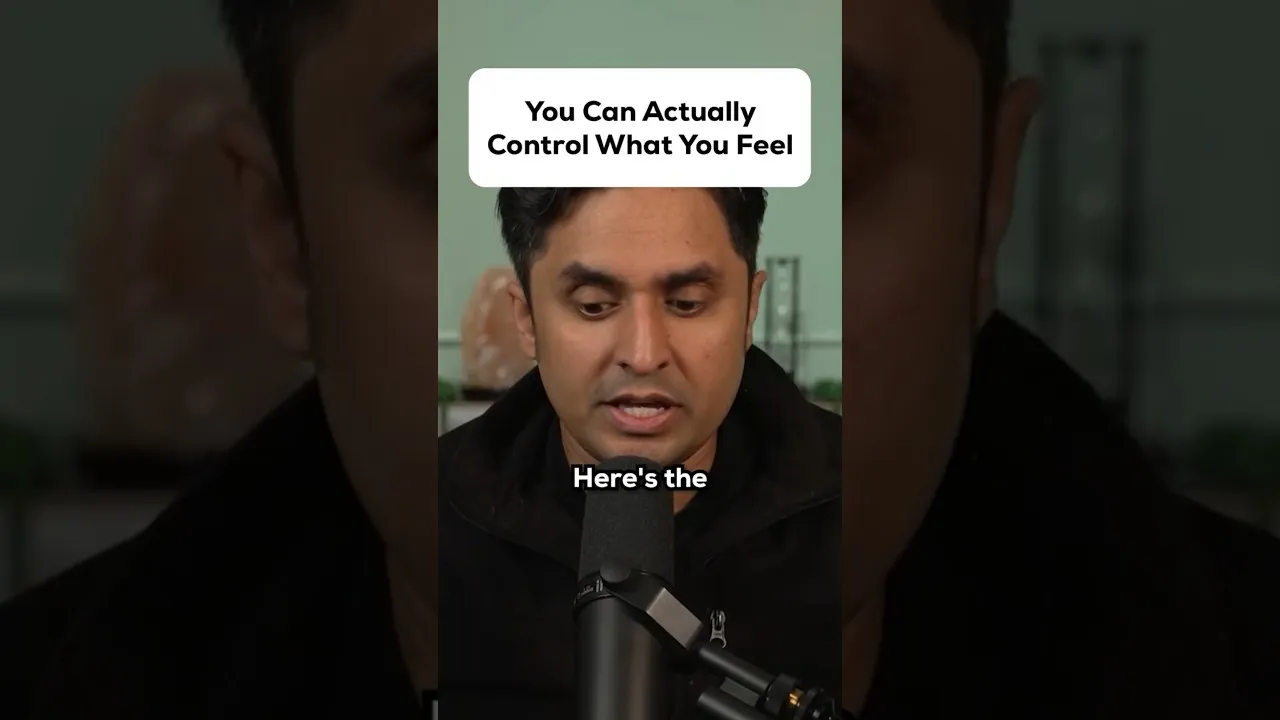
Shift Your Mindset, Change Your Feelings
You have more power over your emotions than you might think. It’s not about ignoring how you feel, but about actively changing how you view situations. This mental shift can help you manage feelings like anxiety and stress more effectively.
Consider a difficult person in your life, perhaps someone who has treated you poorly. Instead of just feeling anger or frustration, try to understand their perspective.
Ask yourself what their life might be like and why they act the way they do. This exercise in compassion can significantly alter your emotional response.
For example, imagine someone who seems to have everything – popularity, friends, success – yet still behaves unkindly. Thinking about their situation can lead to a different understanding. You might wonder what internal struggles they face that cause them to treat others badly, especially when they appear to have so much.
This process of rethinking a situation is challenging at first. However, with repeated practice, it can become an automatic way of responding. This technique is a cornerstone of therapies for conditions like generalized anxiety disorder, where the goal is to adjust a person’s typical emotional reactions to everyday life.
Understanding Emotional Regulation
Our emotional responses are often automatic, but they are also shaped by our thoughts. When we encounter a stressful event, our brain quickly interprets the situation and triggers an emotional reaction. For instance, if you think a car cutting you off in traffic is a deliberate act of aggression, you might feel intense anger.
However, if you consider that the other driver might be rushing to the hospital or simply made an honest mistake, your emotional response could change to one of mild annoyance or even empathy. This is the essence of cognitive reappraisal, a strategy used in cognitive behavioral therapy (CBT).
CBT is a type of talk therapy that helps people identify and change negative thought patterns. Research published in journals like the *Journal of Consulting and Clinical Psychology* has shown CBT to be effective in treating various mental health conditions, including anxiety and depression. It teaches individuals to challenge their assumptions and reframe their thinking.
How to Practice Mindset Shifts
To begin practicing this, pick a situation that recently caused you distress. Write down your initial thoughts and feelings about it. Then, try to brainstorm alternative interpretations of the event, focusing on understanding rather than judgment.
For instance, if a colleague seemed dismissive during a meeting, your initial thought might be that they don’t respect you. An alternative interpretation could be that they were stressed about a deadline or preoccupied with a personal issue. Considering these other possibilities can soften your emotional reaction.
Consistency is key to making these shifts more automatic. Aim to consciously reframe at least one challenging situation each day. Over time, your brain will become more adept at generating these more balanced perspectives, leading to a more stable emotional baseline.
Who Can Benefit?
This approach is beneficial for anyone looking to improve their emotional resilience. It is particularly helpful for individuals struggling with generalized anxiety disorder, social anxiety, or chronic stress. People who tend to ruminate on negative experiences may also find this technique valuable.
The ability to control emotional responses is not limited to those with diagnosed mental health conditions. It is a valuable life skill that can enhance relationships, improve performance at work or school, and generally increase overall well-being. It empowers individuals to feel more in charge of their inner experience.
While these techniques are powerful, they are not a substitute for professional medical advice or treatment. If you are experiencing severe or persistent emotional distress, it is crucial to consult with a qualified healthcare provider or mental health professional.
Key Health Takeaways
- You can actively change your emotional responses by altering how you think about situations.
- Practicing compassion and seeking to understand others’ perspectives can reduce negative feelings.
- Cognitive reappraisal involves consciously reframing challenging events to find alternative interpretations.
- This technique is a core component of therapies like CBT, proven effective for anxiety and stress.
- Consistent practice helps make these positive thought patterns automatic over time.
- This skill is beneficial for everyone, especially those managing anxiety, stress, or difficult emotions.
Start by consciously reframing one situation daily. With persistent effort, you can cultivate greater emotional control and well-being.
Source: You Can Actually Control What You Feel (YouTube)