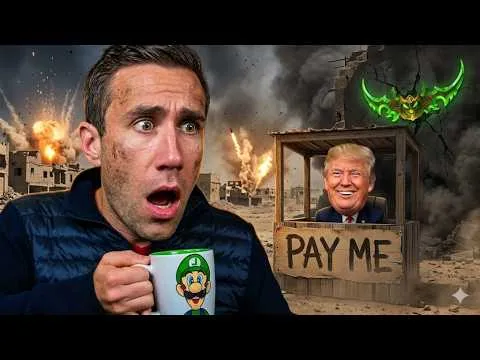
Trump Reverses Stance on Strait of Hormuz, Markets React
Donald Trump has made a significant shift in his policy regarding the Strait of Hormuz, a critical waterway for global oil transport. Last week, Trump stated that the U.S. did not need the strait and that other nations should secure it themselves. However, in a recent address, he declared the strait a “major priority.” This reversal surprised many and caused a brief positive movement in financial markets.
A Complete U-Turn on Policy
Just days after telling the nation, “We don’t need the Strait of Hormuz. In fact, if anybody needs it, they should just go get it themselves. They can control the strait,” Trump reversed his position. He now emphasizes the strait’s importance and suggests a new approach to managing its traffic.
New Approach: Charging Tolls?
During a press conference, Trump hinted at a potential new strategy involving charging tolls for ships transiting the Strait of Hormuz. This idea emerged when a reporter asked about Iran’s parliament passing a law to charge tolls. Trump initially seemed surprised but then stated, “We’ve been working on a concept where we’re going to charge tolls.” He further elaborated, “We won. I’d rather charge the tolls. We are working on a concept where we charge tolls in the Strait of Hormuz.” He also stressed that any deal must include the “free traffic of oil.” This is a stark contrast to his previous stance, where he seemed to suggest that the U.S. would not be involved in ensuring passage through the strait.
Market Optimism Amidst Uncertainty
Financial markets initially interpreted Trump’s renewed focus on the Strait of Hormuz as a positive sign. The concern among investors was that if the U.S. disengaged from the strait, it could become a volatile area, disrupting global oil supplies and negatively impacting the economy. Trump’s indication that the U.S. would ensure the strait remains open, even if it involves a new strategy, provided a brief boost to market confidence. Investors prioritize the stability of the global economy, and an open Strait of Hormuz is key to that stability.
Escalation and Negotiation Tactics
The situation remains tense, with a stated deadline of 8:00 p.m. tomorrow for potential military action. Trump indicated that there is a plan to “completely obliterate every power plant and every bridge in Iran” if necessary. He described the destruction of a bridge in Tehran as a signal to Iran to engage in negotiations. Despite the threats, Trump also expressed optimism about reaching a deal, mentioning that negotiations are ongoing with parties he has “a lot of optimism” in.
Hints of De-escalation?
Adding another layer to the complex situation, Trump suggested the possibility of U.S. involvement in rebuilding efforts in Iran. “We might even get involved in helping them rebuild,” he stated. While this might seem counterintuitive after threatening destruction, some analysts view it as a potential sign of common ground in negotiations. It could imply that instead of paying reparations, the U.S. might offer reconstruction services, potentially paving the way for a less confrontational outcome. This interpretation, however, remains speculative.
Details of a Risky Rescue Operation
The press conference also provided details about a recent rescue operation. Trump highlighted the extensive resources involved, including 155 aircraft, 64 fighters, and 48 refueling tankers. The operation aimed to rescue an American airman whose aircraft was shot down. The CIA played a crucial role in locating the individual in a vast, mountainous, and green terrain, which surprised many who envisioned a more desert-like landscape. The successful rescue, despite the risks, was presented as a testament to American capabilities and commitment to its personnel.
Technological Prowess and Military Stance
Trump confirmed that the aircraft was downed by a man-portable, heat-seeking missile. He also stated that Iran’s military capabilities are currently stronger than they have been in the past 47 years, attributing this to a more sophisticated leadership. Despite this, he reiterated the threat of significant military action, emphasizing the high cost of rebuilding destroyed infrastructure. The U.S. military is reportedly ramping up strikes, with today expected to be the largest volume of strikes since the conflict began, followed by even more tomorrow.
What Investors Should Know
The fluctuating rhetoric surrounding the Strait of Hormuz and Iran creates market uncertainty. Investors should monitor developments closely, as any escalation or de-escalation will directly impact oil prices and global economic stability. Trump’s suggestion of charging tolls or assisting in rebuilding offers potential, albeit uncertain, pathways towards a less volatile situation. The successful rescue operation also underscores the advanced technological and operational capabilities of the U.S. military. While short-term market reactions can be volatile, the long-term implications depend on the ultimate resolution of the geopolitical tensions.
Source: holy smokes Trump FLIPS AGAIN!!!!! {BREAKING NEWS} (YouTube)