Understand Auguste Rodin’s “The Thinker” Sculpture
Many people recognize the famous sculpture “The Thinker,” showing a man deep in thought. But what was the artist, Auguste Rodin, really trying to say with this powerful artwork? It turns out “The Thinker” was originally meant to be part of a much larger, dramatic project inspired by the fires of Hell.
This article will guide you through the story behind “The Thinker.” You’ll learn about Rodin’s early struggles, his groundbreaking artistic style, and how this iconic figure came to represent more than just one man’s thoughts. We will explore its connection to Dante’s “Inferno” and its journey from a piece of a grand design to a globally recognized symbol of contemplation.
Prerequisites
No special tools or prior knowledge are needed. Just bring your curiosity!
Step 1: Discover Rodin’s Early Life and Struggles
Auguste Rodin, the sculptor behind “The Thinker,” had a difficult start. He grew up in a regular working-class neighborhood in Paris. Rodin dreamed of studying at a top art school, but he faced rejection. He applied to the prestigious School of Fine Arts three times and was turned away each time. After these setbacks, he spent several years working as a craftsman, honing his skills. Eventually, he submitted his first sculpture to a major art show called the Paris Salon, but it was also rejected.
Step 2: Explore Rodin’s Artistic Breakthrough
Rodin’s career began to change in 1877. He was 35 years old and had just returned from a trip to Italy. He was deeply impressed by the sculptures he saw from the Renaissance period. Inspired, he created his first significant artwork. However, some art critics wrongly accused him of simply copying his model instead of creating an original piece. Other artists defended Rodin, proving his work was indeed his own.
Expert Note: This early controversy pushed Rodin to develop his unique style. Instead of making sculptures that looked exactly like real people, he started making them with rougher, more expressive surfaces. He believed that art didn’t need perfect accuracy to be truthful; sometimes, a less precise style could convey deeper meaning.
Step 3: Understand the “Gates of Hell” Project
In 1880, Rodin received a very important commission. He was asked to create a large, impressive doorway for a new museum in France. This doorway was meant to be an answer to another famous artwork called the “Gates of Paradise.” Rodin proposed something much darker and more complex: “The Gates of Hell.” This massive project was inspired by Dante Alighieri’s famous poem, the “Inferno,” which describes a journey through the nine circles of Hell and the punishments for sinners.
Rodin began working on “The Gates of Hell” in clay. He sculpted many small figures that were meant to fit together. His studio became filled with these individual pieces, which he could combine, change, or enlarge. Unlike many artists before him, Rodin left marks of his creative process visible on the sculptures. This showed how the art was made, which was a new approach.
Step 4: Learn About the Sculpting Process
The museum for “The Gates of Hell” was never actually built, but the project became Rodin’s lifelong obsession. He kept revising and expanding it for decades. This dedication led to some of his most famous individual sculptures, which were originally part of “The Gates.” Rodin worked with a team of skilled assistants to create his art.
To turn his clay models into bronze sculptures, Rodin used an old method called the lost-wax technique. His team would first make plaster molds of the clay figures. Then, they created hollow wax copies from these molds. These wax copies were coated with a hard material and heated. The heat melted the wax away, leaving a hollow shell. Molten bronze was poured into this shell. Once the bronze cooled, the outer shell was broken away to reveal the solid metal sculpture inside. For very large or complex pieces, different sections were cast separately and then joined together using solder.
Tip: After casting, Rodin’s team would often treat the bronze surface with chemicals. This process, called applying a patina, gave the metal a specific color and finish, adding another layer of artistic expression.
Step 5: Identify “The Thinker” within “The Gates of Hell”
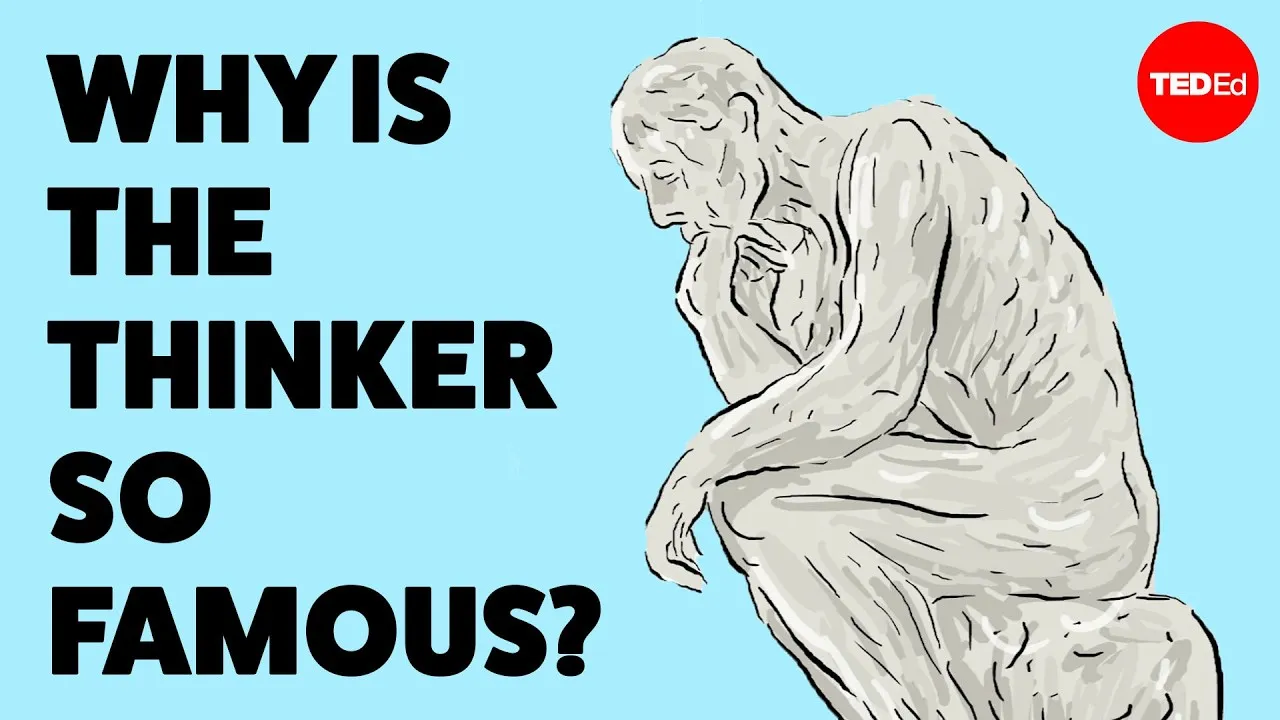
Within the swirling chaos of “The Gates of Hell,” Rodin placed a single, seated figure. This figure was not just any man; it represented the author of the “Inferno” itself, Dante. Rodin originally called this sculpture “The Poet.” The figure is shown hunched over, with his fist supporting his chin, seemingly pondering the suffering and despair of the souls below him. He is contemplating the difficult aspects of human nature and the heavy burdens people carry.
Rodin later renamed the sculpture “The Thinker.” He also found inspiration for other figures within “The Gates” from different sources, including a collection of poetry by Charles Baudelaire, which explored passionate and sometimes dark themes. But the figure of “The Thinker” remained central, overlooking the entire scene of damnation.
Step 6: See How “The Thinker” Became Famous on its Own
In 1888, “The Thinker” was cast as a standalone sculpture for the first time. It quickly became very popular. When it was seen outside the context of “The Gates of Hell,” people began to see it differently. Instead of just representing Dante, the figure started to symbolize a universal idea. Many viewed it as an everyman, a symbol of the human mind’s power to reflect, question, and create new things.
Some even saw “The Thinker” as a symbol of France itself, trying to find a balance between different ideas and values. In 1904, a life-sized version of “The Thinker” was placed in a public space. It wasn’t overlooking a depiction of Hell anymore, but rather standing proudly on top of a cultural monument. It soon became one of the most recognized sculptures in the entire world.
Step 7: Reflect on Rodin’s Legacy
Even though “The Thinker” became incredibly famous on its own, Rodin’s original grand project, “The Gates of Hell,” remained unfinished during his lifetime. He worked on it for 37 years, constantly revising and adding to it. The first bronze version of “The Gates of Hell” was actually completed almost ten years after Rodin passed away. “The Thinker,” though originally a part of this unfinished masterpiece, now stands as a powerful and independent symbol of human thought and introspection.
Source: What is "The Thinker" actually thinking about? – Noah Charney (YouTube)