Mastering Modern Development: Beyond the Hype
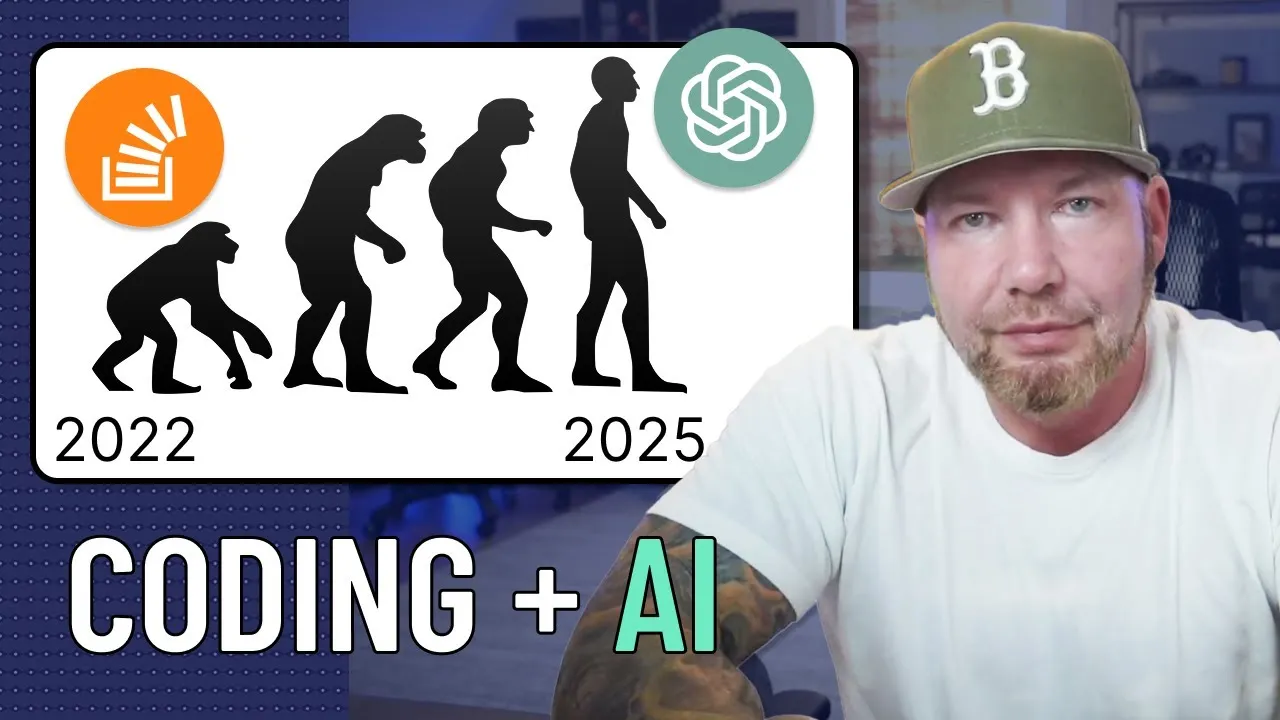
The landscape of software development is constantly evolving, and the recent surge in AI tools has sparked much discussion about how drastically things have changed. While AI offers powerful new capabilities, it’s crucial to understand that many of the processes and tools we use today have roots in practices that predate the current AI boom. This article examines the evolution of software development, comparing past methodologies with current AI-assisted approaches to provide a balanced perspective on what has truly changed and what remains fundamentally the same.
Understanding the Evolution of Coding Practices
The narrative that software development before recent AI advancements was akin to a “stone age” is often an oversimplification. While AI has undoubtedly introduced revolutionary tools, particularly in code generation, the fundamental development process has seen gradual, rather than overnight, transformation over decades. This section will delve into common perceptions versus the reality of coding practices, both past and present.
Prerequisites
- Basic understanding of software development concepts.
- Familiarity with common developer tools and platforms (e.g., IDEs, version control, package managers).
Step 1: Evaluating the “Writing Every Line of Code” Myth
A common misconception is that developers historically wrote every single line of code from scratch. This has rarely been the case. Even years ago, developers relied on a variety of resources:
- Code Snippets and Templates: Reusable pieces of code and project structures were common.
- Stack Overflow: A vast repository of tested solutions that developers frequently adapted.
- Open-Source Code: GitHub and similar platforms provided access to countless libraries and examples for reference and use.
- Package Managers: Tools like npm or pip allowed developers to integrate third-party libraries without needing to understand their internal code.
- Boilerplate Generators and CLI Tools: These tools could scaffold entire projects, automating repetitive setup tasks.
- Intelligent IDE Autocomplete: Integrated Development Environments (IDEs) offered sophisticated code completion long before the current AI wave.
Expert Note: Good developers have always excelled at leveraging existing solutions and libraries. This efficiency is a core part of the job, not a new phenomenon.
Step 2: Addressing the “Hours Fixing Missing Semicolons” Claim
The idea that developers spent hours fixing trivial syntax errors like missing semicolons is largely exaggerated, especially in recent years. Modern development environments have long incorporated tools to prevent this:
- Linters: Tools like ESLint have been standard for years, identifying syntax errors and code style issues.
- Code Formatters: Prettier automatically formats code, ensuring consistency and catching minor errors.
- IDE Features: Most modern IDEs, including VS Code, highlight syntax errors in real-time, often before you even save the file.
Warning: If a developer was genuinely spending hours on such basic errors, it likely indicated a misunderstanding of their development environment rather than a lack of tooling.
Step 3: The Role of Stack Overflow and Community Knowledge
While searching Stack Overflow for answers was a common practice, it offered more than just quick fixes. It provided:
- Vetted Answers: Upvoted solutions indicated community consensus and reliability.
- Community Discussion: Threads often included debates, alternative approaches, and explanations of underlying principles.
- Context and Understanding: Developers could learn *why* a solution worked, not just copy-paste code.
- Real-World Experience: Solutions were often shared by experienced developers, including insights into edge cases.
Expert Note: While AI can provide answers faster, Stack Overflow offered valuable context, debate, and a deeper understanding of problem-solving methodologies that AI currently struggles to replicate.
Step 4: Debunking the “Hope It Runs in Production” Deployment Narrative
The notion that deploying code was once a gamble based on luck is misleading. Professional development has long incorporated robust deployment strategies:
- Staging Environments: Developers have consistently used staging environments that mirror production to test code before release. This practice dates back to at least the mid-2000s.
- Docker Containers: By the mid-2010s, Docker provided consistent environments, largely solving the “works on my machine” problem.
- CI/CD Pipelines: Continuous Integration and Continuous Deployment pipelines (using tools like Jenkins, CircleCI, Travis CI) were standard practice by 2022. These automated systems ensured code passed tests before deployment.
Expert Note: While older methods like manual server configuration via FTP were cumbersome, the professional development world had established reliable deployment workflows long before 2022. The idea of “cowboy coding” directly to production was not the norm.
Step 5: Leveraging AI for Enhanced Development in 2025
AI tools have introduced significant improvements, but they are best viewed as powerful enhancements to existing workflows:
- AI Code Generation: AI can rapidly generate boilerplate code, suggest implementations, and assist with repetitive tasks.
- Conversational Error Explanations: AI can provide tailored explanations for specific errors, often contextualized with code snippets and line numbers, improving upon generic error messages or Stack Overflow searches.
- Interactive Documentation: AI enables more dynamic and conversational documentation, allowing developers to ask follow-up questions and gain deeper understanding, moving beyond static manuals.
Tip: Treat AI as a tool. Understand its output, verify its suggestions, and avoid blindly pasting code. Over-reliance without understanding can lead to technical debt and obscure errors.
Step 6: Recognizing the Subtle but Significant Changes
While AI hasn’t completely reinvented the wheel, it has brought about iterative improvements:
- Streamlined Deployment: Tools like Vercel and Netlify, building on mature CI/CD practices, offer simplified, often single-command deployments. This capability has been available for years (e.g., Heroku’s `git push heroku main`).
- Iterative Progress: The changes brought by AI are significant additions to an already solid foundation, rather than a complete paradigm shift.
Expert Note: The period between 2010 and 2020 saw more fundamental shifts in development (e.g., rise of front-end frameworks like React/Vue, widespread adoption of Docker, cloud platforms) than the changes seen from 2020 to the present. AI tools are building upon this established infrastructure.
Conclusion: Maintaining Perspective on AI’s Role
AI tools are undeniably valuable, accelerating development and offering new ways to learn and solve problems. However, it’s essential to maintain perspective:
- Fundamentals Matter: AI does not negate the need for understanding core programming concepts and development principles. Beginners should not assume AI will handle all learning.
- Experience is Key: Experienced developers were not “stumbling in the dark” before AI. They were utilizing sophisticated tools and methodologies that laid the groundwork for today’s advancements.
- Gradual Evolution: Software development progresses gradually, with occasional leaps. The current AI advancements are part of this ongoing evolution, building on decades of progress.
By understanding the history and context of development practices, we can better leverage AI tools effectively, ensuring they enhance our capabilities without diminishing the fundamental skills and understanding required for robust software engineering.
Source: Coding Before AI Wasn’t The Stone Age (YouTube)