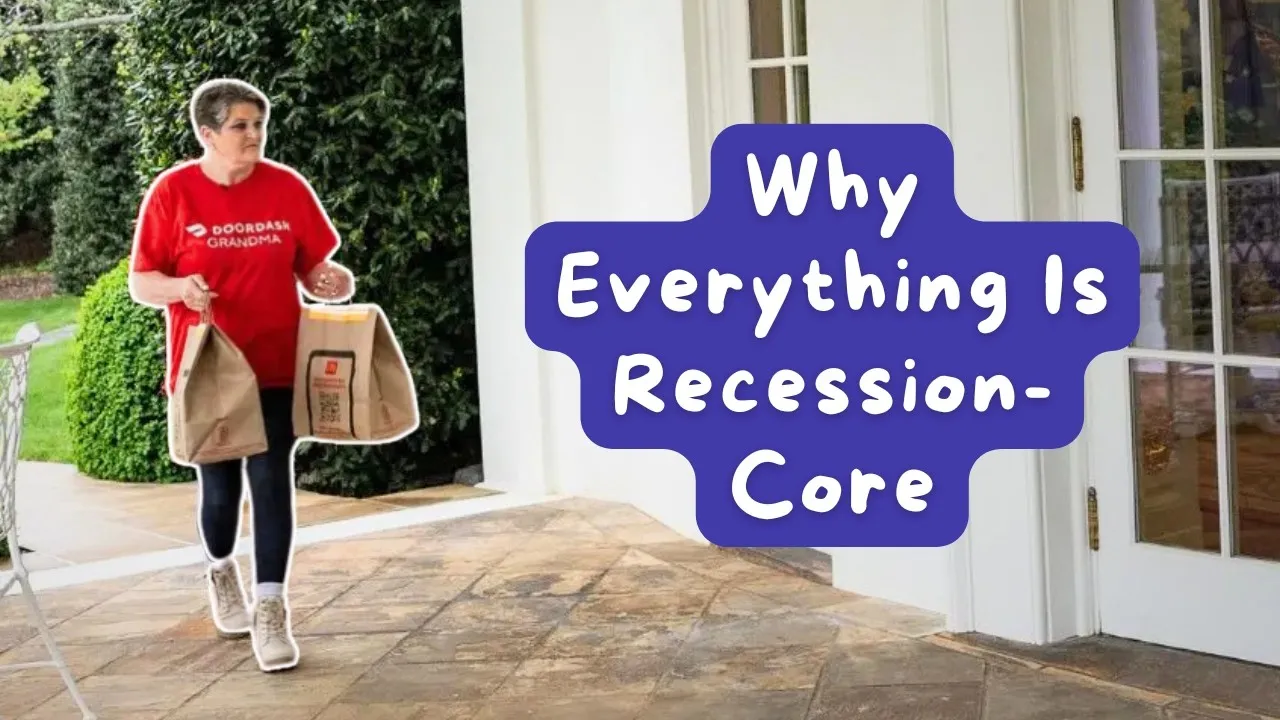
US Economy Faces Hidden Recession Amidst Soaring Costs
Many Americans are feeling the pinch of a struggling economy, even if official terms like “recession” aren’t being widely used by the government. Life has become significantly more expensive, forcing many to dip into savings just to cover basic bills. In February 2026, one individual had to withdraw $200 from savings to make ends meet, a situation not caused by poor financial habits but by the rising cost of everyday necessities.
Property insurance jumped by $30 per month, and health insurance costs surged by $200 monthly due to the removal of government subsidies. Add to this the increasing prices of gas, groceries, and electricity, and it becomes clear why income isn’t keeping pace. For many, 2025 dollars now need to stretch further to cover expenses that have simply outpaced earnings.
What is a Recession?
A recession is generally defined as two consecutive quarters of declining economic activity. This decline can be seen in measures like Gross Domestic Product (GDP), stock market performance, trade levels, and consumer spending habits. While the term might bring to mind major economic downturns like the Great Recession of 2007, recessions are a normal part of the economic cycle.
Since 1900, the United States has experienced 24 recessions. These include significant events such as the Great Depression of the 1930s, the oil crisis of the 1970s, and the dot-com bubble burst in the late 1990s. Understanding this historical context helps frame the current economic situation.
Current Economic Snapshot
As of March 30, 2026, the stock market has fallen 6.79% year-to-date. In the last quarter of 2025, real GDP grew at a modest annual rate of 1.4%. The median income for a full-time worker in 2025 was $62,680.
Total consumer debt reached $18.8 trillion by the end of 2025. This includes auto loans, credit card debt, and mortgages. This figure averages out to about $105,560 in debt per U.S. household.
Wealth Disparities and Debt Burden
The average household debt of $105,560 is particularly striking when compared to average household wealth. In 2022, the average white household held $1.4 million in wealth, while Black families had $211,596 and Hispanic families had $227,544. Asian-American families reported an average of $1.8 million.
For Black and Hispanic families, household debt effectively erases nearly half of their accumulated wealth. This highlights a significant disparity in how economic hardship impacts different communities.
Factors Driving Up Costs
The year 2025 was particularly challenging for individual finances, partly due to government policies like tariffs and ongoing conflicts. The situation in Iran, involving the potential deployment of 50,000 troops, raises serious concerns about oil prices. Since the global economy relies heavily on oil for everything from transportation to manufacturing everyday goods like clothing, an increase in oil prices affects nearly every product and service.
This interconnectedness means that when oil becomes more expensive, the cost of almost everything else in the world tends to rise. This ripple effect contributes significantly to the feeling of a broad economic squeeze on consumers.
Historical Economic Trends
The current economic situation can be partly traced back to decisions made decades ago. The shift towards lower tax rates, starting in the early 1980s under President Ronald Reagan, reduced government revenue. This led to less funding for social programs, making it harder for many Americans to afford essentials like food and childcare.
These tax policies also coincided with the rise of the internet, which created new avenues for wealth generation. While the internet made it easier and cheaper to start businesses and reach a global customer base, lower corporate tax rates allowed these companies to accumulate vast amounts of wealth. This contributed to the creation of many billionaires in the early 2000s.
The K-Shaped Economy
The U.S. economy is often described as K-shaped, meaning it has split into two distinct paths: one for the wealthy and one for everyone else. A striking statistic shows that the top 10% of earners account for nearly 50% of all consumer spending. This isn’t because lower earners spend more freely, but because they often lack the financial means to participate fully in the economy.
This divide is evident in the ongoing housing crisis. For two decades, housing prices and rents have outpaced income growth across much of the U.S. When rent increases significantly, individuals have less money for other essentials like groceries, gas, or even family vacations.
Housing and Minimum Wage Challenges
Rising housing costs pose a particular challenge for younger Americans who may not have had time to build substantial savings or receive inheritances. Compounding this issue is the federal minimum wage, which has remained at $7.25 per hour since 2009. As of 2024, a full-time minimum wage worker cannot afford a one-bedroom apartment anywhere in the United States.
A minimum wage worker earns about $1,257 per month before taxes. In October 2025, the national average rent was $1,558 per month. Households earning $20,000 or less annually often spend nearly 30% of their income solely on housing.
Shifting Retirement and Worker Power
The decline of pension plans in favor of 401(k)s has shifted the burden of retirement savings from employers to employees. Pension plans, or defined benefit plans, were largely funded by employers. In contrast, 401(k)s, or defined contribution plans, require employees to contribute a portion of their salary.
In 1989, most workers were covered by defined benefit plans. By 2022, 83% of workers were in defined contribution plans, significantly outnumbering those in defined benefit plans. This change means individuals are more responsible for their own retirement security.
The weakening of unions has impacted worker power. The 1981 PATCO strike, where air traffic controllers sought better pay and conditions, resulted in President Reagan firing over 11,000 striking workers. This event is seen as a significant moment in how labor disputes were handled, often favoring employers over workers and contributing to a system that funnels wealth upward.
Healthcare Costs Soar
Healthcare costs in the United States remain a major burden. The loss of ACA subsidies in 2026 led to significant premium increases for many. On average, over 20 million subsidized ACA enrollees saw their premiums rise by 114% in 2026, according to the KFF healthcare research nonprofit.
Total health spending per capita has dramatically increased over the last five decades. In 1970, total health spending was $353 per year.
By 2024, this figure had risen to $15,474 per year, even after adjusting for inflation. For individuals, out-of-pocket costs for doctor visits and procedures add to this financial strain.
Consumerism and Planned Obsolescence
The economy has also expanded with a vast increase in available goods and services, particularly with the rise of online shopping. In 1970, there were fewer places to spend money, making it easier to save. Today, the sheer volume of choices and the ease of purchasing contribute to increased spending.
Modern economies often rely on products designed not to last, a concept known as planned obsolescence. Unlike older, durable goods like solid wood furniture from the 1980s, many contemporary items are made with lower-quality materials like particle board and break down quickly. This encourages consumers to repeatedly purchase replacements, further driving economic activity but not necessarily long-term value.
Systemic Solutions Needed
The current economic system makes it easier for the wealthy to retain wealth and harder for average Americans to escape debt and build savings. While smart shopping can offer some defense, the wealth divide and high cost of living necessitate systemic changes.
Potential solutions include stronger workplace protections, repealing laws that punish striking workers, increasing taxes on the very wealthy, and implementing more regulations on large tech companies. Legislation like the “Make Billionaires Pay Their Fair Share Act” proposes a 5% annual wealth tax on billionaires to fund direct payments to households earning under $150,000 and address pressing economic issues.
Union Growth and Economic Outlook
There are signs of increasing worker power, with union representation rising to its highest level in 16 years in 2025. This growth suggests a potential shift towards better worker protections and wages.
While officials may avoid the term “recession,” the data points to significant economic challenges. Federal Reserve Chair Jerome Powell has acknowledged that national debt is rising faster than the economy, a trend he deems unsustainable. Without serious action, the economy faces substantial problems.
Conclusion: Heed the Evidence
The current economic struggles are not a secret to those living through them. It’s crucial not to dismiss the evidence of financial hardship, such as struggles to pay bills, due to rising costs. Blaming individual spending habits, like buying avocado toast, ignores systemic issues like reduced healthcare benefits and stagnant wages.
Given the widespread financial strain, it’s vital for individuals to stay informed and engaged. Apathy can lead to inaction, but collective involvement in addressing these economic issues offers a path forward. Finding ways to contribute to solutions at any level is essential for positive change.
Source: Are We Already In a Recession? (YouTube)