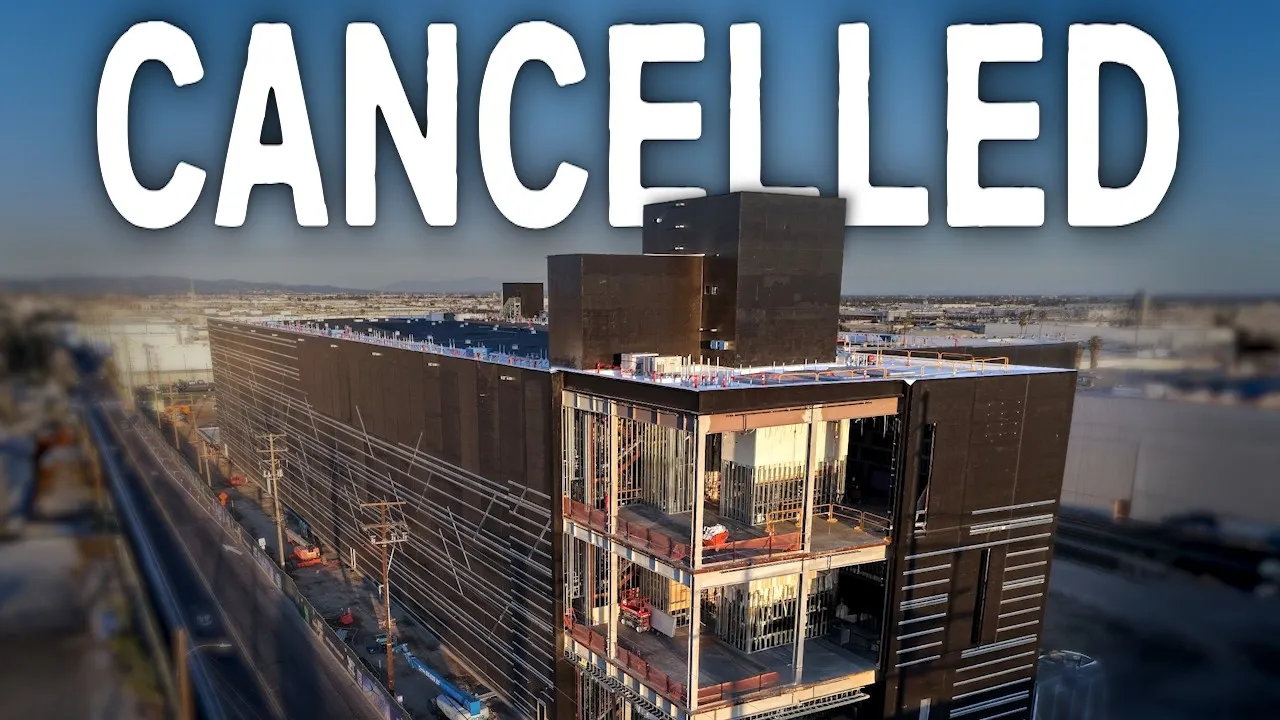
AI Data Center Boom Hits Roadblocks: 50% Delayed or Canceled
Companies poured an estimated $400 billion into building artificial intelligence (AI) data centers in 2025, a massive investment equivalent to nine Manhattan Projects or two Apollo Programs. This spending on infrastructure alone surpassed the total amount spent on new single-family homes during the same period.
These figures do not even include costs for staffing, energy, security, or the investments made by private companies like OpenAI and Anthropic, which are not publicly traded. This trend of record-breaking spending is expected to continue this year.
Despite the huge investments, AI companies have struggled to turn a profit from the technology since ChatGPT’s public debut nearly four years ago. Even with creative accounting, profitability remains elusive.
The primary beneficiaries of this AI surge have been hardware suppliers and chip manufacturers, most notably Nvidia, which profits by selling the essential tools, or “pickaxes and shovels,” for this digital gold rush. However, recent reports suggest that the demand for these “shovels” might not be as high as the massive spending indicates.
Data Center Delays Raise Red Flags
Conflicting reports have emerged regarding the construction of new AI data centers. While companies announce ambitious expansion plans, evidence suggests a significant slowdown.
Over half of the data center sites scheduled to open this year have reportedly been delayed or canceled entirely. This creates a puzzling situation where companies claim they cannot meet the demand for new chips, yet their inventories are growing.
Adding to the confusion, companies are depreciating their AI hardware over six years, while simultaneously suggesting that next year’s models will make this year’s completely outdated. This rapid obsolescence raises questions about the long-term value of these substantial investments. The sheer amount of power required to run these facilities presents another significant challenge.
Where Are All the Chips Going?
Nvidia’s CEO, Jensen Huang, stated the company was shipping around 10 gigawatts (GW) of graphics processing units (GPUs) in 2025. This figure was highlighted during an announcement of a $100 billion partnership with OpenAI to build over 10 GW of compute power. However, this output appears to far exceed the current global capacity of operational AI data centers, which Goldman Sachs estimated at only 7.7 GW.
On-the-ground research by Sightline Climate confirmed that much of the announced data center construction is not as far along as press releases suggest. Out of 21.5 GW of capacity expected before 2027, only 6.3 GW was actively under construction.
The term “under construction” can range from a completed foundation to a nearly finished facility, making the actual progress uncertain. Even major projects, like Oracle and OpenAI’s flagship Stargate Data Center, have reportedly pushed back expansion plans due to ongoing issues.
Power Constraints Slow AI Growth
A primary bottleneck for new data centers is not the availability of advanced computer chips, but the electrical infrastructure needed to support them. Power has become the real constraint in building these massive facilities. While the components for power supply, such as transformers and generators, typically represent less than 10% of a data center’s build cost, nothing can proceed without them.
The price of essential components like large transformers has more than doubled in the last four years, and supply struggles to meet demand. This issue is compounded by reliance on components from countries like China, South Korea, Mexico, and Canada, which can be subject to tariff disruptions.
This scarcity leads companies to buy components, including Nvidia’s latest GPUs, as soon as they become available, even if they don’t have immediate use for them. This purchasing behavior, known as the bullwhip effect in industrial planning, can explain high spending levels alongside slow project progress.
Inventory Piles Up Amidst Supply Chain Issues
Nvidia reported a record year for sales and profits in January. However, its inventory more than doubled from the previous year and quadrupled from 2024. This significant increase in unsold product suggests that either demand for Nvidia’s chips is weakening, or the company is facing its own supply chain challenges and is stockpiling components with the confidence they will eventually be sold.
The situation is further complicated by rising energy prices, partly due to geopolitical events. Higher energy costs directly impact the operational viability and cash burn rates of data centers.
Those relying on the grid face higher bills and longer waits for capacity, while those using on-site natural gas generators are hit by doubled fuel costs. This makes running older, less efficient hardware increasingly expensive, potentially turning multi-million dollar server racks into e-waste.
Depreciation and Investor Hype
A critical concern is the rapid depreciation of AI chips. While major tech companies like Microsoft, Oracle, and Meta depreciate their GPUs over six years for accounting purposes, their actual operational viability may be closer to three years. This practice of stretching out depreciation makes profits appear higher than they truly are, potentially inflating investor enthusiasm for AI.
If these companies are pressured to adopt more realistic depreciation schedules, their reported profits could decrease. For Nvidia, whose business is heavily reliant on GPU demand, this could significantly impact its valuation. The combination of supply bottlenecks, rising energy costs, and rapid chip obsolescence creates a challenging environment for the AI infrastructure boom.
Market Impact and Investor Considerations
The AI data center market faces significant headwinds, including construction delays, power infrastructure limitations, and rising operational costs. Over half of planned data centers for 2026 are reportedly delayed, highlighting the practical challenges of scaling AI infrastructure. These issues are impacting even major players, with projects like the Oracle and OpenAI Stargate Data Center facing expansion setbacks.
Investors should monitor Nvidia’s inventory levels and customer payment times, as these can signal shifts in demand. The increasing cost of energy and the rapid obsolescence of AI hardware also raise questions about the long-term profitability of AI data centers. The availability of financing for these large-scale projects may also become more constrained as private credit companies face their own industry challenges.
Source: 50% Of AI Data Centers Have Quietly Been Cancelled Or "Delayed" (YouTube)