AI Masters Search Across Audio, Images, and Video
A new course is teaching developers how to build smart applications that can understand and search through multiple types of data at once. This means AI can now answer questions using information found in audio recordings, pictures, and video clips.
The training program focuses on creating what’s called a Retrieval-Augmented Generation (RAG) application. This type of AI can pull specific information from vast amounts of data to give precise answers.
The course uses a real-world example: recordings of meetings. By combining the spoken words, the visual actions, and the overall scene, the AI can offer very detailed insights.
It can explain what happened during a meeting and even track events as they unfolded over time. This gives a much richer understanding than just looking at one type of data alone.
How It Works: Combining AI Tools
To build these powerful applications, the course shows how to link together several AI-powered tools. First, it uses automatic speech recognition to turn spoken words in audio files into written text.
This is like having a super-fast transcription service for all your meeting recordings. The AI then processes images, creating text descriptions that large language models can easily understand.
Vision language models are also used to generate descriptions from video segments. This adds another layer of understanding by capturing visual details that might be missed otherwise.
Imagine AI describing the expressions on people’s faces or the objects present in the room. These descriptions are then combined with the transcribed audio.
Once all this information is turned into text, the course teaches how to create data summaries called embeddings. Think of embeddings as short, meaningful digital fingerprints for each piece of information.
These embeddings allow the AI to quickly find the most relevant information when a question is asked. The final step is building the RAG application that uses these embeddings to find answers within the meeting data.
Why This Matters
This development is significant because it unlocks information previously trapped in different media formats. For years, searching through video or audio files for specific details was difficult and time-consuming.
Now, AI can sift through these sources efficiently, uncovering new insights that were hard to find before. This opens doors for creating entirely new kinds of applications.
For businesses, this means getting more value from recorded meetings, customer service calls, or even security footage. Instead of just storing these files, companies can now query them for specific information. This could help improve training, track project progress, or even enhance product development by understanding user interactions better.
Availability and Partnership
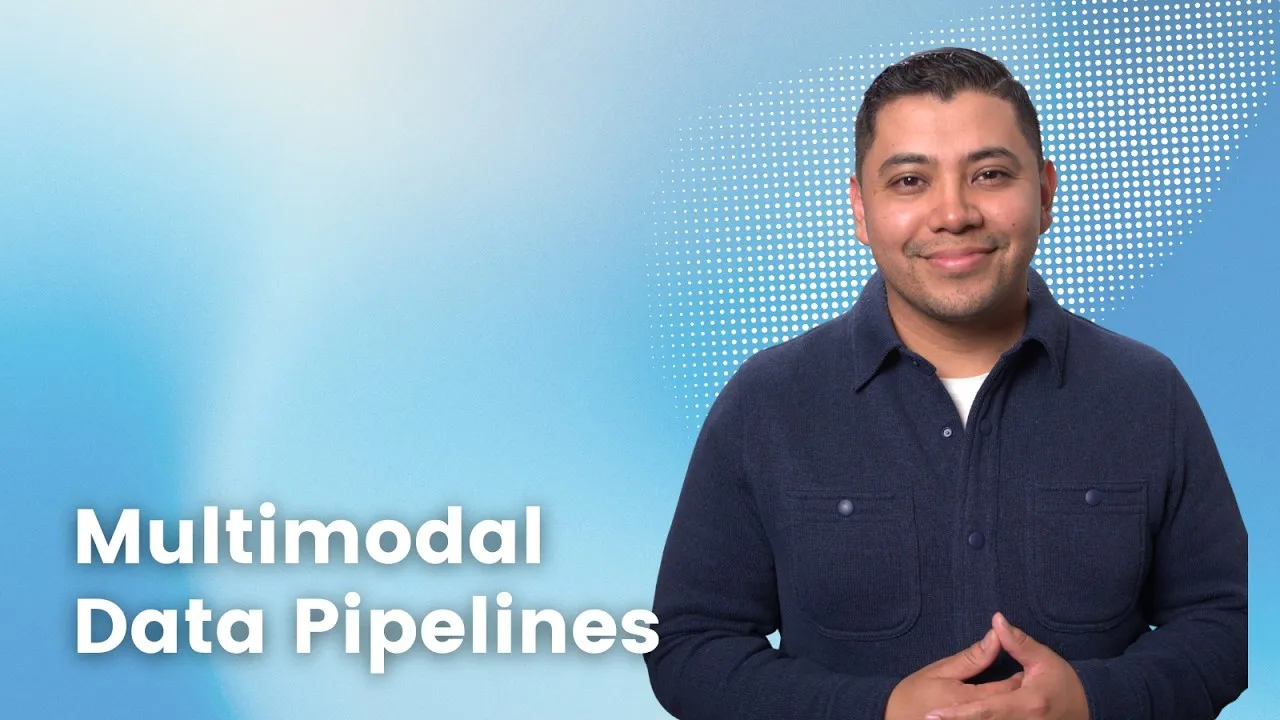
This course is a collaboration between Snowflake, a company known for its data cloud services, and Gberto Hernandez, an instructor specializing in AI data pipelines. The training material is designed to be practical, guiding developers through the process of building their own multimodal RAG applications.
The course aims to equip developers with the skills to handle and analyze data from various sources. By mastering these techniques, professionals can build more sophisticated AI tools. Developers can start learning these new skills immediately through the provided course materials.
Source: 📉 Turn your multimodal data into something you can actually query (YouTube)